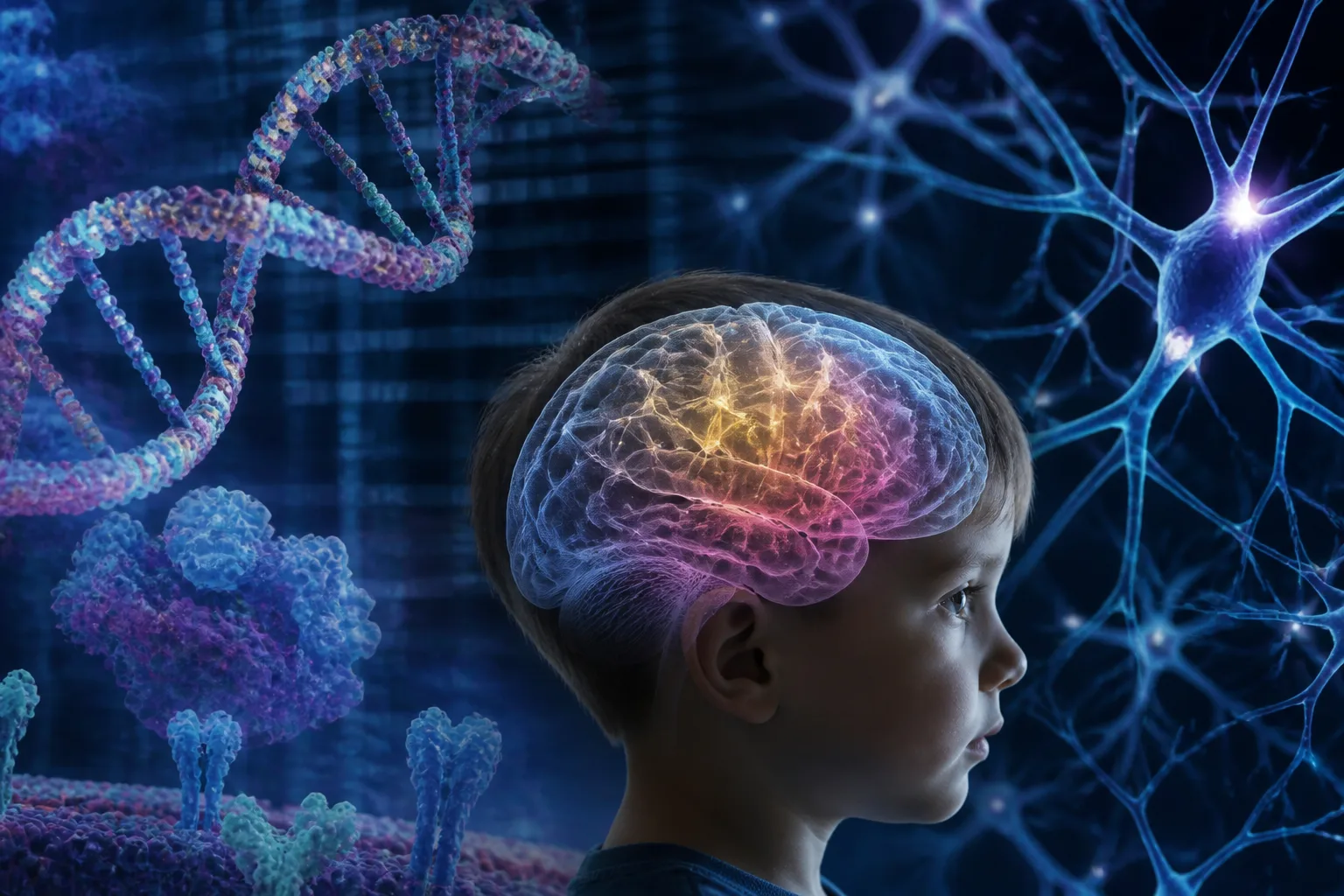
New Framework Illuminates Genetic and Molecular Layers in Autism Spectrum Disorder

Understanding Autism’s Biological Complexity
Autism spectrum disorder (ASD) is a diverse neurodevelopmental condition characterized by a wide range of genetic and biological factors. Researchers have long recognized that ASD arises from intricate interactions between genetic variations, molecular changes, and neural circuitry disruptions. A recent review published in Frontiers in Neuroscience offers a detailed examination of these layers, proposing a structured framework to better understand both syndromic and non-syndromic forms of ASD.
Distinguishing Syndromic and Non-Syndromic ASD
Clinically, ASD is often categorized into syndromic and non-syndromic subtypes. Syndromic ASD is associated with identifiable genetic syndromes, while non-syndromic ASD lacks such clear genetic markers. However, the review highlights that these categories may overlap in their genetic and molecular underpinnings, with some shared and some distinct biological pathways involved.
Key Molecular Mechanisms Explored
The review emphasizes the importance of synaptic development and function, focusing on how chromatin remodeling and epigenetic regulation influence neurodevelopment. These molecular processes affect how genes are expressed and how neurons form connections, which are crucial for brain function.
From Genes to Neural Circuits
Alterations at the molecular and cellular levels can disrupt the integration and communication within neural circuits. The authors discuss how these disruptions may contribute to the behavioral and cognitive features observed in ASD.
A Three-Layer Hierarchical Framework
To synthesize these findings, the review introduces a three-tier model linking:
- Layer 1: Gene function, ranging from local synaptic effectors to global regulators of gene expression.
- Layer 2: Core biological pathways, including chromatin remodeling and synaptic signaling.
- Layer 3: Clinical phenotypes observed in individuals with ASD.
This framework helps illustrate how genetic factors enriched in specific ASD subtypes may lead to both shared and unique biological and clinical outcomes.
Implications for Research and Clinical Practice
By mapping ASD-associated genes onto this continuum, the framework may guide future biomarker discovery and support more biologically informed clinical classifications. This approach aims to bridge the gap between genetic findings and observable traits, potentially improving diagnosis and personalized interventions.
Considerations and Future Directions
While this hierarchical model provides a valuable conceptual tool, the authors note that ASD’s complexity requires ongoing research to validate and refine these connections. The interplay between genetic, molecular, and circuit-level changes remains an active area of investigation.
For more detailed information, the full review is accessible at PubMed.
Download the images in this article