Skip to content
Love Beyond Words - autismwords.com Love Beyond Words - autismwords.com Love Beyond Words - autismwords.com

Supporting children with autism through education and care

Love Beyond Words - autismwords.com Love Beyond Words - autismwords.com Love Beyond Words - autismwords.com

Supporting children with autism through education and care

  • Learning & Support
    • Communication Skills
    • Daily Living Skills
    • Emotional Regulation
    • Everyday Challenges
    • Learning Through Play
    • Parent Education & Advocacy
    • Positive Behavior Support
    • Routines & Transitions
    • Social Skills
    • Speech & Language
  • Autism News & Perspectives
  • Hero News
  • Learning & Support
    • Communication Skills
    • Daily Living Skills
    • Emotional Regulation
    • Everyday Challenges
    • Learning Through Play
    • Parent Education & Advocacy
    • Positive Behavior Support
    • Routines & Transitions
    • Social Skills
    • Speech & Language
  • Autism News & Perspectives
  • Hero News
Close

Search

  • https://www.facebook.com/
  • https://twitter.com/
  • https://t.me/
  • https://www.instagram.com/
  • https://youtube.com/
Love Beyond Words - autismwords.com Love Beyond Words - autismwords.com Love Beyond Words - autismwords.com

Supporting children with autism through education and care

Love Beyond Words - autismwords.com Love Beyond Words - autismwords.com Love Beyond Words - autismwords.com

Supporting children with autism through education and care

  • Learning & Support
    • Communication Skills
    • Daily Living Skills
    • Emotional Regulation
    • Everyday Challenges
    • Learning Through Play
    • Parent Education & Advocacy
    • Positive Behavior Support
    • Routines & Transitions
    • Social Skills
    • Speech & Language
  • Autism News & Perspectives
  • Hero News
  • Learning & Support
    • Communication Skills
    • Daily Living Skills
    • Emotional Regulation
    • Everyday Challenges
    • Learning Through Play
    • Parent Education & Advocacy
    • Positive Behavior Support
    • Routines & Transitions
    • Social Skills
    • Speech & Language
  • Autism News & Perspectives
  • Hero News
Close

Search

  • https://www.facebook.com/
  • https://twitter.com/
  • https://t.me/
  • https://www.instagram.com/
  • https://youtube.com/
Home/Autism News & Perspectives/Exploring the Vitamin D-Gut-Brain Connection in Autism Spectrum Disorder
Exploring the Vitamin D-Gut-Brain Connection in Autism Spectrum Disorder
Autism News & Perspectives

Exploring the Vitamin D-Gut-Brain Connection in Autism Spectrum Disorder

By Jennifer Bui
September 28, 2026 2 Min Read
0

Vitamin D and Gut Microbiota: Emerging Factors in Autism

Autism spectrum disorder (ASD) is a multifaceted neurodevelopmental condition influenced by both genetic and environmental factors. Recent research highlights two environmental elements—vitamin D deficiency and imbalances in gut microbiota—as significant contributors to ASD development and progression.

Interconnected Roles in ASD Pathogenesis

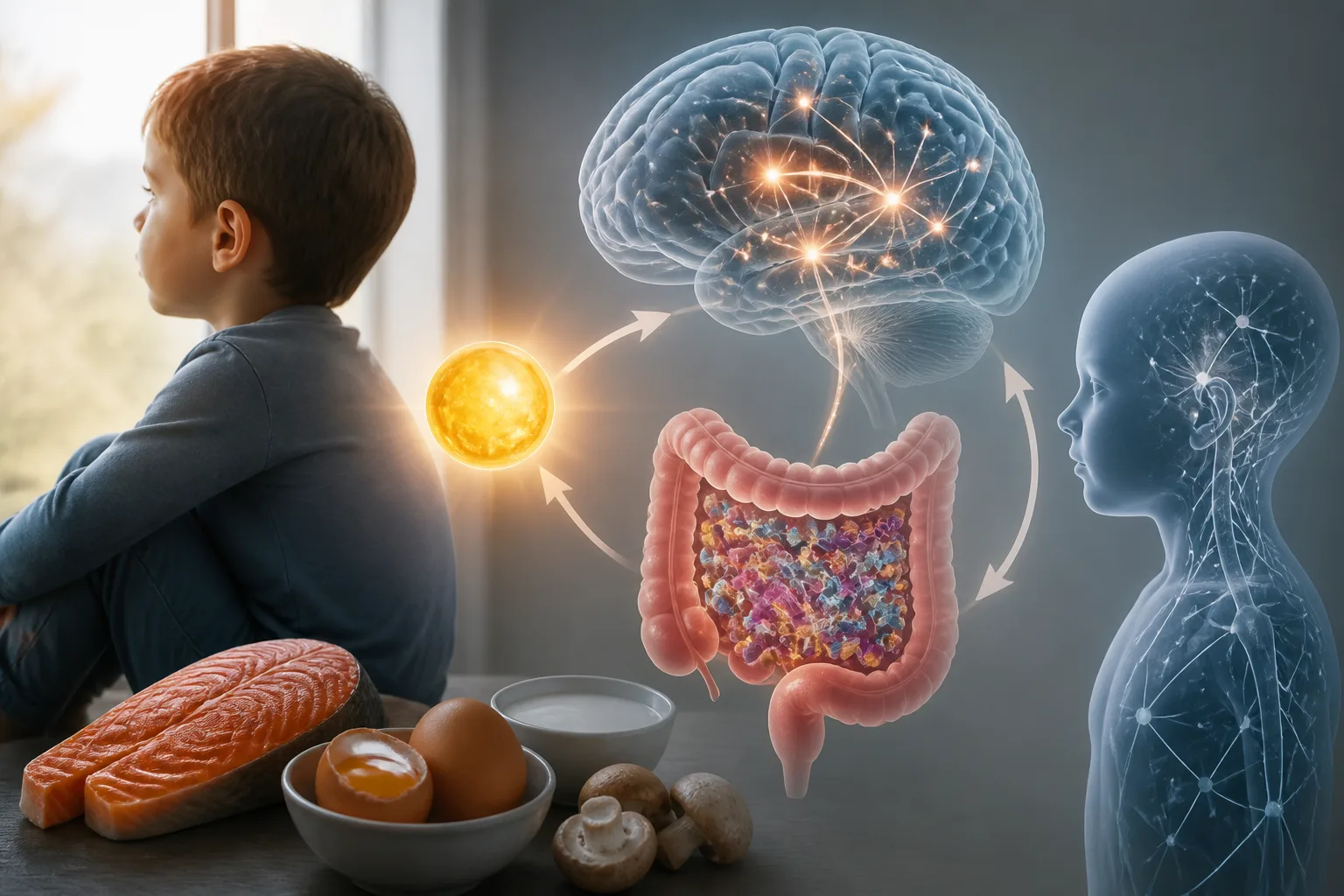
Rather than acting in isolation, vitamin D deficiency and gut microbiota dysbiosis appear to interact in complex, two-way mechanisms that impact ASD. Vitamin D influences several components of the gut-brain axis, including the makeup of gut bacteria, the integrity of the intestinal lining, inflammation within the gut, movement of bacteria across the gut barrier, microbial metabolites, the blood-brain barrier, and neuroinflammation.

Conversely, gut microbiota can affect how vitamin D is metabolized and functions in the body, notably through the production of short-chain fatty acids. This reciprocal relationship forms what researchers describe as a bidirectional vitamin D-gut-brain axis.

Implications for Neurodevelopment and ASD Symptoms

This vitamin D-gut-brain axis may influence ASD characteristics by modulating neuroinflammation, communication between the gut and brain, and key neurodevelopmental processes. Understanding these interactions could shed light on how environmental factors contribute to ASD symptoms and potentially open avenues for targeted interventions.

Research Status and Future Directions

It is important to note that much of the current understanding stems from preclinical studies, such as animal models and laboratory research. Clinical evidence directly linking vitamin D and gut microbiota interactions to ASD in humans remains limited.

Future research is encouraged to unravel the precise molecular mechanisms underlying this crosstalk and to develop personalized treatment strategies that address vitamin D levels and gut microbial profiles in individuals with ASD.

For more detailed information, see the original study at PubMed.

Download the images in this article

  • Exploring the Vitamin D-Gut-Brain Connection in Autism Spectrum Disorder

Tags:

ASD researchautism spectrum disordergut microbiotagut-brain axisneurodevelopmentneuroinflammationvitamin D
Author

Jennifer Bui

Follow Me
Other Articles
Barriers to Adult Autism Diagnosis and Support: Insights from Lived Experience, Families,
Previous

Barriers to Adult Autism Diagnosis and Support: Insights from Lived Experience, Families, and Clinicians

Early Childhood General Anesthesia Linked to Slightly Increased Risk of Neurodevelopmental Disorders
Next

Early Childhood General Anesthesia Linked to Slightly Increased Risk of Neurodevelopmental Disorders

No Comment! Be the first one.

Leave a Reply Cancel reply

Your email address will not be published. Required fields are marked *

ADHD ASD ASD research autism autism communication autism diagnosis autism parenting autism research autism spectrum disorder autism support autistic adults autistic children child communication child development child independence communication communication skills communication support communication supports communication tools coping strategies daily living skills early intervention emotional regulation fine motor skills Functional Communication intellectual disability language development learning through play mental health mouse model neurodevelopment neurodevelopmental disorders neurodiversity neuroinflammation parent advocacy positive behavior support sensory accommodations sensory needs sensory processing sensory support sex differences visual learning set visual routine young children

  • Halliwick Aquatic Therapy Linked to Improved Quality of Life in Children with
    Halliwick Aquatic Therapy Linked to Improved Quality of Life in Children with Autism Spectrum Disorder
    A study suggests that Halliwick-based aquatic physical activity may improve quality of life in children and adolescents with autism spectrum disorder, showing benefits in psychological well-being and autonomy.
  • New Insights into Autism: Linking Brain Fluid Dynamics and Network Development to
    New Insights into Autism: Linking Brain Fluid Dynamics and Network Development to Clinical Outcomes
    New research explores how brain fluid movement and neural network development may influence autism's clinical outcomes, offering insights into its diverse trajectories.
  • Study Links Perceived Stress and Auditory Sensitivity in Autistic and Non-Autistic University
    Study Links Perceived Stress and Auditory Sensitivity in Autistic and Non-Autistic University Students
    A study finds perceived stress is linked to auditory sensitivity in autistic and non-autistic university students, with autistic students showing higher sensitivity.
  • New Study Supports Reliable Autism Intervention Measures Across Clinic and Home Settings
    New Study Supports Reliable Autism Intervention Measures Across Clinic and Home Settings
    A recent study found that brief observational tools measuring social communication and caregiver strategies in young autistic children are reliable and feasible across both clinic and home settings, supporting flexible early intervention assessments.
  • Study Highlights Social Disadvantages Impacting Health of Autistic Adults Without Intellectual Disability
    Study Highlights Social Disadvantages Impacting Health of Autistic Adults Without Intellectual Disability
    A UK study finds autistic adults without intellectual disability face social disadvantages that contribute to higher chronic illness and mortality risks, highlighting the need for systemic policy changes.
Halliwick Aquatic Therapy Linked to Improved Quality of Life in Children with
Halliwick Aquatic Therapy Linked to Improved Quality of Life in Children with Autism Spectrum Disorder
October 16, 2026
New Insights into Autism: Linking Brain Fluid Dynamics and Network Development to
New Insights into Autism: Linking Brain Fluid Dynamics and Network Development to Clinical Outcomes
October 16, 2026
Study Links Perceived Stress and Auditory Sensitivity in Autistic and Non-Autistic University
Study Links Perceived Stress and Auditory Sensitivity in Autistic and Non-Autistic University Students
October 16, 2026
New Study Supports Reliable Autism Intervention Measures Across Clinic and Home Settings
October 16, 2026
Study Reveals Sex-Specific Behavioral Changes in Mice Lacking α5-Nicotinic Acetylcholine Receptors
156 views
Preparing for Loud Events: 6 Sensory Support Steps for Children
137 views
Expressing Discomfort and Asking for Help: 6 Essential Communication Phrases for Young
Expressing Discomfort and Asking for Help: 6 Essential Communication Phrases for Young Children
131 views
Feeling Worried: 6 Steps to Help Young Children Recognize and Manage Worry
129 views
Using a Calm Voice: 5 Positive Steps for Young Children
127 views

Content on this website is created with the assistance of artificial intelligence (AI), while some portions are still reviewed and overseen by humans. All content and resources are provided completely free of charge.

Some information may be referenced or cited from reputable sources. Whenever possible, we will clearly identify the sources used within each article.

If you have any questions, feedback, or would like to contact us, please email: info@autismwords.com

Copyright 2026 — Love Beyond Words - autismwords.com. All rights reserved. Blogsy WordPress Theme

Join Us on the Journey to Understanding Autism

Subscribe to receive curated autism knowledge, lessons, and the latest news — delivered to you regularly.

We promise to send only helpful autism-related information and knowledge — no ads, no spam. You can unsubscribe anytime.

Thank you for subscribing!