Skip to content
Love Beyond Words - autismwords.com Love Beyond Words - autismwords.com Love Beyond Words - autismwords.com

Supporting children with autism through education and care

Love Beyond Words - autismwords.com Love Beyond Words - autismwords.com Love Beyond Words - autismwords.com

Supporting children with autism through education and care

  • Learning & Support
    • Communication Skills
    • Daily Living Skills
    • Emotional Regulation
    • Everyday Challenges
    • Learning Through Play
    • Parent Education & Advocacy
    • Positive Behavior Support
    • Routines & Transitions
    • Social Skills
    • Speech & Language
  • Autism News & Perspectives
  • Hero News
  • Learning & Support
    • Communication Skills
    • Daily Living Skills
    • Emotional Regulation
    • Everyday Challenges
    • Learning Through Play
    • Parent Education & Advocacy
    • Positive Behavior Support
    • Routines & Transitions
    • Social Skills
    • Speech & Language
  • Autism News & Perspectives
  • Hero News
Close

Search

  • https://www.facebook.com/
  • https://twitter.com/
  • https://t.me/
  • https://www.instagram.com/
  • https://youtube.com/
Love Beyond Words - autismwords.com Love Beyond Words - autismwords.com Love Beyond Words - autismwords.com

Supporting children with autism through education and care

Love Beyond Words - autismwords.com Love Beyond Words - autismwords.com Love Beyond Words - autismwords.com

Supporting children with autism through education and care

  • Learning & Support
    • Communication Skills
    • Daily Living Skills
    • Emotional Regulation
    • Everyday Challenges
    • Learning Through Play
    • Parent Education & Advocacy
    • Positive Behavior Support
    • Routines & Transitions
    • Social Skills
    • Speech & Language
  • Autism News & Perspectives
  • Hero News
  • Learning & Support
    • Communication Skills
    • Daily Living Skills
    • Emotional Regulation
    • Everyday Challenges
    • Learning Through Play
    • Parent Education & Advocacy
    • Positive Behavior Support
    • Routines & Transitions
    • Social Skills
    • Speech & Language
  • Autism News & Perspectives
  • Hero News
Close

Search

  • https://www.facebook.com/
  • https://twitter.com/
  • https://t.me/
  • https://www.instagram.com/
  • https://youtube.com/
Home/Autism News & Perspectives/Prenatal Valproate Exposure in Rats Shows Sex-Specific Behavioral and Brain Excitability Changes Linked to Autism Traits
Prenatal Valproate Exposure in Rats Shows Sex-Specific Behavioral and Brain Excitability Changes
Autism News & Perspectives

Prenatal Valproate Exposure in Rats Shows Sex-Specific Behavioral and Brain Excitability Changes Linked to Autism Traits

By Kevin Hoang
September 15, 2026 2 Min Read
0

Study Explores Autism-Like Features in Rats Exposed to Valproate Before Birth

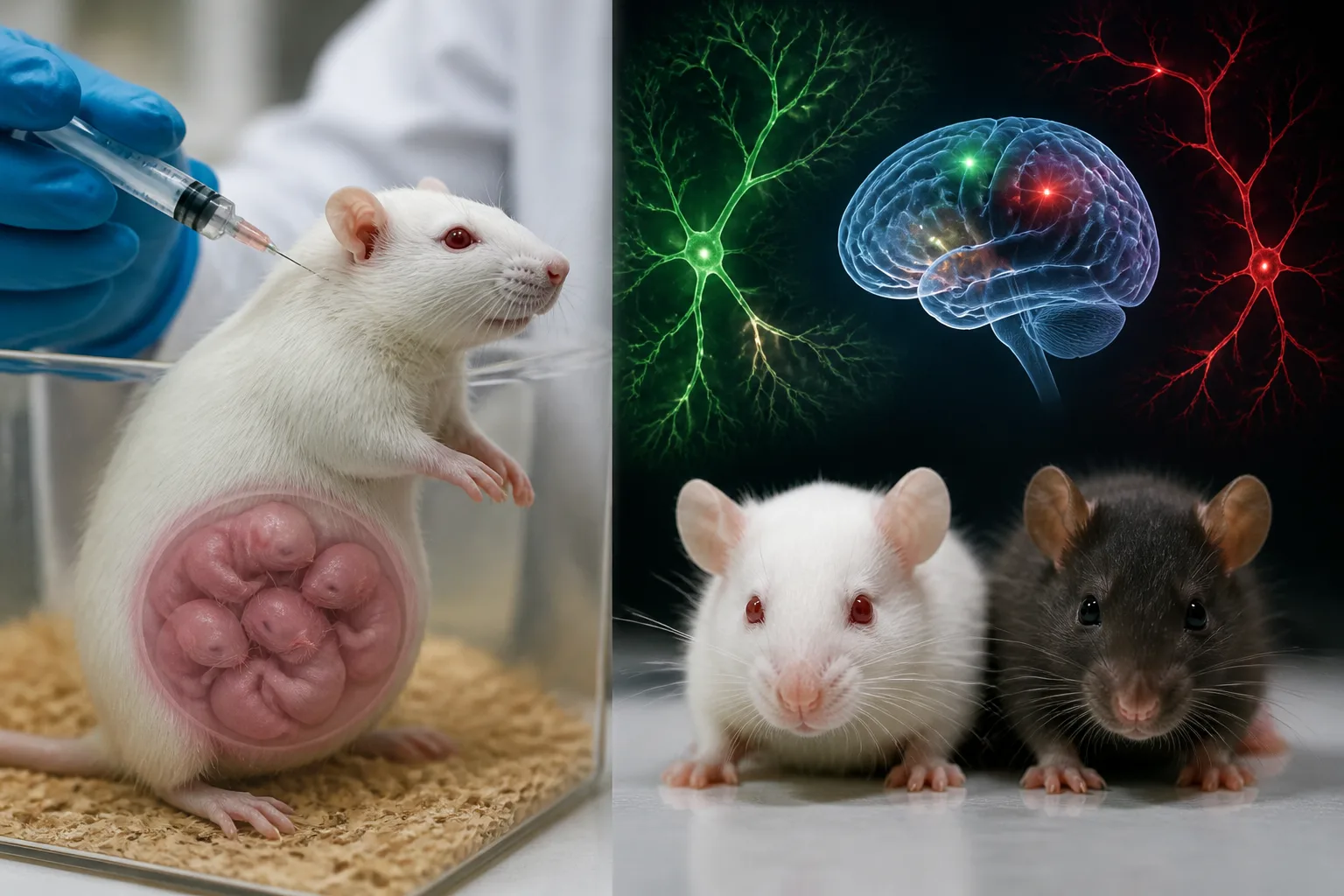
A recent study investigated how prenatal exposure to valproate (VPA), a drug known to increase autism spectrum disorder (ASD) risk, affects brain function and behavior in rats. Researchers focused on individual differences and sex-specific effects, examining both male and female offspring using a range of behavioral tests and brain activity measurements.

Key Findings: Delayed Development and Social Deficits in Males

The study found that rat pups exposed to VPA in the womb showed delayed sensorimotor development during early postnatal stages, regardless of sex. However, social impairments—a core feature of ASD—were observed primarily in male rats, while females appeared largely unaffected in this domain.

Brain Excitability Changes Vary by Sex and Region

Using electrophysiological recordings and optical imaging, the researchers assessed excitability in different regions of the neocortex, including the entorhinal and prefrontal cortices. They reported sex- and region-specific alterations in cortical excitability and seizure susceptibility in VPA-exposed rats. Some of these changes correlated with observable congenital malformations, such as a tail kink, which was more common in affected animals.

Context and Implications

The prenatal VPA rodent model is widely used to study idiopathic ASD because it mimics certain neurodevelopmental disruptions seen in humans. This study adds nuance by highlighting variability in symptoms and physiological changes within treated groups, emphasizing that not all individuals are equally affected. The presence of physical markers like tail kinks may help identify animals with more pronounced neural and behavioral alterations, particularly in males.

Considerations for Families and Researchers

While this research enhances understanding of how prenatal environmental factors might influence ASD-related traits, it is important to note that animal models cannot fully replicate the complexity of human autism. The sex differences observed suggest that males and females may experience different vulnerabilities or compensatory mechanisms. These findings underscore the importance of considering individual variability and sex in both research and potential interventions.

Study Limitations and Cautions

The study’s findings are correlational and based on a rodent model, which may not directly translate to humans. The variability in behavioral and physiological outcomes indicates that prenatal VPA exposure alone does not determine ASD traits but interacts with other factors. Further research is needed to clarify mechanisms and to explore how these findings relate to human neurodevelopment.

For more detailed information, the original study can be accessed here.

Download the images in this article

  • Prenatal Valproate Exposure in Rats Shows Sex-Specific Behavioral and Brain Excitability Changes

Tags:

ASD researchautism spectrum disorderbrain excitabilityneurodevelopmentprenatal valproaterat modelsex differencessocial behavior
Author

Kevin Hoang

Follow Me
Other Articles
Simple Puzzle Play: A Fun Learning Through Play Activity
Previous

Simple Puzzle Play: A Fun Learning Through Play Activity

Omega-3 Supplements Show Modest Benefits for Certain Autism Symptoms, New Review Finds
Next

Omega-3 Supplements Show Modest Benefits for Certain Autism Symptoms, New Review Finds

No Comment! Be the first one.

Leave a Reply Cancel reply

Your email address will not be published. Required fields are marked *

ADHD ASD ASD research autism autism communication autism diagnosis autism parenting autism research autism spectrum disorder autism support autistic adults autistic children child communication child development child independence communication communication skills communication support communication supports communication tools coping strategies daily living skills early intervention emotional regulation fine motor skills Functional Communication intellectual disability language development learning through play mental health mouse model neurodevelopment neurodevelopmental disorders neurodiversity neuroinflammation parent advocacy positive behavior support sensory accommodations sensory needs sensory processing sensory support sex differences visual learning set visual routine young children

  • Halliwick Aquatic Therapy Linked to Improved Quality of Life in Children with
    Halliwick Aquatic Therapy Linked to Improved Quality of Life in Children with Autism Spectrum Disorder
    A study suggests that Halliwick-based aquatic physical activity may improve quality of life in children and adolescents with autism spectrum disorder, showing benefits in psychological well-being and autonomy.
  • New Insights into Autism: Linking Brain Fluid Dynamics and Network Development to
    New Insights into Autism: Linking Brain Fluid Dynamics and Network Development to Clinical Outcomes
    New research explores how brain fluid movement and neural network development may influence autism's clinical outcomes, offering insights into its diverse trajectories.
  • Study Links Perceived Stress and Auditory Sensitivity in Autistic and Non-Autistic University
    Study Links Perceived Stress and Auditory Sensitivity in Autistic and Non-Autistic University Students
    A study finds perceived stress is linked to auditory sensitivity in autistic and non-autistic university students, with autistic students showing higher sensitivity.
  • New Study Supports Reliable Autism Intervention Measures Across Clinic and Home Settings
    New Study Supports Reliable Autism Intervention Measures Across Clinic and Home Settings
    A recent study found that brief observational tools measuring social communication and caregiver strategies in young autistic children are reliable and feasible across both clinic and home settings, supporting flexible early intervention assessments.
  • Study Highlights Social Disadvantages Impacting Health of Autistic Adults Without Intellectual Disability
    Study Highlights Social Disadvantages Impacting Health of Autistic Adults Without Intellectual Disability
    A UK study finds autistic adults without intellectual disability face social disadvantages that contribute to higher chronic illness and mortality risks, highlighting the need for systemic policy changes.
Halliwick Aquatic Therapy Linked to Improved Quality of Life in Children with
Halliwick Aquatic Therapy Linked to Improved Quality of Life in Children with Autism Spectrum Disorder
October 16, 2026
New Insights into Autism: Linking Brain Fluid Dynamics and Network Development to
New Insights into Autism: Linking Brain Fluid Dynamics and Network Development to Clinical Outcomes
October 16, 2026
Study Links Perceived Stress and Auditory Sensitivity in Autistic and Non-Autistic University
Study Links Perceived Stress and Auditory Sensitivity in Autistic and Non-Autistic University Students
October 16, 2026
New Study Supports Reliable Autism Intervention Measures Across Clinic and Home Settings
October 16, 2026
Study Reveals Sex-Specific Behavioral Changes in Mice Lacking α5-Nicotinic Acetylcholine Receptors
157 views
Preparing for Loud Events: 6 Sensory Support Steps for Children
137 views
Expressing Discomfort and Asking for Help: 6 Essential Communication Phrases for Young
Expressing Discomfort and Asking for Help: 6 Essential Communication Phrases for Young Children
131 views
Feeling Worried: 6 Steps to Help Young Children Recognize and Manage Worry
129 views
Using a Calm Voice: 5 Positive Steps for Young Children
127 views

Content on this website is created with the assistance of artificial intelligence (AI), while some portions are still reviewed and overseen by humans. All content and resources are provided completely free of charge.

Some information may be referenced or cited from reputable sources. Whenever possible, we will clearly identify the sources used within each article.

If you have any questions, feedback, or would like to contact us, please email: info@autismwords.com

Copyright 2026 — Love Beyond Words - autismwords.com. All rights reserved. Blogsy WordPress Theme

Join Us on the Journey to Understanding Autism

Subscribe to receive curated autism knowledge, lessons, and the latest news — delivered to you regularly.

We promise to send only helpful autism-related information and knowledge — no ads, no spam. You can unsubscribe anytime.

Thank you for subscribing!