New AI Model Enhances Voice-Based Autism Detection Using Multiple Audio Features

Innovative Approach to Autism Screening Through Speech Analysis
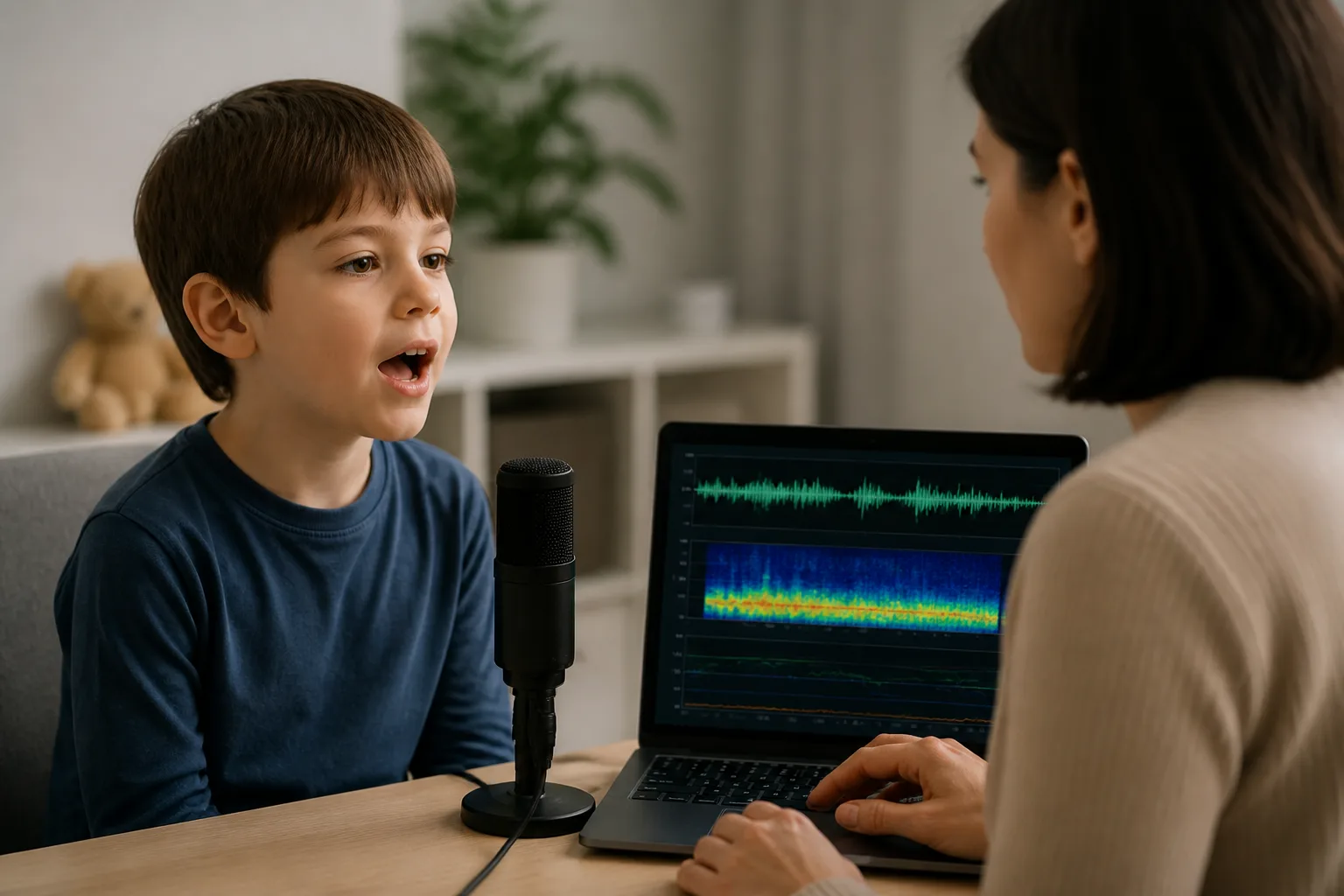
Researchers have developed a novel artificial intelligence system that improves the detection of autism spectrum disorder (ASD) by analyzing children’s speech using multiple audio feature sets. This method aims to provide a noninvasive, early screening tool for ASD by leveraging advanced voice-based analysis techniques.
Multibranch Attention and Fusion Network (MBAFNet)
The newly introduced system, called the Multibranch Attention and Fusion Network (MBAFNet), integrates multiple pretrained audio embeddings—specifically YAMNet and VGGish—that capture different characteristics of speech. Unlike previous approaches that typically rely on a single audio representation, MBAFNet processes each embedding separately through dedicated convolutional encoders. These encoders extract temporal patterns at various scales, which are then combined through a self-attention mechanism that models interactions between the different audio features.
A gating mechanism within the network dynamically weighs the contribution of each audio embedding before making a final classification decision. This selective fusion strategy allows the model to harness complementary information from diverse audio representations, potentially leading to more accurate ASD detection.
Performance and Validation
The model was tested on the CASD-SC corpus, a dataset designed for ASD speech analysis, using a rigorous five-fold evaluation protocol that ensured no overlap of subjects between training and testing sets. MBAFNet achieved an accuracy of 94.17%, surpassing all baseline models and prior state-of-the-art methods reported in the literature.
Implications for Families and Clinicians
These promising results suggest that combining multiple audio embeddings with advanced attention and fusion techniques could enhance early voice-based screening tools for autism. Such tools may offer a more accessible and less intrusive option for identifying children who might benefit from further clinical evaluation.
Limitations and Future Directions
Despite the encouraging findings, the researchers emphasize the need for broader validation across diverse populations and settings before this technology can be recommended for routine screening. The current study’s results are preliminary and should be interpreted with caution, as voice-based detection methods are still under active investigation and are not diagnostic on their own.
For more detailed information, see the original research publication: Multibranch Attention and Fusion Network for Voice-Based Autism Detection Using Heterogeneous Audio Embeddings.
Download the images in this article