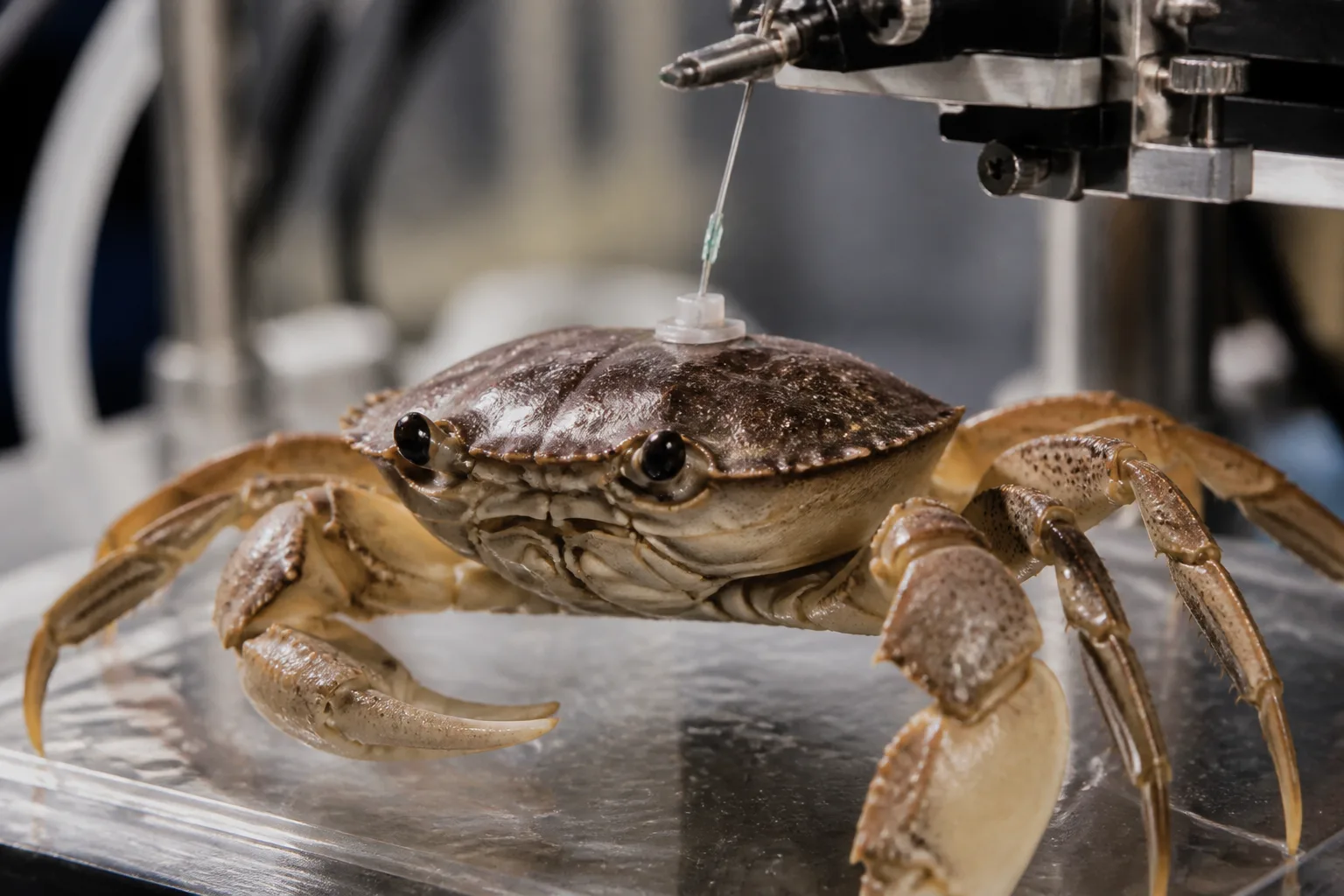
New Insights into How Neohelice granulata Crabs Execute Their Escape Responses

Understanding the Escape Mechanism of Neohelice granulata
Researchers have made significant progress in uncovering the neural underpinnings of escape behavior in the crab species Neohelice granulata. This species offers a unique advantage for neuroethological studies because it allows for intracellular recordings from animals that are awake and actively behaving, providing valuable insights into the neural circuits involved in rapid escape responses.
Why Neohelice granulata Is a Valuable Model
Unlike many other animals used in neuroscience research, Neohelice granulata can be studied at the cellular level while it is still conscious and engaged in natural behaviors. This capability enables scientists to observe how individual neurons function during real-time escape maneuvers, which are critical for the crab’s survival.
Implications for Neuroscience and Behavior
By recording intracellular activity in these crabs, researchers can better understand how sensory information is processed and translated into motor commands that trigger swift escape actions. This research contributes to a broader understanding of how nervous systems coordinate complex behaviors in response to threats.
What This Means for Future Research
The ability to study awake, behaving Neohelice granulata at the cellular level opens new avenues for exploring the neural basis of behavior in invertebrates. It may also inform comparative studies across species, enhancing our knowledge of evolutionary adaptations in escape mechanisms.
For more detailed information on this research, visit the original source: The Transmitter.
Download the images in this article