Exploring Acupuncture’s Role in Autism Spectrum Disorder: Insights into Neurotransmitter and Neuroplasticity Effects

Acupuncture and Autism Spectrum Disorder: An Emerging Area of Research
Autism spectrum disorder (ASD) is a complex neurodevelopmental condition marked by challenges in social communication, repetitive behaviors, sensory processing differences, and often co-occurring psychiatric conditions. Recently, acupuncture has gained interest as a complementary approach that may influence neurological function in ASD, though the precise biological mechanisms behind its effects are not yet fully understood.
Key Findings on Neurotransmitter and Neuroplasticity Modulation
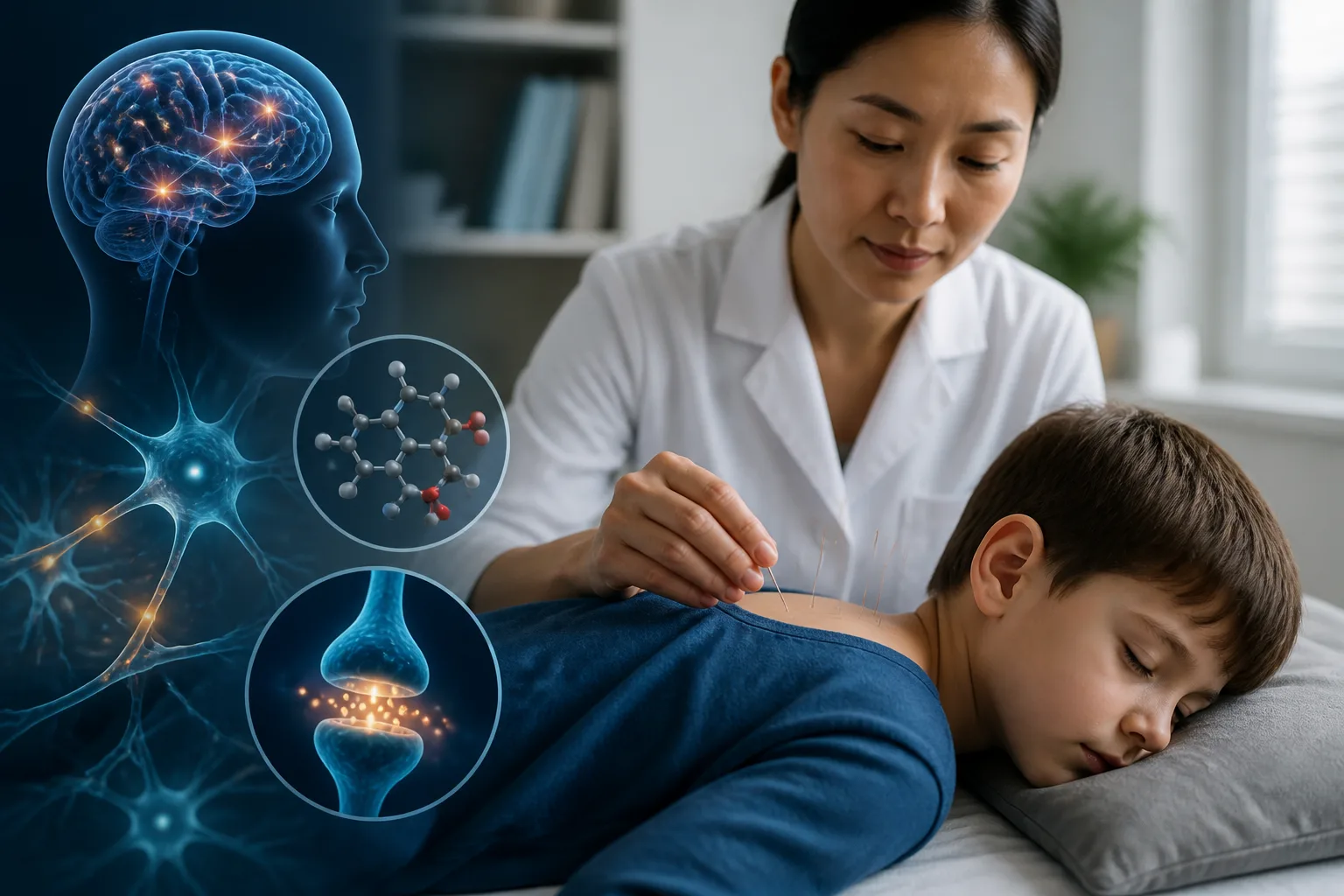
A recent narrative review examined studies from 2015 to 2025, including preclinical experiments, clinical trials, and molecular research, to evaluate how acupuncture might affect brain pathways relevant to ASD. The evidence suggests acupuncture can modulate several neurotransmitter systems such as glutamate, GABA, dopamine, serotonin, and norepinephrine. These neurotransmitters play critical roles in regulating brain activity and behavior.
Additionally, acupuncture appears to impact neurotrophin-mediated plasticity—processes that support the growth and adaptation of neurons—as well as neuroinflammatory responses and synaptic function. Such effects may contribute to balancing excitatory and inhibitory signals in the brain, which is often disrupted in ASD.
Research in ASD Models and Related Disorders
Studies specifically conducted in ASD models have shown that acupuncture can influence monoaminergic signaling and neurotrophin pathways, correlating with improvements in some behavioral features associated with ASD. Research on related neuropsychiatric disorders also supports the idea that acupuncture’s benefits arise from its coordinated modulation of multiple interconnected neural systems, rather than targeting a single molecular mechanism.
Implications for Families and Caregivers
While these findings are promising, acupuncture remains an adjunctive approach rather than a standalone treatment for ASD. Families considering acupuncture should be aware that protocols vary widely, and the scientific community has not yet established standardized treatment guidelines or definitive evidence of efficacy in clinical populations.
Limitations and Future Directions
The review highlights the current gaps in direct mechanistic evidence from ASD-specific clinical studies. Variability in acupuncture methods and outcome measures complicates interpretation of results. Future research combining standardized acupuncture techniques with advanced molecular, electrophysiological, neuroimaging, and behavioral assessments will be crucial to better understand how acupuncture may support neurodevelopmental processes in ASD and to clarify its potential therapeutic role.
For more detailed information, see the original review at PubMed.
Download the images in this article