
Understanding Similarities Between Brains and AI Models: New Approaches in Neural Comparison

Advances in Comparing Neural Activity Across Brains and AI
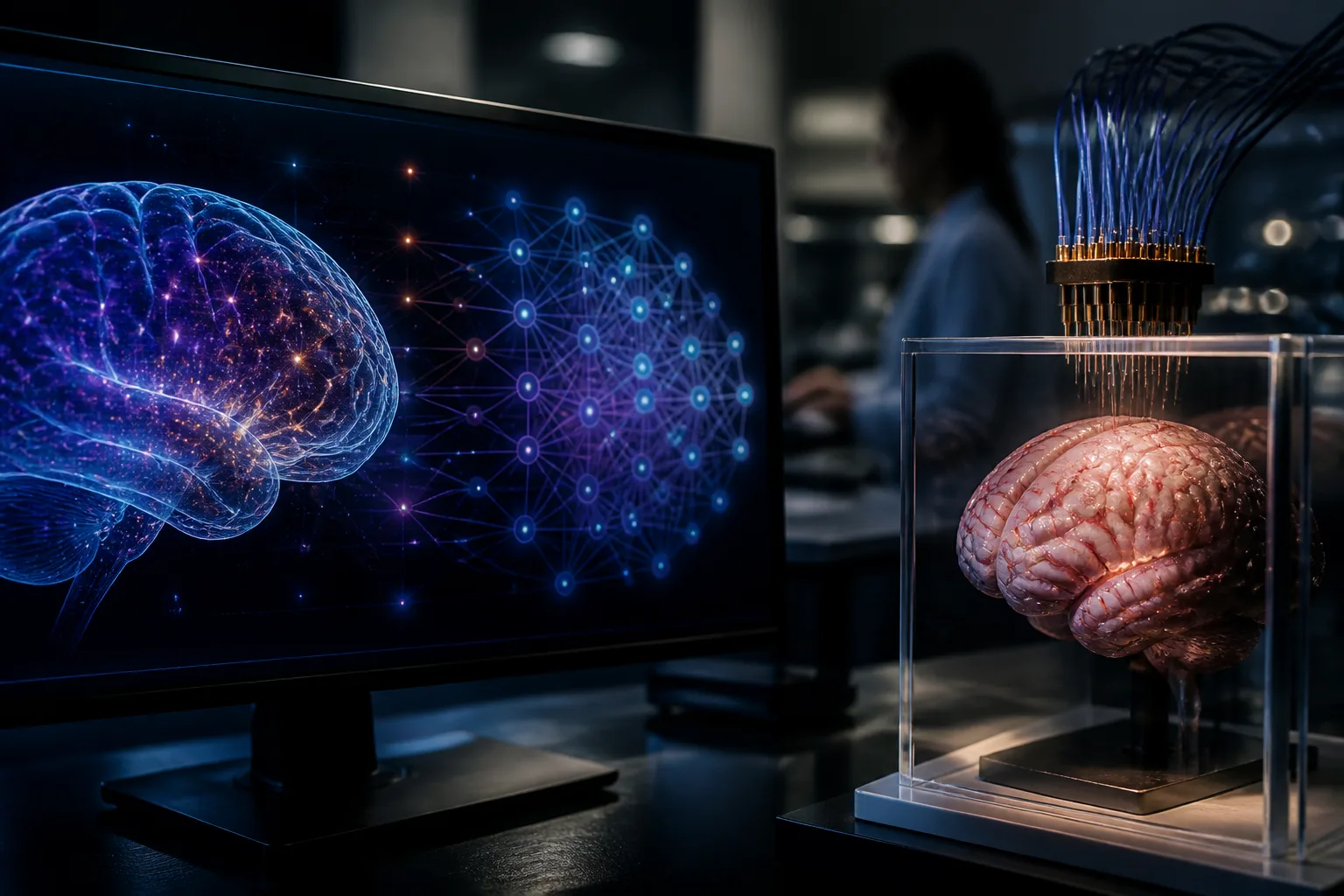
Recent technological progress has enabled scientists to record activity from large groups of neurons simultaneously. This capability has sparked the creation of numerous methods aimed at comparing neural activity patterns, whether between different brains or artificial intelligence (AI) models.
Challenges in Defining Neural Similarity
Despite these advances, researchers continue to face challenges in translating quantitative measures of similarity into meaningful mechanistic insights. Simply put, while we can calculate how alike two neural datasets are, understanding what these similarities reveal about underlying brain function or AI model operation remains complex.
Implications for Neuroscience and AI Research
Developing robust ways to compare neural dynamics is crucial for both neuroscience and AI. For neuroscience, it can help elucidate how different brains process information or respond to stimuli. In AI, it may assist in evaluating how closely models mimic biological neural activity or in comparing different architectures.
Looking Ahead
Ongoing research is focused on refining these comparison techniques to move beyond surface-level metrics toward deeper mechanistic understanding. This progress holds promise for advancing our knowledge of brain function and improving AI systems.
For more detailed insights on this topic, see the original discussion at The Transmitter.
Download the images in this article