Skip to content
Love Beyond Words - autismwords.com Love Beyond Words - autismwords.com Love Beyond Words - autismwords.com

Supporting children with autism through education and care

Love Beyond Words - autismwords.com Love Beyond Words - autismwords.com Love Beyond Words - autismwords.com

Supporting children with autism through education and care

  • Learning & Support
    • Communication Skills
    • Daily Living Skills
    • Emotional Regulation
    • Everyday Challenges
    • Learning Through Play
    • Parent Education & Advocacy
    • Positive Behavior Support
    • Routines & Transitions
    • Social Skills
    • Speech & Language
  • Autism News & Perspectives
  • Learning & Support
    • Communication Skills
    • Daily Living Skills
    • Emotional Regulation
    • Everyday Challenges
    • Learning Through Play
    • Parent Education & Advocacy
    • Positive Behavior Support
    • Routines & Transitions
    • Social Skills
    • Speech & Language
  • Autism News & Perspectives
Close

Search

  • https://www.facebook.com/
  • https://twitter.com/
  • https://t.me/
  • https://www.instagram.com/
  • https://youtube.com/
Love Beyond Words - autismwords.com Love Beyond Words - autismwords.com Love Beyond Words - autismwords.com

Supporting children with autism through education and care

Love Beyond Words - autismwords.com Love Beyond Words - autismwords.com Love Beyond Words - autismwords.com

Supporting children with autism through education and care

  • Learning & Support
    • Communication Skills
    • Daily Living Skills
    • Emotional Regulation
    • Everyday Challenges
    • Learning Through Play
    • Parent Education & Advocacy
    • Positive Behavior Support
    • Routines & Transitions
    • Social Skills
    • Speech & Language
  • Autism News & Perspectives
  • Learning & Support
    • Communication Skills
    • Daily Living Skills
    • Emotional Regulation
    • Everyday Challenges
    • Learning Through Play
    • Parent Education & Advocacy
    • Positive Behavior Support
    • Routines & Transitions
    • Social Skills
    • Speech & Language
  • Autism News & Perspectives
Close

Search

  • https://www.facebook.com/
  • https://twitter.com/
  • https://t.me/
  • https://www.instagram.com/
  • https://youtube.com/
Home/Learning & Support/Routines & Transitions/Leaving the Playground: 6-Step Visual Routine to Support Smooth Transitions
Leaving the Playground: 6-Step Visual Routine to Support Smooth Transitions
Routines & Transitions

Leaving the Playground: 6-Step Visual Routine to Support Smooth Transitions

August 22, 2026 2 Min Read
0

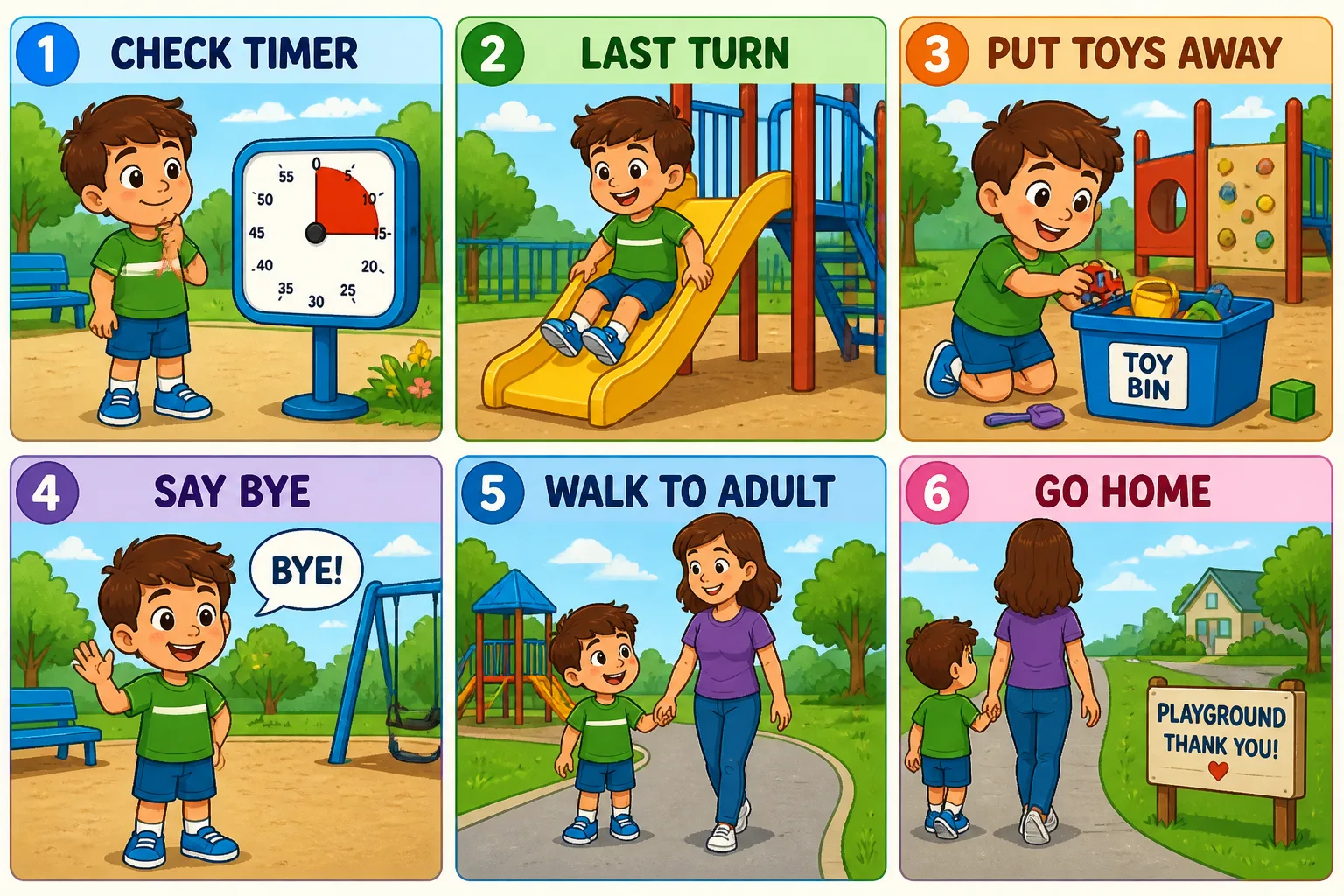
Leaving the playground can be a challenging transition for many young children, especially those who thrive on predictability and clear communication. Using a visual routine for leaving the playground helps children understand what is happening now, what comes next, and how to finish their playtime calmly and confidently. This 6-step visual routine breaks down the process into manageable, concrete actions that support smooth transitions and reduce anxiety.

1. Check Timer

Begin by showing the child a timer or clock to indicate how much time is left at the playground. Visual timers or countdowns provide a clear, concrete way to prepare for the upcoming change and reduce surprises. For example, “5 more minutes, then we leave.”

2. Last Turn

Encourage the child to take one last turn on their favorite playground equipment. This step helps the child feel a sense of closure and control over the transition.

3. Put Toys Away

Support the child in putting away any toys or items they brought to the playground. This concrete action signals the end of playtime and helps establish responsibility and routine.

4. Say Bye

Teach the child to say goodbye to the playground, friends, or adults present. This social cue reinforces the transition and helps the child process the change emotionally.

5. Walk to Adult

Guide the child to walk over to the adult or caregiver who will accompany them home. This step emphasizes safety and adult support during transitions in public spaces.

6. Go Home

Finally, the child and adult leave the playground together, moving toward home or the next destination. This step completes the transition and sets the stage for the next routine.

Supporting Your Child Through the Leaving Playground Routine

To help your child navigate this routine smoothly, preview the visual schedule before heading to the playground and remind them of the steps as time progresses. Use consistent simple language like “5 more minutes,” “last turn,” and “time to go home.” Visual timers can be very helpful for children who benefit from seeing time pass. Offer choices when possible, such as which toy to put away first or which goodbye gesture to use. Allow your child processing time and avoid rushing or forcing compliance. Praise their participation and gradually reduce adult support as they become more independent with this routine.

For more strategies on supporting transitions and communication, see our article on How Clear Communication Helps Secure Classroom Accommodations for Your Autistic Child.

What strategies have you found helpful when leaving the playground with your child? Share your experiences below!

Download the images in this article

  • Leaving the Playground: 6-Step Visual Routine to Support Smooth Transitions

Tags:

autism supportchild transitionscommunicationleaving the playground routineplayground transitionpredictable routinesvisual routine
Other Articles
How Clear Communication Helps Secure Classroom Accommodations for Your Autistic Child
Previous

How Clear Communication Helps Secure Classroom Accommodations for Your Autistic Child

No Comment! Be the first one.

Leave a Reply Cancel reply

Your email address will not be published. Required fields are marked *

AAC asking for a break asking for help autism education autism parenting autism parenting tips autism research Autism Science Foundation autism spectrum disorder autism support child development child independence child transitions communication communication phrases communication skills coping strategies daily living skills documenting progress early childhood development emotional regulation fine motor skills hygiene routine independence language development learning through play neuroscience parent advocacy parenting tips parent preparation positive behavior support predictable routines problem solving replacement skills self-advocacy sensory sensitivities sensory support snack time routine special education speech and language step-by-step routine visual learning visual learning set visual routine young children

  • Leaving the Playground: 6-Step Visual Routine to Support Smooth Transitions
    Leaving the Playground: 6-Step Visual Routine to Support Smooth Transitions
    Support your child’s smooth transition when leaving the playground with this clear 6-step visual routine. Teach predictability, communication, and independence.
  • How Clear Communication Helps Secure Classroom Accommodations for Your Autistic Child
    How Clear Communication Helps Secure Classroom Accommodations for Your Autistic Child
    Clear communication with teachers helps parents secure effective classroom accommodations through the IEP process for their autistic child.
  • Tracking Concerns About My Child: 6 Practical Parent Steps
    Tracking Concerns About My Child: 6 Practical Parent Steps
    Learn 6 practical steps for parents to track concerns about their child effectively. Observe, document, and identify patterns to support advocacy and collaboration with professionals.
  • When I Make a Mistake: 6 Steps to Help Kids Cope
    When I Make a Mistake: 6 Steps to Help Kids Cope
    Help your child cope with mistakes using 6 practical steps: notice, pause, ask for help, fix what I can, try again, and move on. Support emotional growth with these strategies.
  • When I'm Excited: 6 Steps to Recognize and Manage Excitement in Young
    When I’m Excited: 6 Steps to Recognize and Manage Excitement in Young Children
    Help your child recognize and manage excitement with 6 simple steps: notice body signals, say "I'm excited," communicate safely, choose safe actions, ask for help, and take breaks.
Transition from Playtime to Snack Time: 6-Step Visual Routine for Young Children
August 21, 2026
Preparing for Loud Events: 6 Sensory Support Steps for Children
42 views
Expressing Discomfort and Asking for Help: 6 Essential Communication Phrases for Young
Expressing Discomfort and Asking for Help: 6 Essential Communication Phrases for Young Children
40 views
Using a Calm Voice: 5 Positive Steps for Young Children
31 views
Transition from Playtime to Snack Time: 6-Step Visual Routine for Young Children
28 views
Preparing for an IEP Meeting: 6 Essential Parent Steps for Success
27 views

Content on this website is created with the assistance of artificial intelligence (AI), while some portions are still reviewed and overseen by humans. All content and resources are provided completely free of charge.

Some information may be referenced or cited from reputable sources. Whenever possible, we will clearly identify the sources used within each article.

If you have any questions, feedback, or would like to contact us, please email: info@autismwords.com

Copyright 2026 — Love Beyond Words - autismwords.com. All rights reserved. Blogsy WordPress Theme

Join Us on the Journey to Understanding Autism

Subscribe to receive curated autism knowledge, lessons, and the latest news — delivered to you regularly.

We promise to send only helpful autism-related information and knowledge — no ads, no spam. You can unsubscribe anytime.

Thank you for subscribing!