Skip to content
Love Beyond Words - autismwords.com Love Beyond Words - autismwords.com Love Beyond Words - autismwords.com

Supporting children with autism through education and care

Love Beyond Words - autismwords.com Love Beyond Words - autismwords.com Love Beyond Words - autismwords.com

Supporting children with autism through education and care

  • Learning & Support
    • Communication Skills
    • Daily Living Skills
    • Emotional Regulation
    • Everyday Challenges
    • Learning Through Play
    • Parent Education & Advocacy
    • Positive Behavior Support
    • Routines & Transitions
    • Social Skills
    • Speech & Language
  • Autism News & Perspectives
  • Hero News
  • Learning & Support
    • Communication Skills
    • Daily Living Skills
    • Emotional Regulation
    • Everyday Challenges
    • Learning Through Play
    • Parent Education & Advocacy
    • Positive Behavior Support
    • Routines & Transitions
    • Social Skills
    • Speech & Language
  • Autism News & Perspectives
  • Hero News
Close

Search

  • https://www.facebook.com/
  • https://twitter.com/
  • https://t.me/
  • https://www.instagram.com/
  • https://youtube.com/
Love Beyond Words - autismwords.com Love Beyond Words - autismwords.com Love Beyond Words - autismwords.com

Supporting children with autism through education and care

Love Beyond Words - autismwords.com Love Beyond Words - autismwords.com Love Beyond Words - autismwords.com

Supporting children with autism through education and care

  • Learning & Support
    • Communication Skills
    • Daily Living Skills
    • Emotional Regulation
    • Everyday Challenges
    • Learning Through Play
    • Parent Education & Advocacy
    • Positive Behavior Support
    • Routines & Transitions
    • Social Skills
    • Speech & Language
  • Autism News & Perspectives
  • Hero News
  • Learning & Support
    • Communication Skills
    • Daily Living Skills
    • Emotional Regulation
    • Everyday Challenges
    • Learning Through Play
    • Parent Education & Advocacy
    • Positive Behavior Support
    • Routines & Transitions
    • Social Skills
    • Speech & Language
  • Autism News & Perspectives
  • Hero News
Close

Search

  • https://www.facebook.com/
  • https://twitter.com/
  • https://t.me/
  • https://www.instagram.com/
  • https://youtube.com/
Home/Autism News & Perspectives/Study Links Changes in Brain Glymphatic Function and Network Connectivity to Autism Prognosis
Study Links Changes in Brain Glymphatic Function and Network Connectivity to Autism
Autism News & Perspectives

Study Links Changes in Brain Glymphatic Function and Network Connectivity to Autism Prognosis

By David Anderson
October 17, 2026 2 Min Read
0

New Insights Into Autism Spectrum Disorder Brain Function

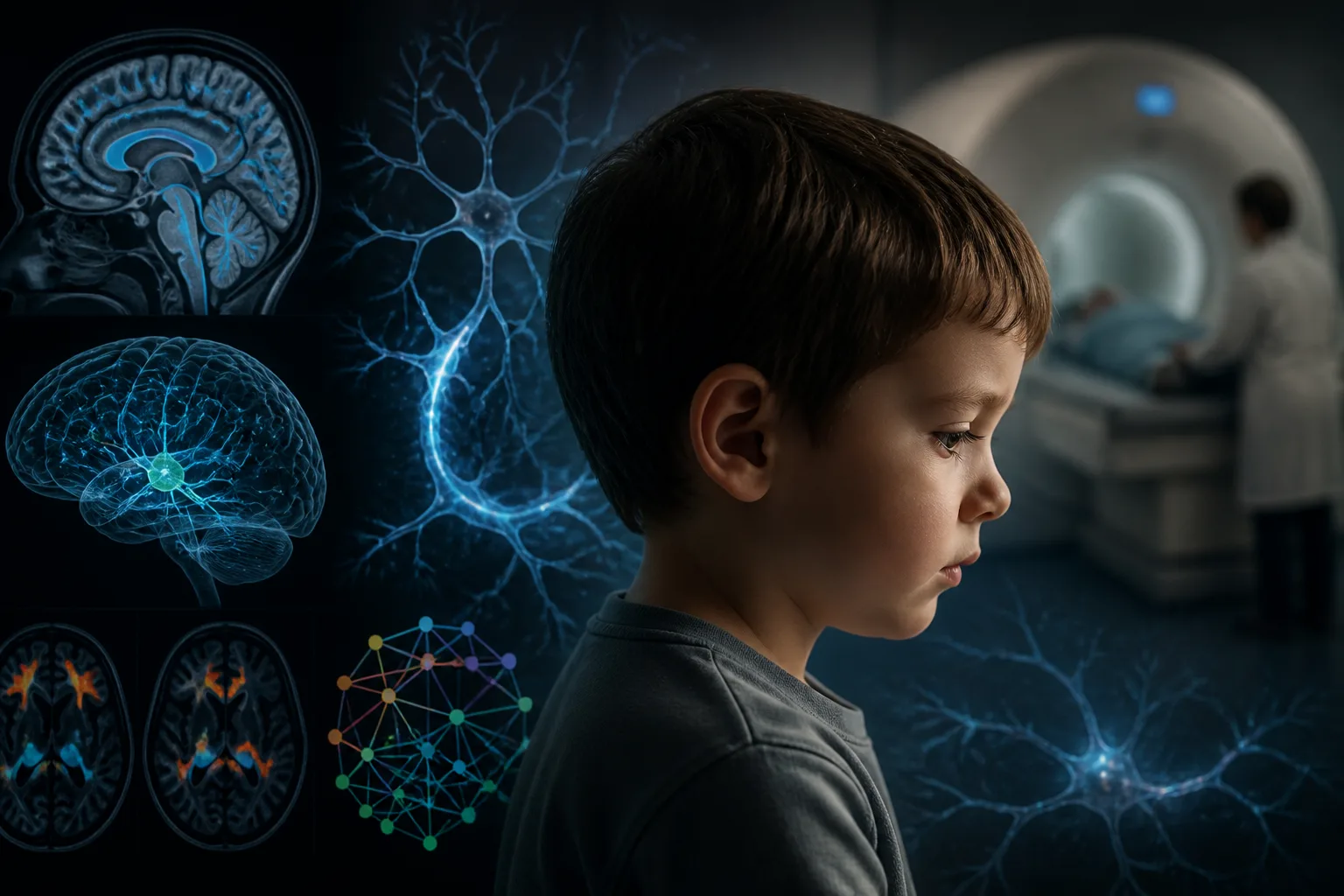
A recent longitudinal study has explored how alterations in the brain’s glymphatic system and functional network connectivity (FNC) relate to clinical outcomes in children with autism spectrum disorder (ASD). The research suggests that these brain measures may serve as promising biomarkers for tracking symptom progression and prognosis in ASD.

Study Design and Participants

The investigation combined cross-sectional and two-year follow-up analyses involving 50 children diagnosed with ASD and 50 typically developing controls. Researchers assessed glymphatic function using two imaging-based metrics: the along the perivascular space (ALPS) index and global blood-oxygen-level-dependent to cerebrospinal fluid (gBOLD-CSF) coupling. Functional network connectivity was also evaluated to understand brain network interactions.

Key Findings on Glymphatic Function and Network Connectivity

At the initial assessment, children with ASD exhibited significantly lower ALPS index and gBOLD-CSF coupling values compared to controls, indicating reduced glymphatic function. Additionally, widespread decreases in functional network connectivity were observed in the ASD group.

During the two-year follow-up, 40 ASD participants were reassessed. Results showed an overall increase in glymphatic function over time among these children. Notably, greater improvements in the ALPS index correlated with more substantial reductions in autism symptom severity, as measured by the Autism Diagnostic Observation Schedule calibrated severity score (ADOS-CSS).

Within the subgroup of children whose symptoms improved, four specific functional network connections, including those between the default mode network (DMN) and dorsal attention network (DAN), strengthened over time. Conversely, no consistent connectivity changes were detected in children without symptom improvement.

Implications for Prognosis and Future Research

Baseline measures of inter-network connectivity showed associations with symptom improvement in simpler analyses, although these relationships did not hold in more complex multivariate models. Mediation analysis revealed an indirect link between initial gBOLD-CSF coupling and long-term symptom reduction mediated by changes in DMN-DAN connectivity.

These findings highlight that both glymphatic function and functional brain networks are altered in ASD but may improve alongside clinical symptoms. This suggests potential utility for these imaging markers in predicting and monitoring ASD prognosis.

Considerations and Limitations

While the study provides valuable longitudinal data, the sample size for follow-up was limited to 40 ASD participants, and causal relationships cannot be definitively established. Further research is needed to validate these biomarkers and understand their mechanistic roles in ASD.

For more detailed information, see the original study published in Psychiatry and Clinical Neurosciences at https://pubmed.ncbi.nlm.nih.gov/42888514/.

Download the images in this article

  • Study Links Changes in Brain Glymphatic Function and Network Connectivity to Autism

Tags:

ADOS-CSSASD prognosisautism spectrum disorderbrain imagingfunctional network connectivityglymphatic systemlongitudinal studyneurodevelopmental disorders
Author

David Anderson

Follow Me
Other Articles
Zebrafish Model Reveals Gut and Brain Neurochemical Changes Linked to Autism Traits
Previous

Zebrafish Model Reveals Gut and Brain Neurochemical Changes Linked to Autism Traits

Global Trends in Non-Pharmacological Interventions for Autism Spectrum Disorder: Insights from 2001
Next

Global Trends in Non-Pharmacological Interventions for Autism Spectrum Disorder: Insights from 2001 to 2025

No Comment! Be the first one.

Leave a Reply Cancel reply

Your email address will not be published. Required fields are marked *

ADHD ASD autism autism communication autism diagnosis autism parenting autism research autism spectrum disorder autism support autistic adults autistic children child communication child development child health child independence communication communication skills communication support communication supports communication tools coping strategies daily living skills early intervention emotional regulation fine motor skills Functional Communication intellectual disability language development learning through play mental health mouse model neurodevelopment neurodevelopmental disorders neurodiversity neuroinflammation parent advocacy positive behavior support sensory accommodations sensory needs sensory processing sensory support sex differences visual learning set visual routine young children

  • Microglial Dysfunction Linked to Fragile X Syndrome Through Impaired Lysosomal Activity
    Microglial Dysfunction Linked to Fragile X Syndrome Through Impaired Lysosomal Activity
    Research reveals that microglial dysfunction due to impaired lysosomal activity regulated by FMRP contributes to fragile X syndrome features, highlighting new therapeutic targets.
  • Non-Pharmacological Interventions Show Domain-Specific Cognitive Benefits in Children with Autism Spectrum Disorder
    Non-Pharmacological Interventions Show Domain-Specific Cognitive Benefits in Children with Autism Spectrum Disorder
    A recent systematic review found that non-pharmacological interventions may improve working memory and social-emotional cognition in children with autism spectrum disorder, though effects vary by cognitive domain.
  • Australian Study Reveals High Prevalence of Mental Health Conditions in Prader-Willi Syndrome
    Australian Study Reveals High Prevalence of Mental Health Conditions in Prader-Willi Syndrome
    An Australian study found that 73% of individuals with Prader-Willi syndrome experience mental health conditions, notably anxiety, OCD, and depression, highlighting the need for early intervention.
  • Brain Connectivity Patterns May Help Predict Social Skills in Young Children with
    Brain Connectivity Patterns May Help Predict Social Skills in Young Children with Autism
    A recent study found that brain connectivity patterns, especially within the default mode network, can predict social functioning differences in young children with autism spectrum disorder.
  • New Insights into OPHN1-Related Neurodevelopmental Disorders: Clinical and Genetic Discoveries Including Novel
    New Insights into OPHN1-Related Neurodevelopmental Disorders: Clinical and Genetic Discoveries Including Novel Variants
    A recent study reports novel OPHN1 gene variants linked to intellectual disability and neurodevelopmental disorders, expanding understanding of clinical features and genetic diversity.
Microglial Dysfunction Linked to Fragile X Syndrome Through Impaired Lysosomal Activity
October 18, 2026
Non-Pharmacological Interventions Show Domain-Specific Cognitive Benefits in Children with Autism Spectrum Disorder
October 18, 2026
Australian Study Reveals High Prevalence of Mental Health Conditions in Prader-Willi Syndrome
October 18, 2026
Brain Connectivity Patterns May Help Predict Social Skills in Young Children with
Brain Connectivity Patterns May Help Predict Social Skills in Young Children with Autism
October 18, 2026
Study Reveals Sex-Specific Behavioral Changes in Mice Lacking α5-Nicotinic Acetylcholine Receptors
185 views
Preparing for Loud Events: 6 Sensory Support Steps for Children
141 views
Expressing Discomfort and Asking for Help: 6 Essential Communication Phrases for Young
Expressing Discomfort and Asking for Help: 6 Essential Communication Phrases for Young Children
134 views
Feeling Worried: 6 Steps to Help Young Children Recognize and Manage Worry
132 views
Using a Calm Voice: 5 Positive Steps for Young Children
130 views

Content on this website is created with the assistance of artificial intelligence (AI), while some portions are still reviewed and overseen by humans. All content and resources are provided completely free of charge.

Some information may be referenced or cited from reputable sources. Whenever possible, we will clearly identify the sources used within each article.

If you have any questions, feedback, or would like to contact us, please email: info@autismwords.com

Copyright 2026 — Love Beyond Words - autismwords.com. All rights reserved. Blogsy WordPress Theme

Join Us on the Journey to Understanding Autism

Subscribe to receive curated autism knowledge, lessons, and the latest news — delivered to you regularly.

We promise to send only helpful autism-related information and knowledge — no ads, no spam. You can unsubscribe anytime.

Thank you for subscribing!