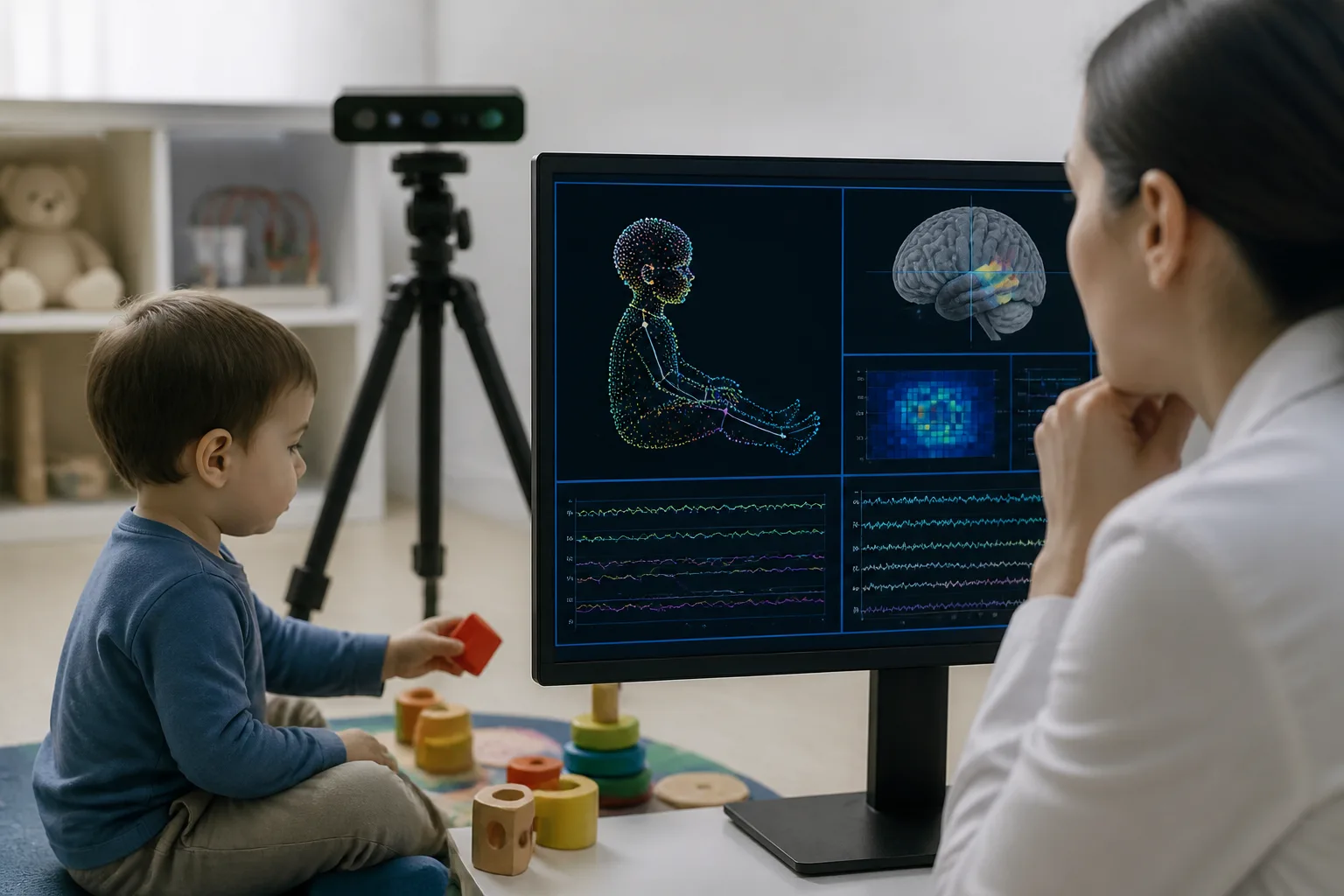
Systematic Review Highlights Promise and Challenges of Machine Learning for Early Autism Detection

Overview of Machine Learning in Early Autism Spectrum Disorder Detection
Autism spectrum disorder (ASD) is a complex neurodevelopmental condition where early identification can significantly support timely intervention and developmental assessment. A recent systematic review examined the current landscape of machine learning (ML) and deep learning (DL) methods aimed at early ASD detection, focusing on pediatric populations and integrating perspectives from both clinical pediatrics and engineering fields.
Scope and Methodology of the Review
The researchers conducted comprehensive searches in PubMed and IEEE Xplore databases up to July 29, 2026, initially retrieving 1,249 records after removing duplicates and excluding those beyond the cutoff date. Following a rigorous screening process, 237 studies were deemed eligible for detailed analysis based on titles, abstracts, and available metadata.
Variety of Data Modalities and Model Approaches
The included studies utilized diverse data sources and modalities, such as:
- Questionnaires and clinical information
- Home video and behavioral analyses
- Speech and acoustic features
- Eye tracking
- Electroencephalography (EEG) and magnetoencephalography (MEG)
- Magnetic resonance imaging (MRI) and functional MRI (fMRI)
- Wearable sensors
- Multimodal approaches combining several data types
Diagnostic Performance and Validation Challenges
The diagnostic accuracy reported across these studies varied widely depending on the population studied, data modalities employed, machine learning algorithms used, and validation methods applied. Some retrospective analyses demonstrated very high classification accuracy. For instance, one ML model based on medical and background information achieved an area under the receiver operating characteristic curve (AUROC) of 0.895 during development and 0.790 in independent validation. Another AI-based diagnostic system, evaluated in a real-world setting, reported a sensitivity of 99.1% and specificity of 81.6% for determinate outputs.
However, independent and cross-cultural validations generally showed more variable results, highlighting the challenges of generalizing these models across diverse populations and settings.
Barriers to Clinical Translation
Despite promising results, several significant obstacles remain before ML/DL tools can be routinely integrated into clinical practice for ASD detection. These include:
- External validation on diverse populations
- Prevention of data leakage and addressing dataset shift
- Ensuring explainability of AI decisions
- Maintaining privacy and fairness
- Reproducibility of findings
- Managing computational requirements
- Integration into existing clinical workflows
The review emphasized that current evidence does not support replacing specialist clinical assessments with autonomous AI diagnosis but suggests ML and DL may serve as valuable adjunctive screening and risk-classification tools.
Recommendations for Future Research
The authors advocate for future studies to focus on prospective multicenter validation, transparent and standardized reporting, independent testing, clinically meaningful explainability, privacy-preserving techniques, evaluation of health equity impacts, calibration of models, and real-world deployment within pediatric clinical workflows.
Conclusion
Machine learning approaches hold considerable promise for enhancing early ASD detection, but methodological heterogeneity and validation gaps currently limit clinical application. Careful, rigorous research addressing these challenges is essential to realize the potential benefits for families and healthcare providers.
For more detailed information, see the original systematic review at PubMed.
Download the images in this article