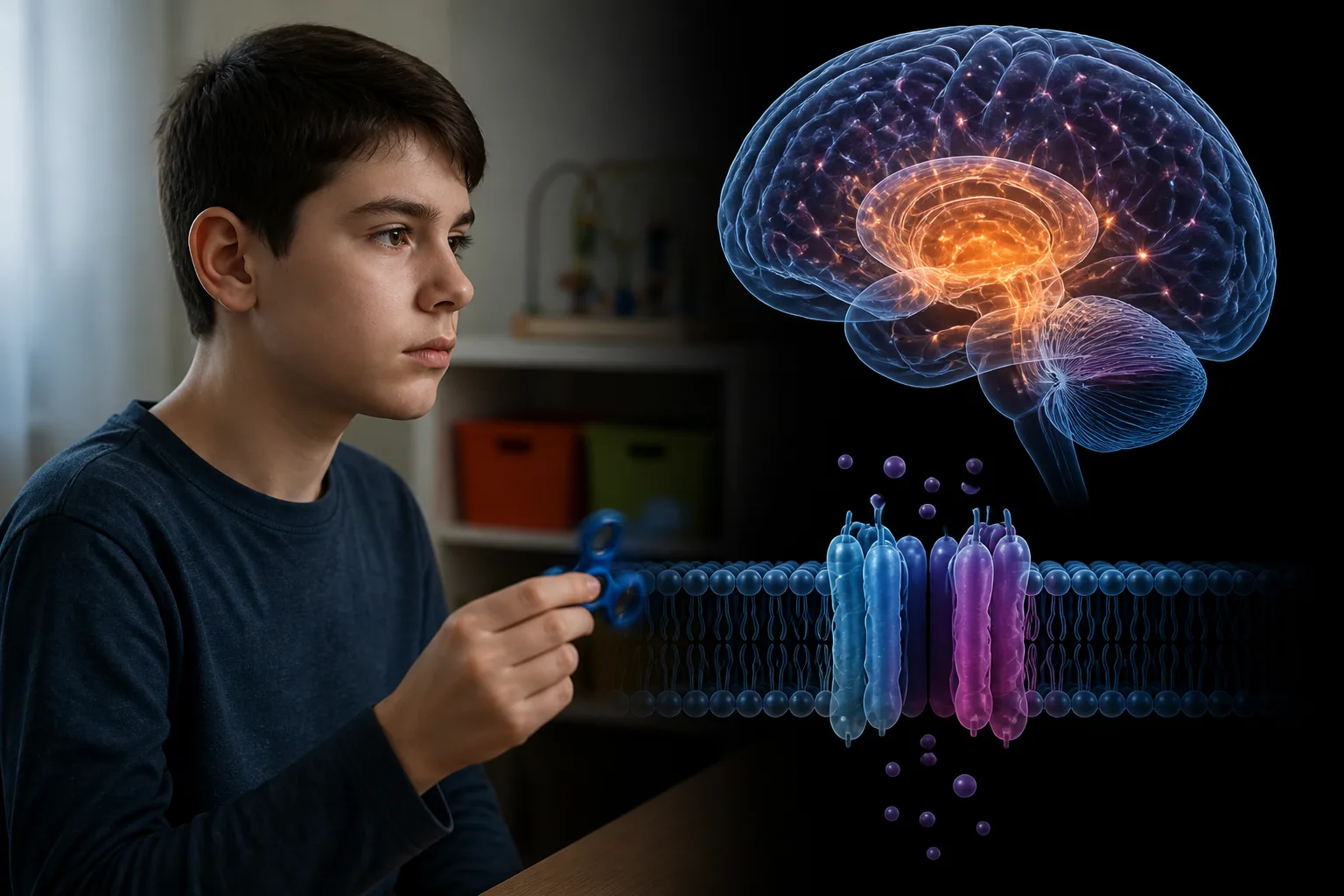
New KCNA1 Gene Variant Linked to Autism Spectrum Disorder and Tremor Shows Complex Effects on Brain Ion Channels

Discovery of a Novel KCNA1 Variant in a Teenager with Autism and Tremor
Researchers have identified a previously unreported genetic variant in the KCNA1 gene in a 16-year-old patient presenting with autism spectrum disorder (ASD), borderline intellectual disability, and tremor. Unlike many known KCNA1 mutations, this patient did not experience episodic ataxia or epilepsy, conditions commonly associated with changes in this gene.
Functional Impact on Kv1.1 Potassium Channels
The KCNA1 gene encodes the Kv1.1 potassium channel, which plays a crucial role in regulating neuronal excitability. The newly identified variant, termed A401T, was studied using HEK293 cells to understand its effects on channel function. The variant exhibited a complex profile: it significantly reduced potassium currents and slowed channel activation, changes consistent with loss-of-function (LOF). Simultaneously, it accelerated a process called C-type inactivation and shifted channel activation to more negative voltages, indicating gain-of-function (GOF) effects.
Expanding the Clinical and Functional Spectrum of KCNA1 Variants
This mixed LOF/GOF pattern is unusual among KCNA1 variants, which have traditionally been linked to neurological disorders such as episodic ataxia and epileptic encephalopathies. The association of this variant with ASD and tremor broadens the known clinical manifestations related to KCNA1 mutations. These findings suggest that Kv1.1 channel dysfunction may contribute to neurodevelopmental conditions beyond previously recognized syndromes.
Implications for Families and Future Research
While this discovery highlights a potential genetic factor in ASD and tremor, it is important to note that this is a single case study. The complex effects of the A401T variant on channel function underscore the need for further research to clarify how such mutations influence brain development and neurological symptoms. Families affected by similar conditions may benefit from genetic counseling and consideration of KCNA1 testing as part of a broader diagnostic workup.
Limitations and Cautions
As this report is based on one patient and in vitro cell studies, the direct causal relationship between the A401T variant and the clinical symptoms remains to be fully established. Additional studies involving more patients and in vivo models are necessary to confirm these findings and to understand the mechanisms involved.
For more detailed information, see the original research article published ahead of print in Annals of Clinical and Translational Neurology: source.
Download the images in this article