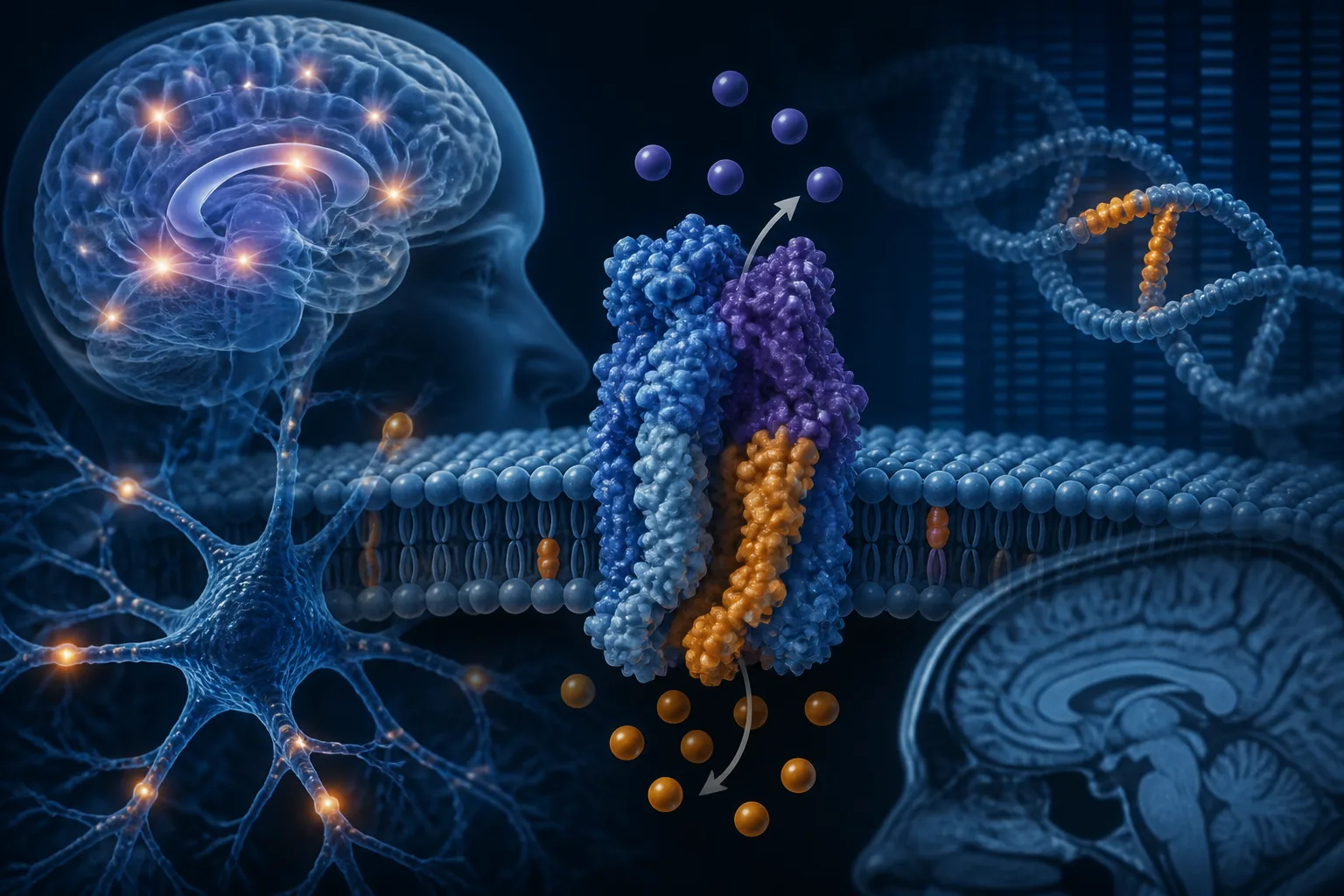
Genetic Variants in Na+,K+-ATPase Linked to Diverse Neurological Disorders: A Comprehensive Review

Overview of Na+,K+-ATPase and Neurological Health
Neurological disorders often involve complex symptoms linked to disruptions in cellular ion balance. A key player in maintaining this balance is the Na+,K+-ATPase enzyme, which regulates electrochemical gradients critical for nerve cell function and brain activity.
Systematic Review of Genetic Variants
A recent systematic review compiled and analyzed human studies investigating genetic variants in Na+,K+-ATPase subunits and their associations with neurological conditions. This review consolidated findings from 61 studies, identifying 123 unique variants across four subunits of the enzyme.
ATP1A1 (α1) Variants
Mutations in the ATP1A1 gene have been linked to several neurological disorders, including epilepsy, developmental delays, autism spectrum disorder, and Charcot-Marie-Tooth disease (CMT), a hereditary neuropathy affecting peripheral nerves.
ATP1A2 (α2) Variants
Variants in ATP1A2 are primarily associated with familial hemiplegic migraine type 2 (FHM2) and sporadic hemiplegic migraine (SHM), as well as epilepsy. Notably, biallelic loss-of-function mutations in ATP1A2 can lead to severe neurodevelopmental issues such as polymicrogyria, a malformation of the brain cortex, and microcephaly, characterized by reduced brain size.
ATP1A3 (α3) Variants
The ATP1A3 gene exhibits the widest range of neurological phenotypes. Variants here have been connected to alternating hemiplegia of childhood (AHC), rapid-onset dystonia-parkinsonism (RDP), cerebellar ataxia, childhood-onset schizophrenia, and CAPOS syndrome—a condition involving cerebellar ataxia, areflexia, foot deformities, optic nerve atrophy, and sensorineural deafness.
FXYD2 Gene Variant
Additionally, the Gly41Arg variant in the FXYD2 gene, which encodes a regulatory subunit of Na+,K+-ATPase, has been implicated in isolated dominant hypomagnesemia (IDH), a condition that may present neurological symptoms due to magnesium imbalance.
Implications for Research and Clinical Practice
This structured summary of genetic variants provides a valuable reference for researchers and clinicians exploring the molecular underpinnings of neurological disorders related to ion transport dysfunction. Understanding these associations may guide future diagnostic and therapeutic strategies.
Limitations and Considerations
While this review offers a comprehensive overview, it is important to recognize that genetic associations do not necessarily imply causation. Further functional studies are needed to clarify how these variants contribute to disease mechanisms. Additionally, clinical presentations can vary widely even among individuals with the same genetic variant.
For more detailed information, the original review can be accessed here.
Download the images in this article