Supporting Young Children Who Have Difficulty with Bedtime Routines: 5 Positive Steps for Parents

Bedtime can be a challenging time for many young children, including those who are autistic or have additional communication, sensory, or emotional needs. Supporting young children who have difficulty with bedtime routines requires understanding what the behavior might look like, why it happens, and how to respond with positive, respectful strategies. This article will explore common reasons behind bedtime challenges and offer five practical steps parents can use to support their child through this transition with patience and care.
nn
What Bedtime Difficulty May Look Like
n
Children who struggle with bedtime routines may resist going to bed, refuse to stop playing, cry, yell, or have trouble settling down. Some may repeatedly ask for more time, get up frequently, or show signs of anxiety or sensory discomfort. These behaviors are often the child’s way of communicating that they need help, more time, or that something feels overwhelming.
nn
Possible Reasons and Common Triggers
n
Understanding what happens before bedtime difficulties begin is essential. Common triggers include:
n
- n
- Sudden changes in routine or environment
- Sensory sensitivities to light, sound, or bedding textures
- Difficulty understanding expectations or the sequence of bedtime tasks
- Feeling overwhelmed or anxious about separation or the dark
- Communication challenges making it hard to express needs like needing a break or more time
n
n
n
n
n
n
Recognizing these triggers helps adults anticipate and prevent challenging moments.
nn
What the Child May Be Communicating
n
Behaviors around bedtime often communicate needs such as:
n
- n
- More Time: The child may not be ready to stop an enjoyable activity.
- Help: They might need assistance with tasks like changing clothes or brushing teeth.
- Break or Space: Overwhelm or sensory discomfort may make the child want to pause or have some quiet time.
- Fear or Anxiety: The child may be scared of the dark or separation.
n
n
n
n
n
Respecting these messages and providing appropriate support is key.
nn
Prevention Strategies Parents Can Use
n
Preventing bedtime difficulties involves creating a calm, predictable environment and clear expectations. Strategies include:
n
- n
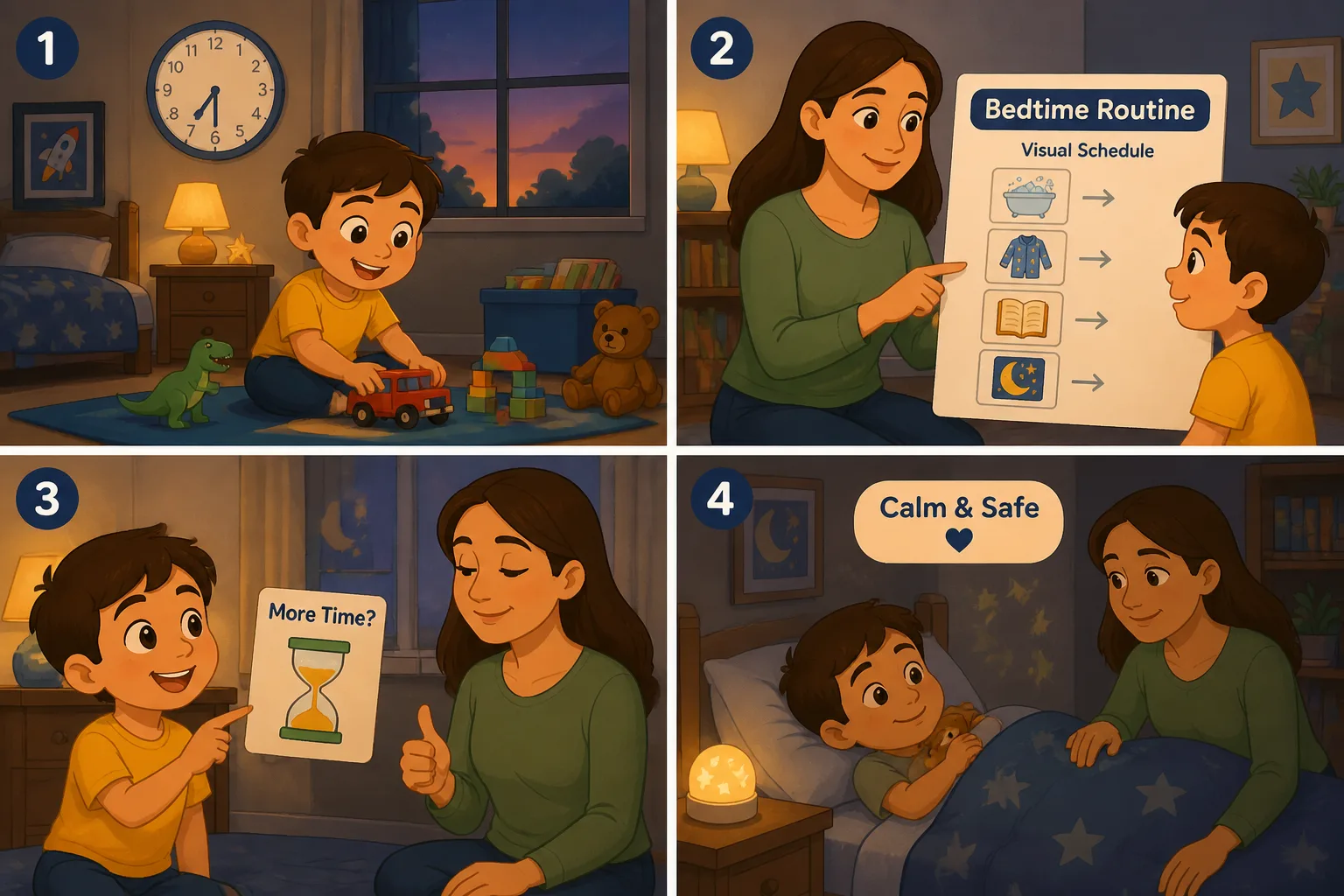
- Establish a Visual Bedtime Routine: Use picture schedules or simple charts to show each step, such as putting on pajamas, brushing teeth, and reading a book. Visuals help children understand and anticipate what comes next.
- Offer Choices: Allow the child to choose between two pajamas or books to increase their sense of control.
- Prepare the Environment: Dim lights, reduce noise, and use comfortable bedding to accommodate sensory needs.
- Use Consistent Timing: Try to keep bedtime and pre-bedtime activities at the same time daily to build predictability.
- Teach Communication for Needs: Introduce simple words, signs, or AAC tools for the child to request “more time,” “help,” or “break.”
n
n
n
n
n
nn
Replacement Skills to Teach
n
Teaching useful replacement skills supports the child in expressing their needs safely and effectively:
n
- n
- Requesting More Time: Teach the child to say or sign “more time” when they want to continue an activity briefly before bedtime.
- Asking for Help: Encourage use of communication aids or gestures to request assistance with tasks.
- Requesting a Break: Help the child signal if they feel overwhelmed and need a quiet moment.
- Using Comfort Objects: Allow a favorite toy or blanket to help soothe anxiety.
n
n
n
n
nn
How Adults Can Respond During Difficult Moments
n
When bedtime challenges arise, adults can support the child by:
n
- n
- Staying calm and using a gentle tone to reduce anxiety.
- Acknowledging the child’s communication, e.g., “I see you want more time. Let’s have five more minutes, then bedtime.”
- Offering a clear, simple choice or visual cue to guide the next step.
- Providing reassurance and physical comfort if appropriate.
- Reducing demands temporarily if the child is overwhelmed, then gently reintroducing the routine.
n
n
n
n
n
nn
What to Do After the Child Is Calm
n
Once the child settles, adults can:
n
- n
- Reinforce the child’s successful communication or cooperation with praise or a favorite activity.
- Review the bedtime routine visuals together to reinforce understanding.
- Prepare for the next bedtime by noting what worked well and what could be adjusted.
n
n
n
nn
Practicing During Calm Times
n
Use calm moments to practice bedtime routines and communication skills without pressure. Role-play steps, use visuals, and celebrate small successes to build confidence and reduce anxiety.
nn
Environmental Adjustments
n
Consider sensory accommodations such as blackout curtains, white noise machines, or weighted blankets if appropriate and preferred by the child. Adjust lighting and temperature to the child’s comfort.
nn
What Adults Should Avoid
n
- n
- Do not force the child to comply through threats, punishment, or harsh words.
- Avoid rushing or abrupt transitions without warning.
- Do not insist on eye contact or verbal speech if the child uses other communication methods.
- Refrain from ignoring the child’s communication or distress signals.
n
n
n
n
nn
Individual Differences and When to Seek Professional Support
n
Each child is unique. Some children may need more sensory supports, others more communication aids. If bedtime difficulties are severe, persistent, or involve safety concerns, consider consulting a pediatrician, occupational therapist, or behavior specialist for tailored guidance.
nn
Key Takeaway
n
Bedtime challenges often communicate important needs. By preventing triggers, teaching clear communication, and responding with calm support, parents can help their child feel safe, understood, and ready for a restful night.
nn
Parent Engagement Question: What small change could you try tonight to make your child’s bedtime routine feel more predictable and comfortable? Share your ideas or experiences with us!
Download the images in this article