Supporting Young Children Who Have Difficulty Stopping Preferred Activities: 5 Positive Steps for Parents

Many parents and caregivers notice that young children, including autistic children and those with additional communication or sensory needs, can have difficulty stopping preferred activities. This behavior might look like a child refusing to put down a toy, resisting transitioning from screen time, or becoming upset when asked to stop playing. Understanding why this happens and how to support your child with positive strategies can make these moments less stressful for everyone.
Why Do Children Have Trouble Stopping Preferred Activities?
Stopping a preferred activity can be challenging for young children for several reasons. It may feel abrupt or confusing, especially if the child is deeply engaged or finds comfort in the activity. For autistic children or those with sensory sensitivities, transitions can be overwhelming due to difficulty processing change or a strong need for predictability. The child might be communicating that they want more time, need a break, or feel uncertain about what comes next.
Common Triggers
- Unexpected or sudden requests to stop an activity
- Lack of warning or preparation for the transition
- Unclear expectations or communication about what will happen next
- Sensory overload or emotional distress linked to change
What Your Child May Be Communicating
When a child resists stopping a preferred activity, they might be trying to say:
- “I’m not ready to stop.”
- “I need more time.”
- “I don’t understand what’s happening next.”
- “I want to keep doing this because it feels good or safe.”
- “I need help to transition.”
Five Positive Steps to Support Your Child
Here are practical strategies to help your child stop preferred activities more smoothly, focusing on prevention, communication, and teaching replacement skills.
1. Prepare in Advance with Visual Timers and Warnings
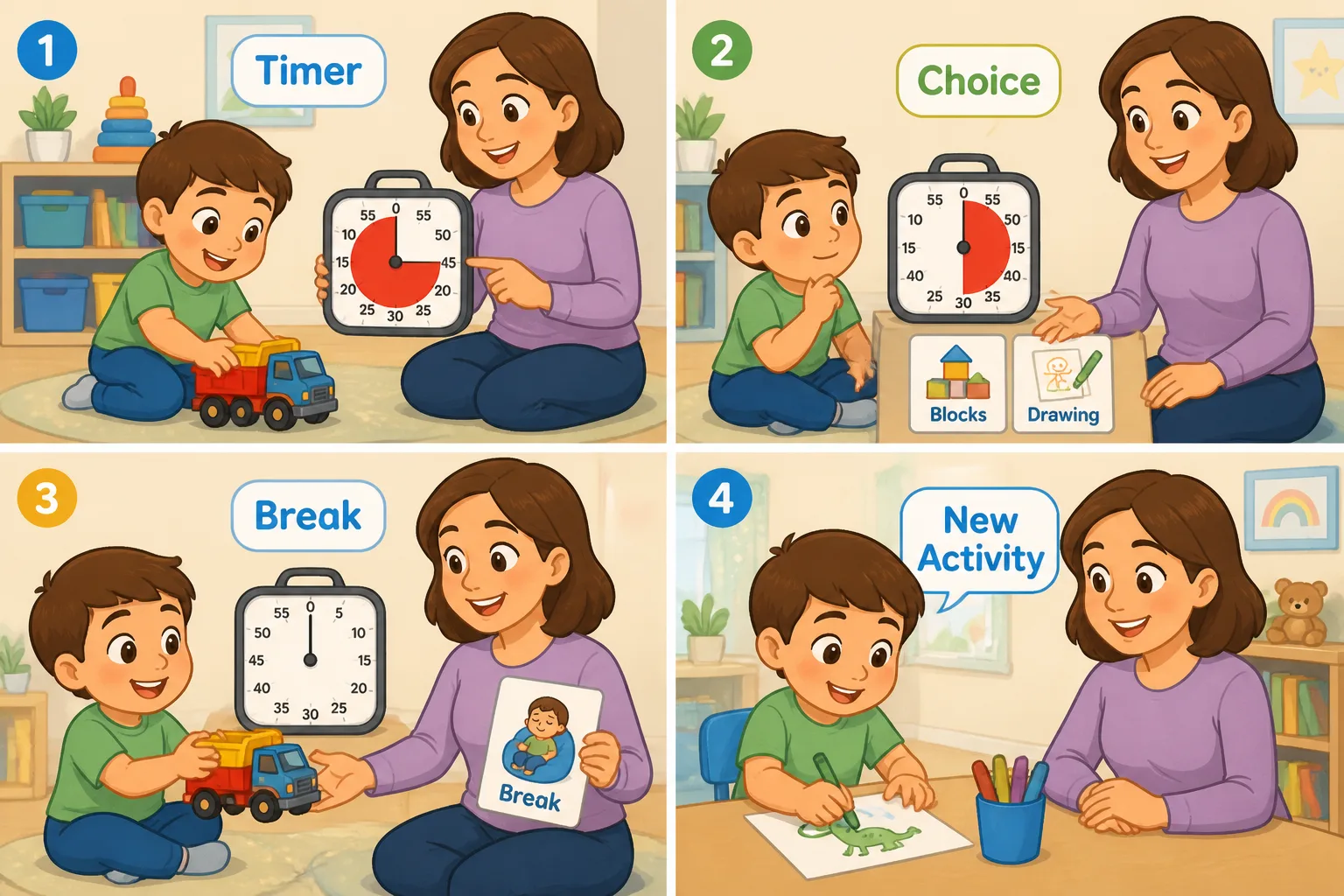
Use a visual timer or countdown to show how much time is left for the activity. Start giving gentle verbal or visual warnings several minutes before the transition. For example, “Five more minutes of play, then it’s time to clean up.” This helps your child anticipate the change and reduces surprise.
2. Use Clear, Simple Communication and Visual Supports
Communicate what will happen next using words, pictures, signs, or AAC devices depending on your child’s communication style. Visual schedules or choice boards can show the sequence of activities, so your child knows what to expect after stopping the preferred activity.
3. Offer Choices and Control
Giving your child some control can reduce resistance. For example, “Do you want to put away your toy first, or pick a new activity first?” or “Would you like a break before we start the next thing?” Simple choices empower your child and make transitions feel less forced.
4. Teach and Reinforce Replacement Skills
Help your child learn to communicate their needs during transitions. Teach useful words or signs like “More time,” “Break,” or “Help.” Reinforce when your child uses these appropriately by acknowledging their communication and providing support.
5. Respond Calmly and Supportively During Difficult Moments
If your child becomes upset or resists stopping, stay calm and acknowledge their feelings. You might say, “I see you’re upset because playtime is ending. Let’s take a deep breath together.” Offer a break or a quiet space if needed. Avoid forcing compliance or using punishment, which can increase distress.
After the Transition: Support Recovery and Practice
Once your child has stopped the preferred activity and is calm, reconnect with positive interaction. Praise their efforts and gently review the transition process. During calm times, practice transitions with games or role-play to build confidence and reduce anxiety.
Environmental Adjustments to Consider
- Keep a consistent routine with predictable transitions.
- Minimize sensory distractions during transitions.
- Use comfortable, quiet spaces for breaks.
- Ensure visual supports are accessible and clear.
What to Avoid
Avoid sudden demands without warning, punishment, shaming, or forcing your child to stop immediately without support. These approaches can increase anxiety and resistance.
Individual Differences and When to Seek Professional Support
Every child is unique. Some may need more time, more visual supports, or additional sensory accommodations. If your child’s difficulty stopping preferred activities causes frequent distress, aggression, or safety concerns, consider consulting a behavior specialist, speech therapist, or occupational therapist for tailored strategies.
Key Takeaway
Supporting young children who have difficulty stopping preferred activities means understanding their needs, preparing them with clear communication and visual supports, offering choices, teaching replacement skills, and responding calmly. This respectful approach builds trust and helps children transition more comfortably.
What strategies have you found helpful when your child needs to stop a favorite activity?
Download the images in this article