Study Finds Reduced Motor Preparation and Altered Brain Activity in Autistic Adults During Predictive Tasks

New Research Explores Prediction and Motor Preparation in Autism
A recent study published in the European Journal of Neuroscience investigates how autistic adults process predictive cues and prepare motor responses, revealing notable differences compared to non-autistic individuals. The research suggests that challenges in forming and using predictions may underlie some of the social and behavioral features associated with autism.
Study Design and Participant Groups
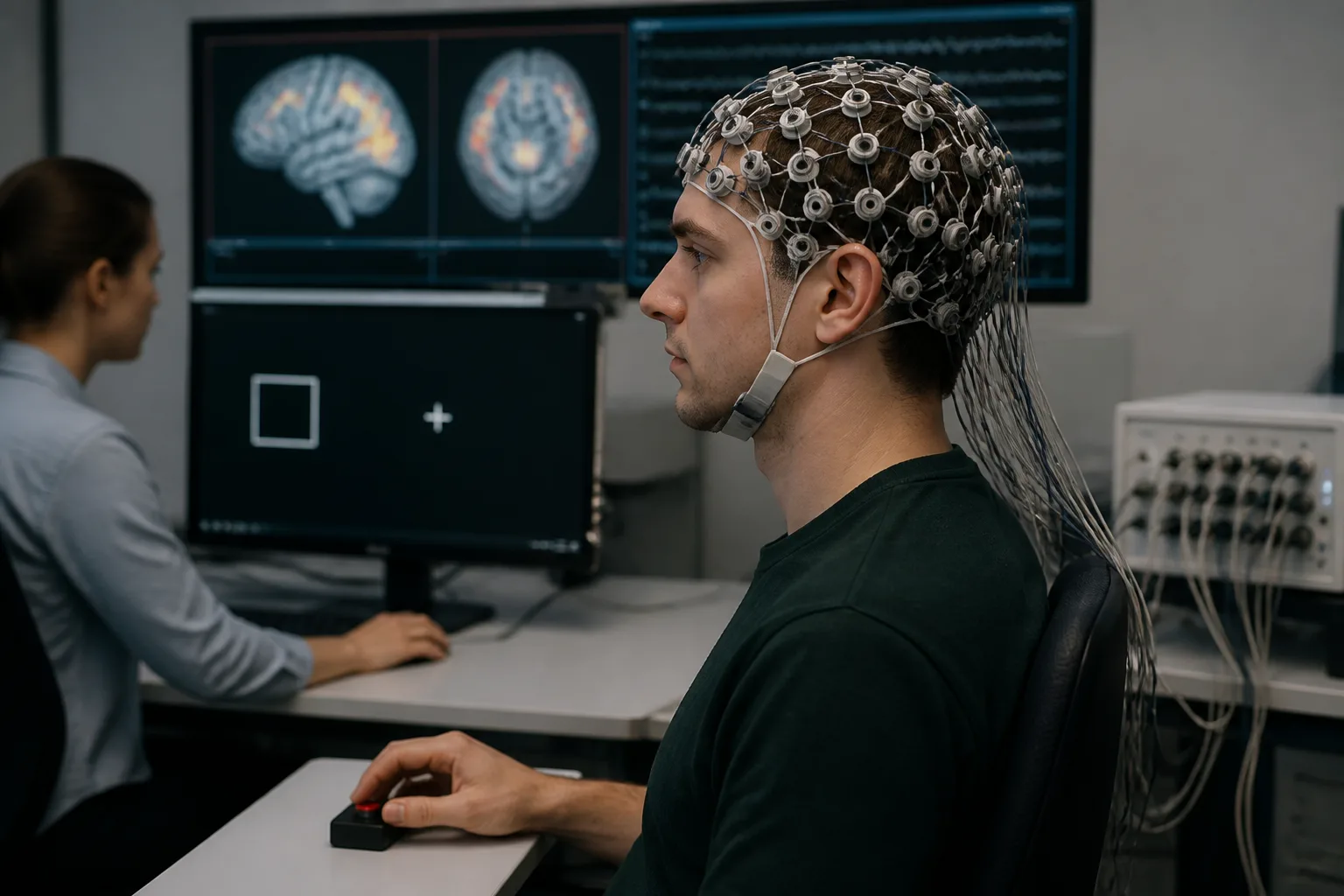
In a preregistered experiment, researchers asked autistic and matched non-autistic adults to respond as quickly as possible to target sounds embedded within a rhythmic sequence of tones. Participants were informed that different auditory tones indicated varying probabilities that a target sound would occur on the next beat. This design aimed to assess how participants use predictive cues to prepare motor responses.
Key Findings: Behavioral and EEG Differences
Results showed that autistic participants gained less advantage from cues signaling a high probability of an upcoming target compared to non-autistic controls matched for IQ and language ability. This was evident in slower response times when anticipating targets.
Electroencephalography (EEG) recordings revealed that autistic adults exhibited a diminished effect of high-probability cues on the late contingent negative variation (CNV), a brain potential associated with motor preparation. Additionally, differences emerged in motor-related brain oscillations (mu and beta rhythms). Rather than a general reduction, autistic participants showed specifically reduced desynchronization following medium probability cues.
Further analysis indicated that autistic individuals had shallower ramping potentials anticipating the next auditory event and reduced neural phase entrainment at posterior brain regions during the rhythmic sequence. These neural signatures suggest altered timing and prediction mechanisms.
Implications for Understanding Autism
The findings highlight a potential sensorimotor component to autism, where spontaneous predictive motor preparation is less robust. This may contribute to the observable social and behavioral characteristics of autism by affecting how individuals anticipate and respond to environmental cues.
Considerations and Future Directions
While the study provides valuable insights, it focuses on specific auditory-motor tasks and adult participants. Further research is needed to explore how these neural differences manifest across diverse contexts and developmental stages. The study does not establish causation but adds to the understanding of predictive processing in autism.
For a detailed review of the research, see the original publication: Reduced Motor Preparation and Altered EEG Signatures of Prediction in Autistic Adults.
Download the images in this article