Low-Frequency rTMS Shows Promise for Improving Brain Activity and Symptoms in Preschool Children with Autism

Study Explores Brain Effects of rTMS in Young Children with Autism
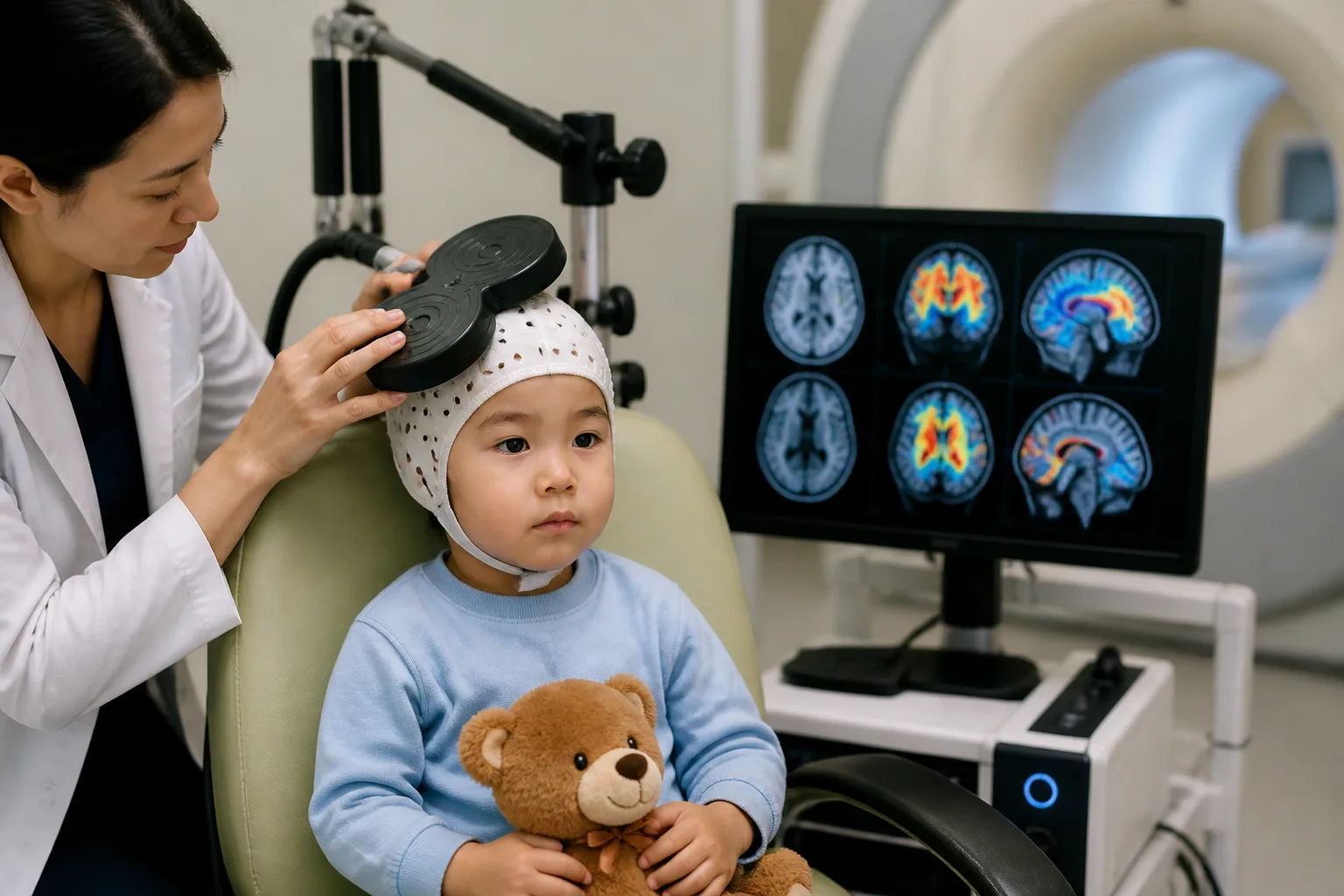
Researchers have investigated how low-frequency repetitive transcranial magnetic stimulation (rTMS) affects brain function and behavior in preschool-aged children diagnosed with autism spectrum disorder (ASD). The study used resting-state functional MRI (rs-fMRI) to examine changes in brain activity patterns alongside clinical assessments, shedding light on possible neural mechanisms underlying symptom improvements.
Key Findings from the Clinical Trial
The study enrolled 34 children aged 2 to 6 years with ASD, randomly assigning them to receive either 12 weeks of low-frequency (1 Hz) rTMS over the left dorsolateral prefrontal cortex (DLPFC) combined with conventional rehabilitation, or sham stimulation with rehabilitation. After accounting for dropouts, 32 children completed the trial.
Behavioral evaluations demonstrated that the rTMS group experienced significantly greater improvements in autism symptom severity and repetitive behaviors compared to controls. Specifically, scores on the Childhood Autism Rating Scale (CARS), Repetitive Behavior Scale-Revised (RBS-R), and Autism Treatment Evaluation Checklist (ATEC) showed meaningful reductions in symptom severity.
Brain Activity Changes Detected by rs-fMRI
Post-treatment imaging revealed increased regional homogeneity (ReHo), indicating enhanced local synchronization of neural activity, in areas including the right caudate nucleus, right angular gyrus, and left anterior cingulate gyrus. Conversely, ReHo decreased in the left cerebellar Crus II, left inferior occipital gyrus, and left middle temporal gyrus.
Additionally, amplitude of low-frequency fluctuations (ALFF), reflecting spontaneous brain activity levels, increased in the right inferior orbital frontal gyrus, right angular gyrus, and right dorsolateral superior frontal gyrus.
Correlations Between Brain Changes and Symptom Improvement
After adjusting for age, sex, and head motion during scans, stronger ALFF in the right angular gyrus was significantly associated with better clinical outcomes across multiple scales (ATEC, Aberrant Behavior Checklist [ABC], and CARS). Similarly, increased ReHo in the right caudate nucleus correlated with improvements measured by ATEC.
Implications for Families and Future Research
This study suggests that low-frequency rTMS targeting the left DLPFC may be a safe and effective intervention to alleviate core ASD symptoms in young children. The findings highlight the potential role of specific brain regions involved in cognitive and executive functions, such as the right angular gyrus and caudate nucleus, as biomarkers for treatment response.
Families considering neuromodulation therapies should note that while these results are promising, further research is needed to confirm long-term benefits and optimize treatment protocols. The study focused on a small sample of preschoolers, and individual responses to rTMS can vary.
Study Limitations and Cautions
The authors acknowledge that the relatively small sample size and short follow-up period limit the generalizability of the findings. Additionally, the study design cannot definitively establish causation between brain activity changes and clinical improvements. Continued investigation with larger cohorts and longer-term monitoring is necessary to better understand the mechanisms and durability of rTMS effects in ASD.
For more detailed information, the original research article is available at PubMed.
Download the images in this article