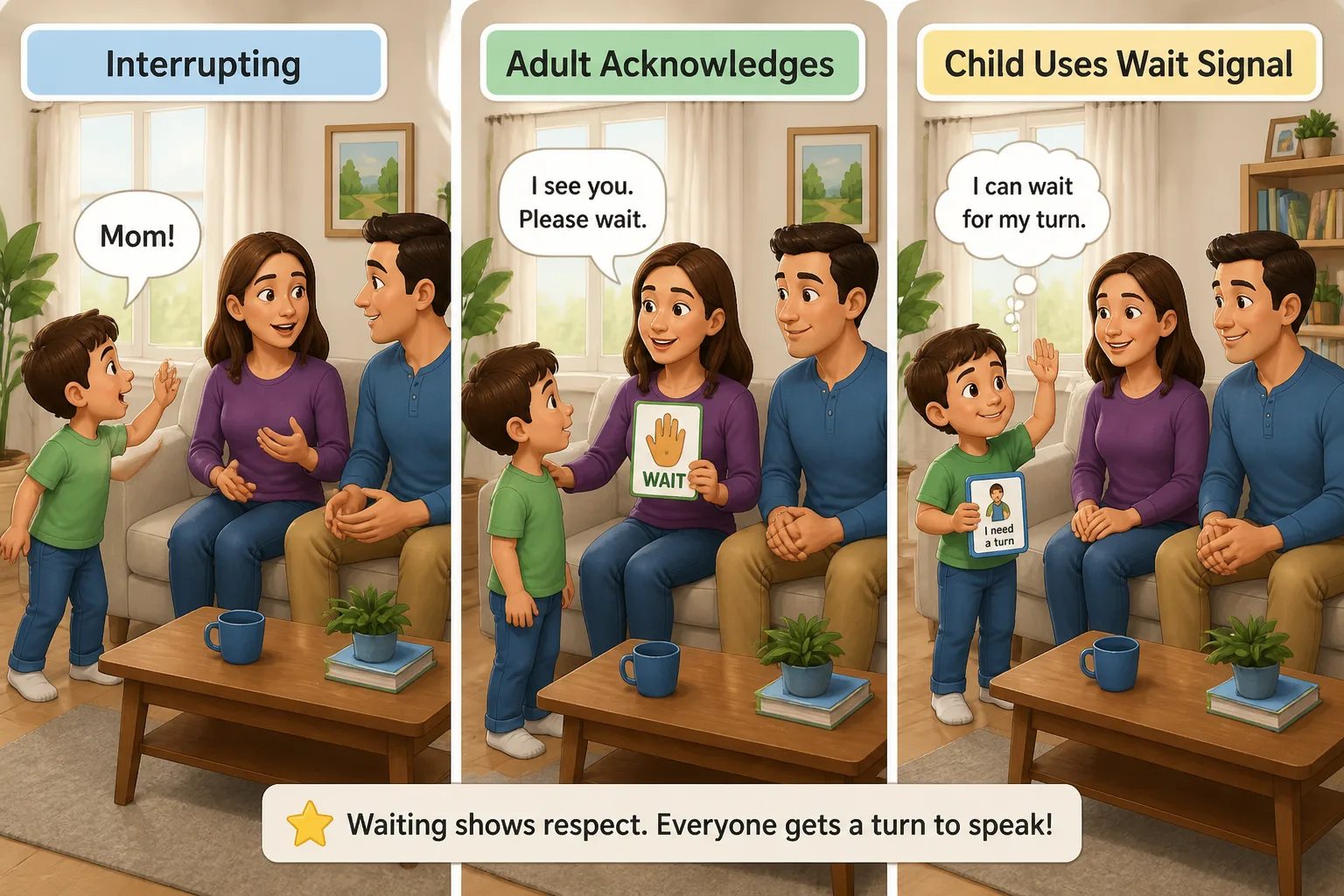

Interrupting is a common behavior many young children display, including autistic children and those with additional communication or sensory needs. While it can be challenging for parents and caregivers, interrupting is often a child’s way of communicating something important, such as needing attention, sharing excitement, or expressing urgency. Understanding why a child interrupts and teaching respectful, effective replacement skills can help children participate more comfortably in conversations and social situations.
What Interrupting Looks Like and Why It Happens
Interrupting may look like a child speaking out of turn during conversations, blurting out answers, or physically trying to get an adult’s attention while they are busy. For some children, especially those with communication challenges, interrupting can be a way to express needs quickly when they don’t have other tools to communicate.
Common reasons for interrupting include:
- Communication needs: The child may want to share something urgent or ask for help but lacks the words or skills to wait.
- Excitement or anxiety: High emotions can make waiting difficult.
- Difficulty with waiting: Some children have trouble understanding social rules about turn-taking.
- Sensory or attention-seeking: The child may seek sensory input or connection.
Prevention Strategies: Setting Up for Success
Preventing interrupting starts with creating a supportive environment and clear expectations. Consider these steps:
- Use visual supports: Picture cards or signs that represent “wait,” “my turn,” or “help” can remind children of appropriate ways to communicate.
- Establish routines: Predictable routines for conversations and activities help children know when it’s their turn to speak.
- Provide choices and breaks: Offering simple choices or sensory breaks can reduce anxiety and the urge to interrupt.
- Model turn-taking: Adults should demonstrate waiting patiently and acknowledging others’ turns.
Teaching Replacement Skills
Teaching children how to communicate their needs without interrupting is key. Replacement skills might include:
- Raising a hand or using a gesture: Teach the child to raise their hand or use a specific sign to indicate they want to speak.
- Using a communication device or card: For children using AAC, teach them to press a “wait” or “help” button or show a “wait” card.
- Using words or phrases: Simple phrases like “excuse me,” “wait please,” or “help me” can be practiced and reinforced.
- Waiting with a timer: Visual timers can help children understand how long to wait before speaking.
Responding Calmly During Interruptions
When a child interrupts, adults can respond in ways that acknowledge the child’s communication while gently guiding them toward more appropriate behavior:
- Acknowledge the child: Use calm words like “I see you have something to say” or “Thank you for waiting.”
- Use visual cues: Show the “wait” card or gesture to remind the child of the replacement skill.
- Offer choices: “Would you like to wait or tell me now?” helps the child feel heard and in control.
- Keep your tone calm and patient: Avoid frustration or punishment, which can increase anxiety or confusion.
After the Moment: Reinforce and Practice
Once the child is calm and the conversation is over, use the opportunity to reinforce positive behavior and practice skills:
- Praise efforts: “You did a great job waiting your turn today!”
- Practice turn-taking games: Simple games that involve waiting and speaking in turns help build skills.
- Review visual supports: Go over cards or signs during calm moments to reinforce understanding.
- Adjust the environment: Reduce distractions or create quiet spaces if sensory overload triggers interrupting.
What to Avoid and Individual Differences
Avoid shaming, scolding, or forcing eye contact or speech, as these can increase stress and reduce trust. Remember, every child is unique — some may need more time, different communication tools, or sensory accommodations. Observe what works best and adapt accordingly.
When to Seek Professional Support
If interrupting is frequent, intense, or accompanied by other challenging behaviors that affect safety or learning, consider consulting a speech-language pathologist, occupational therapist, or behavioral specialist. They can provide tailored strategies and supports.
Key Takeaway
Interrupting is a form of communication that often signals a child’s need for connection, help, or expression. By understanding the reasons behind interrupting, preventing triggers, teaching respectful replacement skills, and responding calmly, parents and caregivers can support children in developing positive communication and social participation.
How have you helped your child express themselves when they want to speak? Share your experiences or questions to support other families.
For related strategies on managing frustration or yelling, you may find helpful tips in Supporting Young Children with Frustration: 6 Positive Steps for Parents and Supporting Young Children Who Yell or Scream: 5 Positive Steps for Parents.
Download the images in this article