
Ending a conversation is an important social skill that helps children participate comfortably in social settings and respect both their own and others’ boundaries. Teaching children clear steps to end a conversation politely can reduce social stress and support their communication preferences, whether they use speech, gestures, sign, pictures, or AAC.
Why Teach Ending a Conversation?
Many children, especially those with social communication differences, find it challenging to know when and how to end a conversation. Without guidance, they might feel stuck, overwhelmed, or unsure how to signal they want to stop talking. Learning simple, respectful steps empowers children to take control of their social interactions and helps others understand their needs.
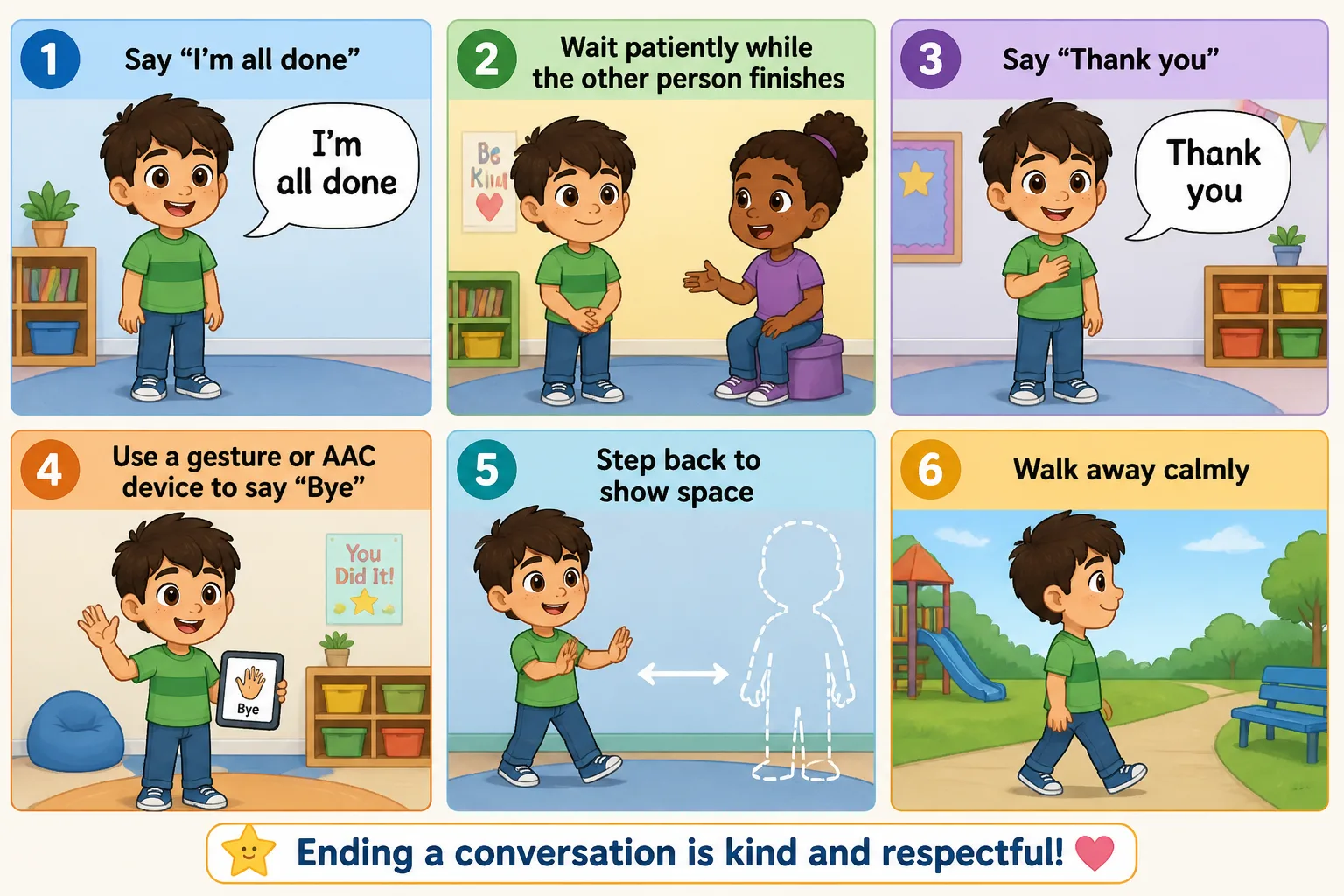
6 Clear Steps to End a Conversation
1. Say “I’m all done”
Teaching children to express that they are finished talking is a clear way to signal the conversation is ending. This phrase can be spoken, signed, gestured, or communicated via AAC.
2. Wait for the other person to finish
Encourage children to pause and listen while the other person finishes their part. This models respect and helps avoid interruptions.
3. Say “Thank you”
Showing appreciation for the interaction helps end the conversation on a positive note. This can be a simple verbal thank you, a smile, or another form of communication.
4. Say “Bye” or use a goodbye gesture
Using a clear goodbye phrase or gesture signals the conversation is closing. This might be waving, a sign, or an AAC message.
5. Step back to create space
Physically stepping back helps indicate the interaction is over and respects personal boundaries.
6. Walk away calmly
Leaving the conversation area calmly shows the child is moving on to another activity or space.
How Parents Can Practice This Skill
Parents can model these steps during everyday interactions by narrating their own actions, such as saying, “I’m all done talking now,” or “Thank you for chatting! Bye!” Role-playing these steps when the child is calm can build confidence. Remember to respect the child’s communication style and allow them to use gestures, AAC, or other methods. Praise attempts and provide gentle reminders as needed.
For more ways to support your child’s social skills, consider exploring teaching children to ask for space and handling disagreement.
Key Takeaways
- Ending a conversation respectfully supports social comfort and boundaries.
- Clear, simple phrases or gestures work best.
- Model and practice these steps naturally with your child.
- Respect your child’s communication preferences and timing.
What signs or phrases does your child use to end conversations, and what helps them feel comfortable doing so?
Download the images in this article