Maternal Immune Activation Linked to Lasting Gut and Brain Immune Changes in Offspring

Study Explores How Maternal Immune Activation Affects Offspring’s Gut and Brain Immunity
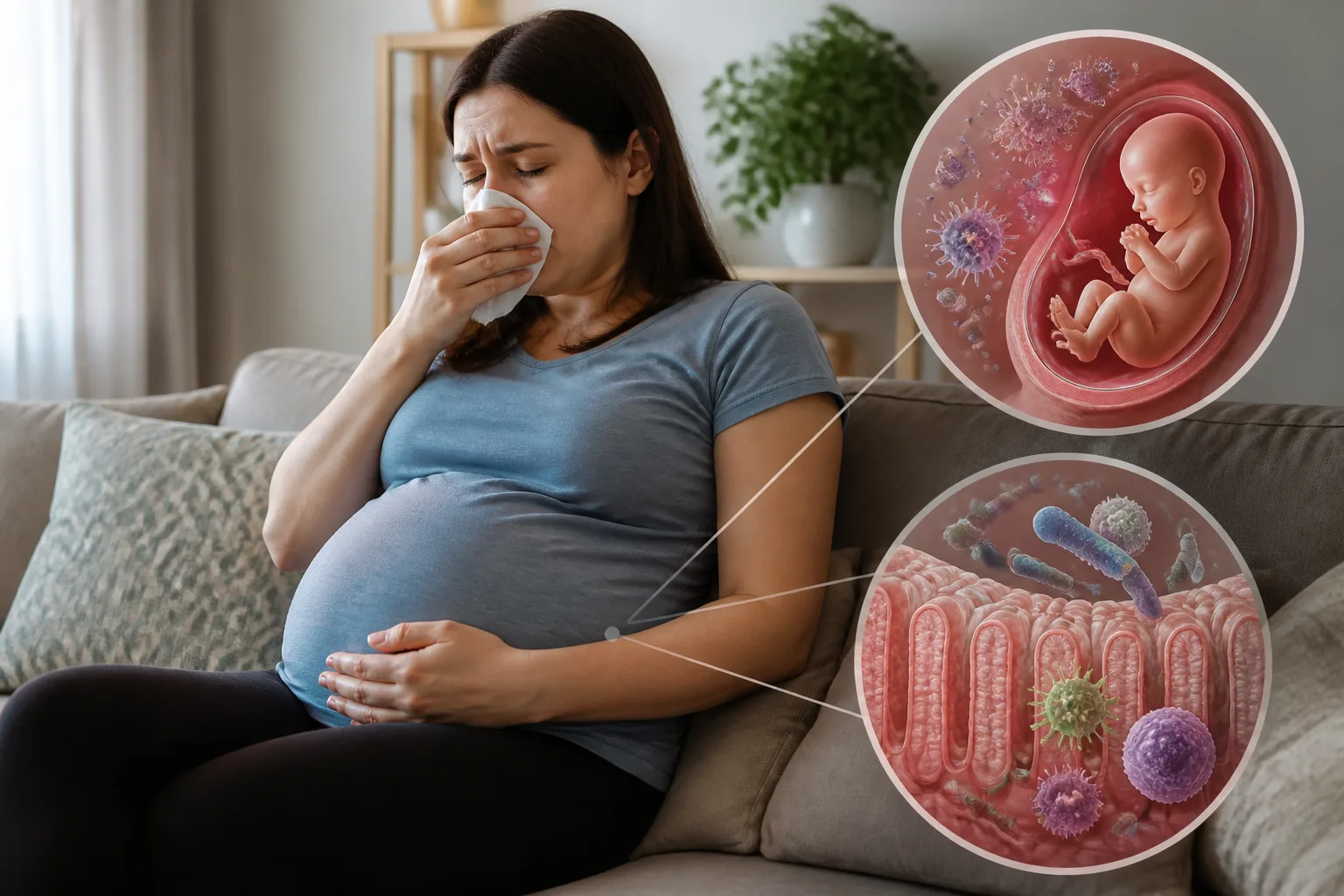
New research has shed light on how immune challenges during pregnancy may lead to lasting changes in both the gut and brain immune environments of offspring. The study, conducted in mice, focused on the effects of maternal immune activation (MIA) induced by lipopolysaccharide (LPS) exposure during gestation and its impact on intestinal immune cells, microbiota composition, systemic inflammation, and brain immune markers in male and female offspring.
Key Findings on Intestinal Immune and Microbial Changes
The researchers found that offspring exposed to MIA exhibited distinct immune alterations primarily in the ileum, a section of the small intestine, rather than the colon. These changes included increased inflammatory cytokine signaling and significant remodeling of intraepithelial lymphocyte (IEL) populations. Notably, there was a shift in T cell receptor (TCR) subsets, including TCRγδ CD8αα cells and TCRαβ IELs.
Alongside immune cell changes, the mucosa-associated microbiome in the ileum also showed altered community structures. This included modifications in populations of segmented filamentous bacteria and Lactobacillus species, both known to influence immune responses.
Systemic and Brain Immune Effects
Systemically, both male and female offspring demonstrated elevated plasma levels of the inflammatory cytokine interleukin-6 (IL-6). Interestingly, interleukin-17 (IL-17) was increased only in female offspring, suggesting sex-specific immune responses.
In the prefrontal cortex (PFC), a brain region involved in higher cognitive functions, MIA was associated with changes in cytokine profiles and alterations in microglial cell morphology. These findings indicate that prenatal immune activation may lead to neuroimmune modifications that vary by sex and possibly by the timing and intensity of the immune challenge.
Implications for Neurodevelopmental Disorders
Maternal immune activation has been previously linked to increased risks of neurodevelopmental disorders such as schizophrenia and autism spectrum disorder. This study highlights the mucosa-associated microbiota and IEL interface as a critical, yet underexplored, component in the immune remodeling process triggered by MIA.
The integrated observations of persistent ileal immune and microbial changes alongside systemic inflammation and brain immune alterations provide a valuable framework for understanding gut-brain immune communication in the context of neurodevelopmental conditions.
Considerations and Future Directions
While these findings offer important insights, it is important to note that the study was conducted in a mouse model, and direct application to humans requires further investigation. The precise mechanisms linking gut immune changes to brain function remain to be fully elucidated.
Future research may explore how targeting the gut microbiota or intestinal immune cells could influence neuroimmune outcomes and potentially inform interventions for neurodevelopmental disorders associated with maternal immune activation.
For more detailed information, see the original study published in Frontiers in Immunology: Mucosal microbiota and intraepithelial lymphocyte remodeling link maternal immune activation to neuroimmune outcomes in female and male offspring.
Download the images in this article