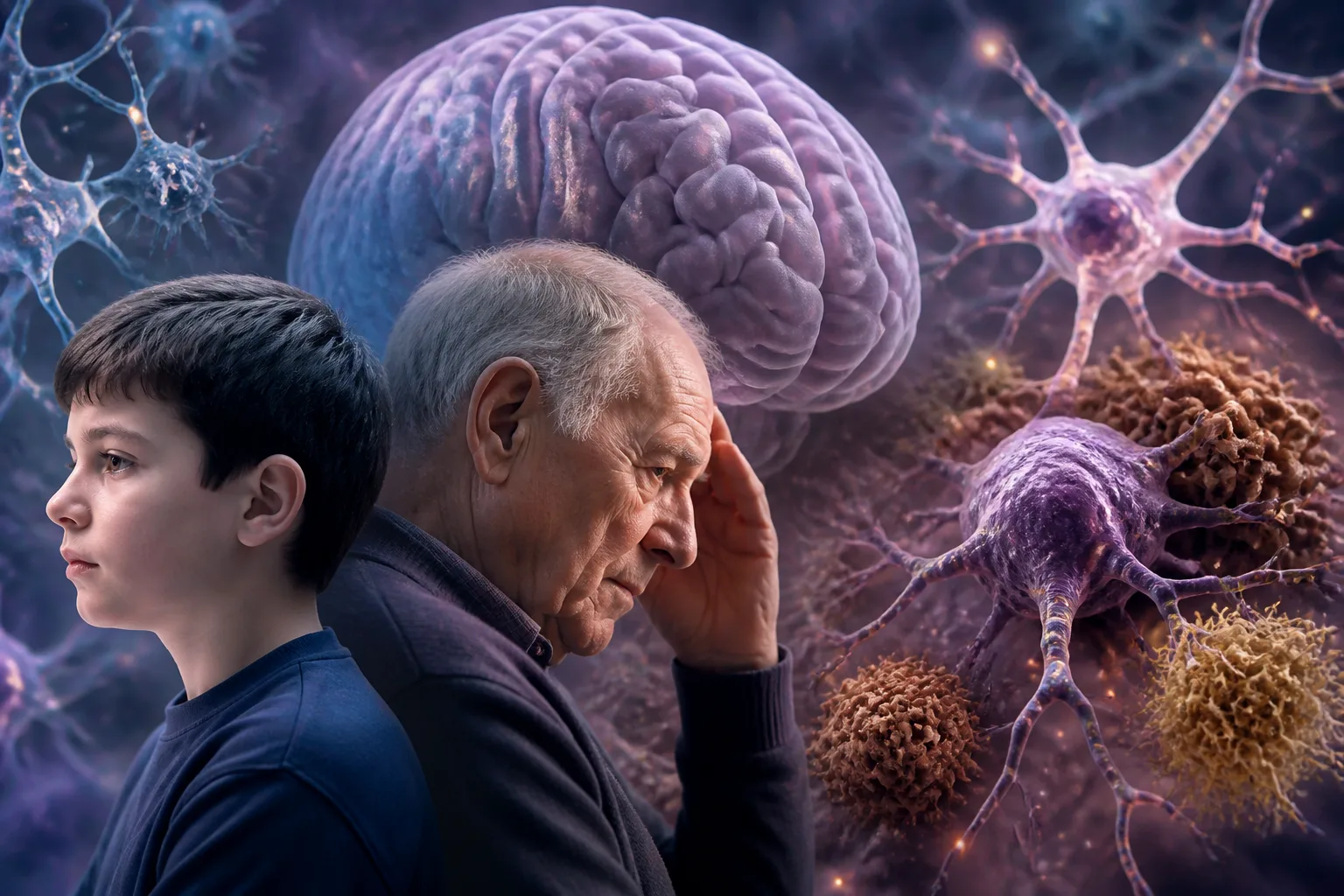
Exploring Neuroinflammation as a Link Between Autism Spectrum Disorder and Early-Onset Alzheimer’s Disease

Emerging Research Connects ASD and Early-Onset Dementia
Recent scientific reviews have begun to investigate a possible connection between autism spectrum disorder (ASD) and early-onset Alzheimer’s disease and related dementias (AD/ADRD). While the exact mechanisms remain unclear, neuroinflammation has been identified as a potential shared biological pathway that might explain this association.
Review Highlights Neuroinflammation’s Role
A comprehensive narrative review analyzed 133 studies published between 1996 and 2026, focusing on ASD, neuroinflammation, aging, and dementia. The research included various types of studies such as systematic reviews, clinical trials, and animal models. The findings suggest that neuroinflammation is a central factor linking ASD-related health issues with known risk factors for AD/ADRD.
Potential for Early Intervention
The review emphasizes that interventions aimed at reducing neuroinflammation—especially by targeting microglial cells in the brain during childhood or early adulthood—may decrease the risk of developing early-onset Alzheimer’s disease in individuals with ASD. Microglia are immune cells in the brain that, when overactivated, can contribute to chronic inflammation and neuronal damage.
Current Evidence and Future Directions
Although the evidence supporting these connections is largely theoretical and indirect at this stage, it provides a rationale for further research into anti-inflammatory treatments as preventive strategies. The authors call for empirical studies to evaluate whether early management of neuroinflammation in ASD can effectively reduce the incidence of early-onset AD/ADRD.
Implications for Families and Care Providers
This emerging research underscores the importance of monitoring neuroinflammatory processes in individuals with ASD as they age. While no definitive clinical recommendations can be made yet, understanding these biological links could eventually inform new approaches to care that address long-term brain health.
Limitations and Cautions
It is important to note that current findings do not establish a causal relationship between ASD and early-onset Alzheimer’s disease. The proposed mechanisms remain hypotheses requiring validation through well-designed clinical trials. Families and clinicians should interpret these findings with caution and avoid premature conclusions.
For more detailed information, the original review can be accessed here.
Download the images in this article