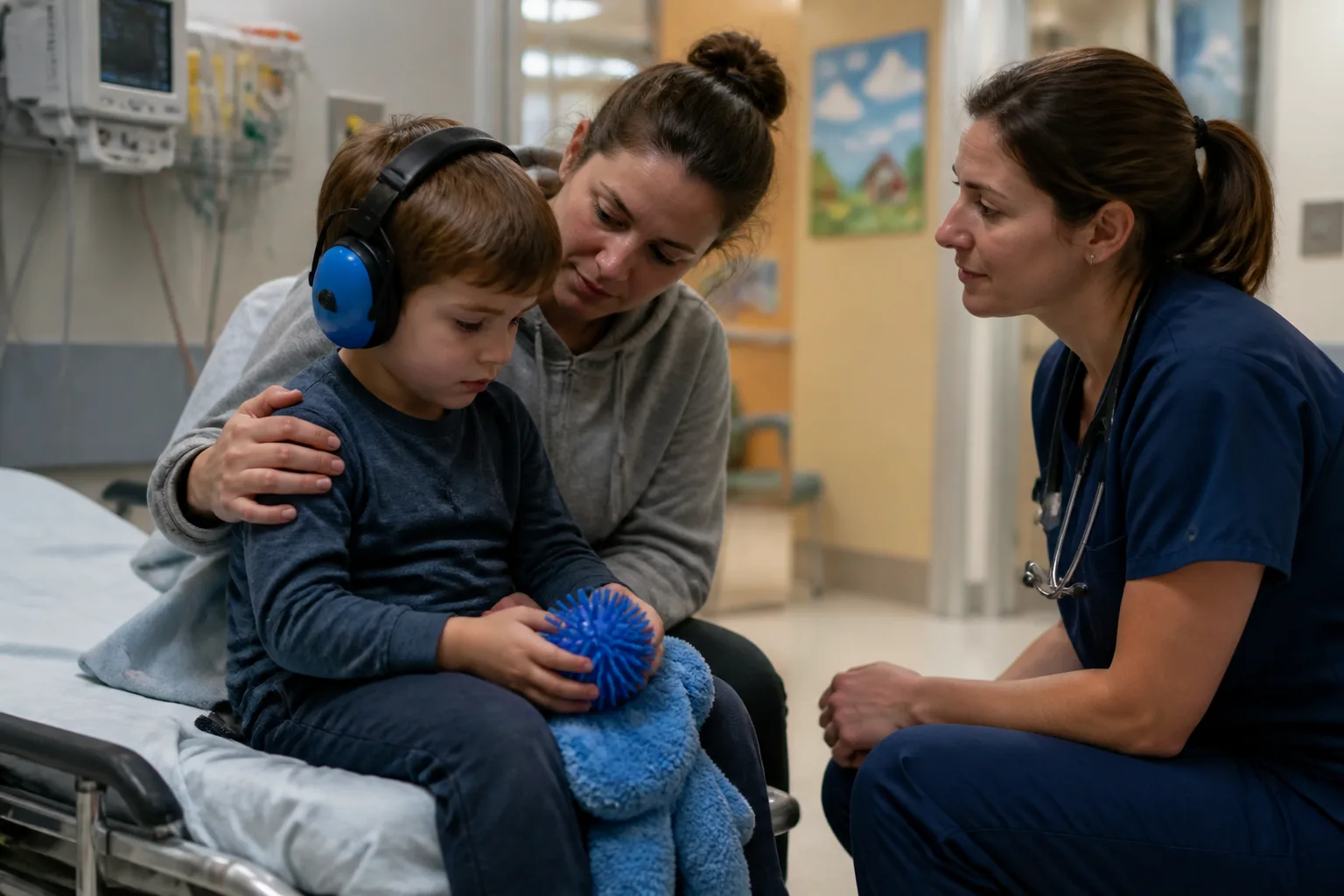
New Toolkit Developed to Enhance Emergency Care Access for Autistic Children in Rural Areas

Community Partnership Creates Resources for Rural Emergency Departments
Addressing Sensory and Environmental Challenges
Autism is characterized by core traits and sensory processing differences that can make the fast-paced, noisy, and brightly lit environment of EDs particularly difficult for autistic children. These sensory challenges can hinder timely access to care and affect the quality of emergency treatment received.
Collaborative Development of Educational and Sensory Supports
The interdisciplinary team employed an iterative, community-driven approach to co-create educational materials for healthcare staff, recommend environmental modifications within EDs, and implement sensory regulation tools aimed at easing the experience for autistic patients. This partnership included academic researchers, graduate students, parents, hospital staff, and representatives from autism-focused organizations.
Toolkit Components and Reception
The resulting toolkit encompasses three main elements: educational resources to increase provider understanding of autism-related needs, suggestions for adapting the ED environment to be more sensory-friendly, and practical sensory tools to support regulation during emergency visits. Feedback from healthcare team members indicated high acceptability and perceived usefulness of the toolkit.
Implications and Future Directions
While the toolkit shows promise in enhancing care for autistic children in rural EDs, further research is needed to adapt the materials for diverse emergency department contexts and to evaluate the impact on healthcare outcomes. Such studies will help determine the effectiveness of these interventions in improving access and quality of emergency care for autistic patients.
For more detailed information, see the original study published in Progress in Community Health Partnerships: https://pubmed.ncbi.nlm.nih.gov/42803077/.
Download the images in this article