Study Links Auditory Sensory Gating to Noise Tolerance and Listening Challenges in Young Adults with Autism

Research Explores Brain Responses and Noise Acceptance in Autism
A recent study has examined how auditory sensory gating—the brain’s ability to filter sounds—relates to tolerance for background noise and self-perceived listening skills in young adults with autism spectrum disorder (ASD) compared to neurotypical peers. The findings provide insights into sensory processing differences that may affect communication in noisy environments.
Key Findings on Noise Acceptance and Neural Activity
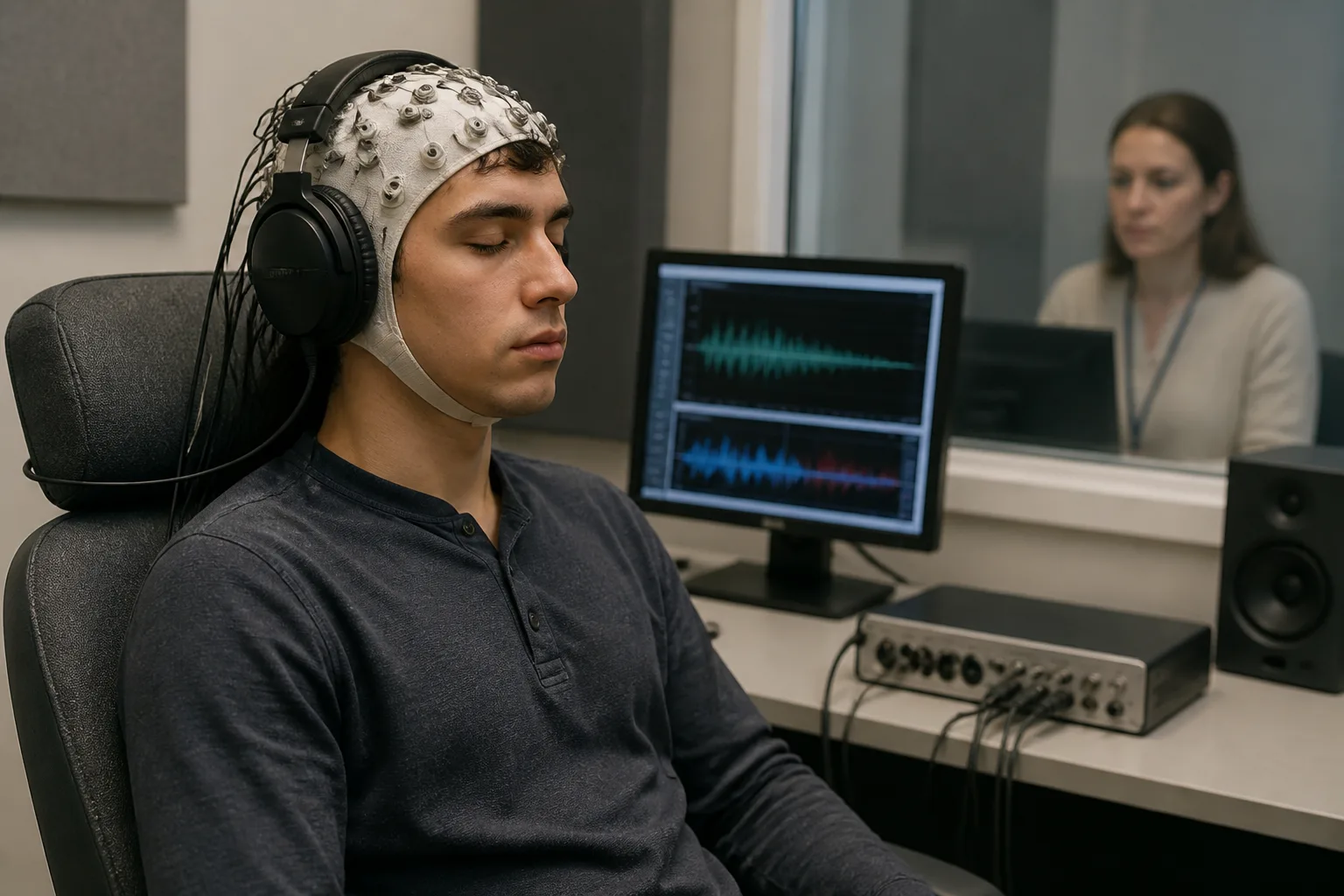
The study involved 12 young adults diagnosed with ASD and 12 neurotypical controls. Researchers measured neural responses to simple tone sounds using a passive auditory gating paradigm, which assesses how the brain inhibits repeated sounds. Participants’ tolerance for background noise while listening to speech was quantified using the acceptable noise level (ANL) test. Additionally, self-reported listening abilities were gathered through the Speech, Spatial, and Qualities of Hearing Scale (SSQ).
Results showed that individuals with ASD generally accepted less background noise during speech listening and preferred louder speech volumes for comfort. They also reported more difficulties with listening in everyday situations on the SSQ compared to controls.
Statistical analysis revealed that across both groups, weaker early-stage auditory gating (specifically the P1 neural response) was linked to poorer noise acceptance, meaning participants with less effective sensory gating found background noise more disruptive. Interestingly, differences in a later neural response (P2 gating) were associated with self-reported listening difficulties only within the ASD group.
Understanding Auditory Processing in Autism
Auditory sensory gating helps the brain filter out irrelevant sounds, enabling better focus on important auditory information like speech. The study suggests that in ASD, impairments in this filtering process may contribute to challenges in noisy environments, affecting communication and social interaction.
The distinction between early (P1) and later (P2) neural gating responses indicates that different stages of auditory processing may uniquely influence noise tolerance and perceived listening ability in autism.
Implications for Families and Clinicians
These findings highlight the importance of considering sensory processing differences when supporting individuals with ASD, especially in settings with background noise such as classrooms or social gatherings. Interventions that address auditory filtering and noise management could potentially improve communication comfort and effectiveness.
Limitations and Future Directions
The study sample was relatively small, and the findings show associations rather than direct causation. Further research with larger groups is needed to confirm these results and explore how auditory sensory gating might be targeted therapeutically.
For more detailed information, the original research can be accessed here.
Download the images in this article