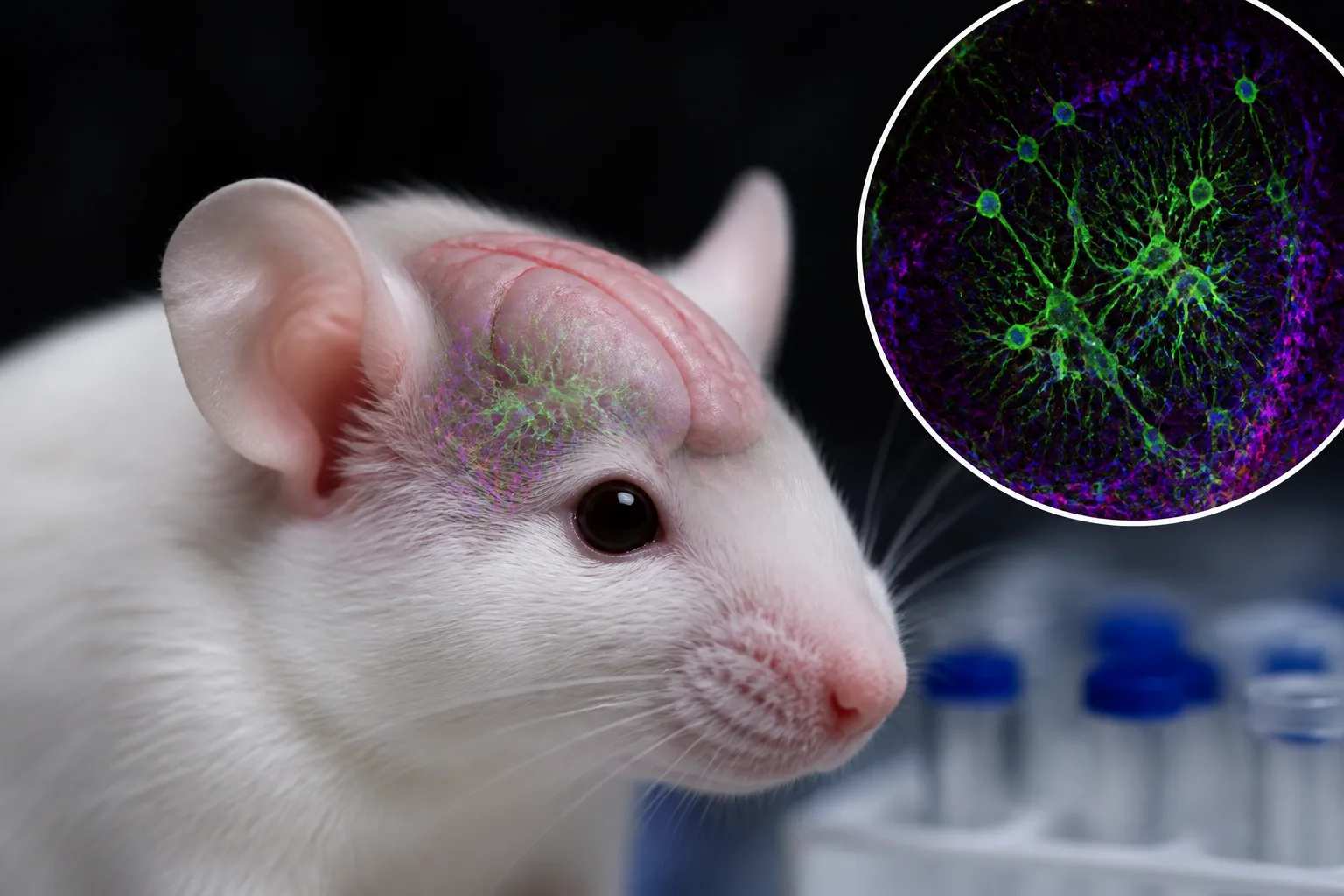
Human Brain Organoids Thrive in Mouse Cortex, Offering New Insights into Brain Development

Human Brain Organoids Successfully Grown in Mouse Brain Environment
Researchers have achieved a significant advance by cultivating human brain organoids within the cerebral cortex of specially prepared mice. These chimeric animals, featuring human neural tissue integrated into their brains, provide a novel platform to study human brain development and neurological disorders.
Key Findings and Research Implications
The study involved transplanting human brain organoids—miniature, lab-grown brain structures—into areas of the mouse cortex that had been cleared to accommodate the new tissue. The organoids were reported to flourish in this environment, establishing connections and demonstrating growth patterns resembling those seen in human brain development.
This approach may offer researchers a valuable tool to investigate complex biological processes underlying human brain formation. It also holds promise for advancing understanding of neurodevelopmental conditions such as autism spectrum disorder, where human-specific brain features are difficult to replicate in animal models alone.
Context and Potential Benefits for Families
Studying human brain development directly has been challenging due to ethical and technical limitations. The use of brain organoids in chimeric mice could bridge this gap, enabling scientists to observe human neural tissue behavior in a living brain environment. This may eventually inform strategies for diagnosis or treatment of developmental brain disorders.
Limitations and Ethical Considerations
While promising, this research remains at an early stage. The organoids do not replicate the full complexity of a human brain, and the long-term effects of integrating human tissue into animal brains require further study. Ethical considerations about chimeric research also necessitate careful oversight.
For more detailed information, see the original report at The Transmitter.
Download the images in this article