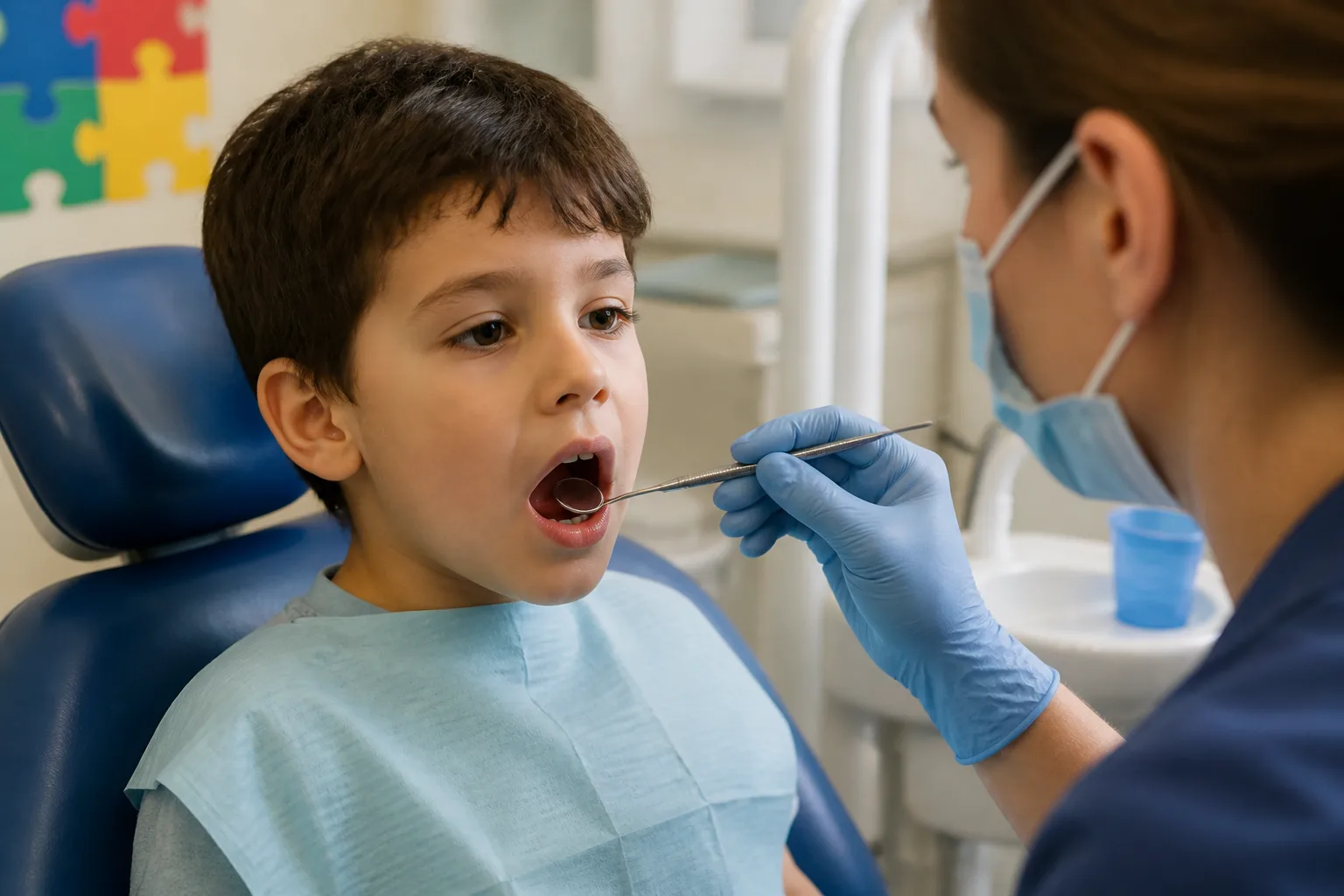
Study Finds Children with Autism Spectrum Disorder May Have Greater Orthodontic Needs and Oral Hygiene Challenges

New Research Highlights Oral Health Differences in Children with Autism
A recent comparative study has found that children diagnosed with Autism Spectrum Disorder (ASD) tend to have higher orthodontic treatment needs and poorer oral hygiene compared to their typically developing peers. This research sheds light on the oral health challenges faced by children with ASD, emphasizing the importance of tailored dental care approaches.
Study Overview and Methodology
The study involved 50 children aged between 6 and 18 years with ASD, alongside 43 age- and sex-matched typically developing children. Researchers assessed orthodontic treatment requirements using the Index of Complexity, Outcome, and Need (ICON), while malocclusion was classified according to Angle’s classification system. Oral hygiene was evaluated through the Simplified Oral Hygiene Index (OHI-S). To ensure consistency, intra-rater reliability was confirmed with a high intraclass correlation coefficient (ICC = 0.96).
Key Findings
- Children with ASD exhibited significantly higher ICON scores, indicating greater orthodontic treatment needs (p = 0.024).
- Oral hygiene status was notably poorer in the ASD group compared to typically developing children (p < 0.001).
- No significant difference was observed in Angle classification between the two groups (p = 0.118), suggesting similar patterns of malocclusion.
- After adjusting for age and sex, ASD diagnosis remained strongly associated with higher orthodontic treatment needs and increased likelihood of poorer oral hygiene.
- The severity of autism symptoms, measured by the Childhood Autism Rating Scale (CARS), did not show a significant correlation with orthodontic treatment need.
Implications for Families and Care Providers
These findings suggest that children with ASD may face additional challenges related to orthodontic care and maintaining oral hygiene. Behavioral, sensory, and motor difficulties common in ASD could contribute to these disparities. Dental professionals and caregivers might need to consider specialized strategies to address these unique needs effectively.
Limitations and Future Directions
While the study provides valuable insights, it is based on a relatively small sample size and cross-sectional design, limiting the ability to establish causation. Further research is necessary to explore underlying factors influencing oral health and orthodontic outcomes in children with ASD, as well as to develop targeted interventions.
For more detailed information, please refer to the original study published online ahead of print in Orthodontics & Craniofacial Research: Orthodontic and Oral Health Assessment in Children With Autism.
Download the images in this article