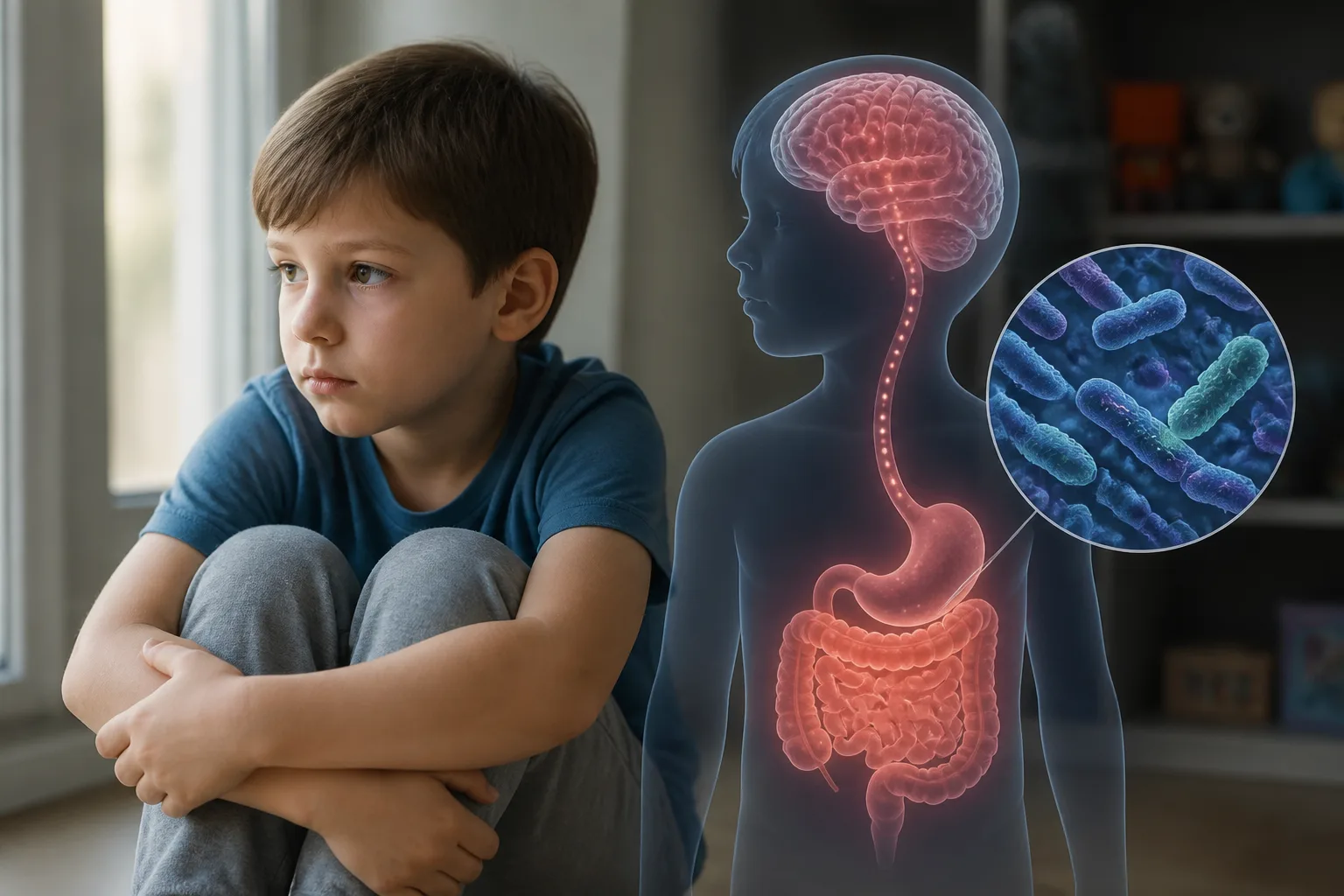
Exploring Gut Microbiota Imbalance and Sensory Processing in Autism Spectrum Disorder: Insights from a Systematic Review

Gut Microbiota and Autism Spectrum Disorder: An Emerging Area of Research
Autism spectrum disorder (ASD) is a complex neurodevelopmental condition marked by difficulties in social communication and repetitive behaviors. In addition to these core features, many individuals with ASD experience gastrointestinal (GI) issues and sensory processing challenges. Recent scientific interest has focused on whether imbalances in gut microbiota—known as microbial dysbiosis—may be linked to these co-occurring symptoms.
Systematic Review Highlights Potential Associations
A systematic review published in Cureus in August 2026 examined studies from 2011 to 2026 that investigated the relationships among gut microbiota composition, gastrointestinal symptoms, sensory processing differences, and dietary habits in people with ASD. The review included both observational and intervention studies sourced from databases such as PubMed, Scopus, Web of Science, and Google Scholar.
Findings indicated that many individuals with ASD reported gastrointestinal complaints alongside sensory processing variations and restricted eating patterns. These factors appeared to correlate with differences in gut microbiota composition. However, most studies were cross-sectional, limiting the ability to determine cause and effect or the direction of these relationships.
Possible Bidirectional Relationships and Influencing Factors
The evidence suggests a potential bidirectional relationship: gastrointestinal and sensory symptoms might influence gut microbiota, while microbial differences could also affect these symptoms. Additionally, sensory sensitivities, selective eating habits, stool consistency, medication use, and other clinical features may impact the composition of the gut microbiome in ASD.
Interventions Targeting the Microbiome Show Preliminary Promise
Some initial microbiome-focused interventions demonstrated potential benefits for certain outcomes related to ASD symptoms. Nonetheless, these findings are tentative due to small sample sizes, variability in study methodologies, and possible biases. More rigorous research is needed to confirm these early results.
Implications for Families and Future Research
While changes in gut microbiota are associated with gastrointestinal and sensory processing issues in ASD, current evidence does not establish microbial imbalance as a primary cause. It remains possible that sensory sensitivities and dietary preferences influence the gut environment, which in turn affects microbiota composition.
To clarify these complex interactions and evaluate the effectiveness of microbiome-targeted therapies, future studies should employ longitudinal designs and well-powered randomized controlled trials.
Conclusion
This systematic review underscores the intricate connections between the gut microbiome, gastrointestinal symptoms, sensory processing, and diet in autism spectrum disorder. Although promising, the research field requires further high-quality studies to unravel causal pathways and inform clinical interventions.
For more detailed information, see the original systematic review here.
Download the images in this article