OXTR Gene Variants and Methylation Linked to Brain Connectivity and Symptoms in Autism Spectrum Disorder

Study Explores Genetic and Epigenetic Influences on Brain Connectivity in ASD
Recent research has examined how variations in the oxytocin receptor gene (OXTR), including both genetic differences and epigenetic modifications, relate to brain connectivity patterns and symptom severity in children with autism spectrum disorder (ASD). This study highlights the complex interplay between molecular factors and neural network function that may underlie behavioral features of ASD.
Key Findings on Brain Connectivity and OXTR Variations
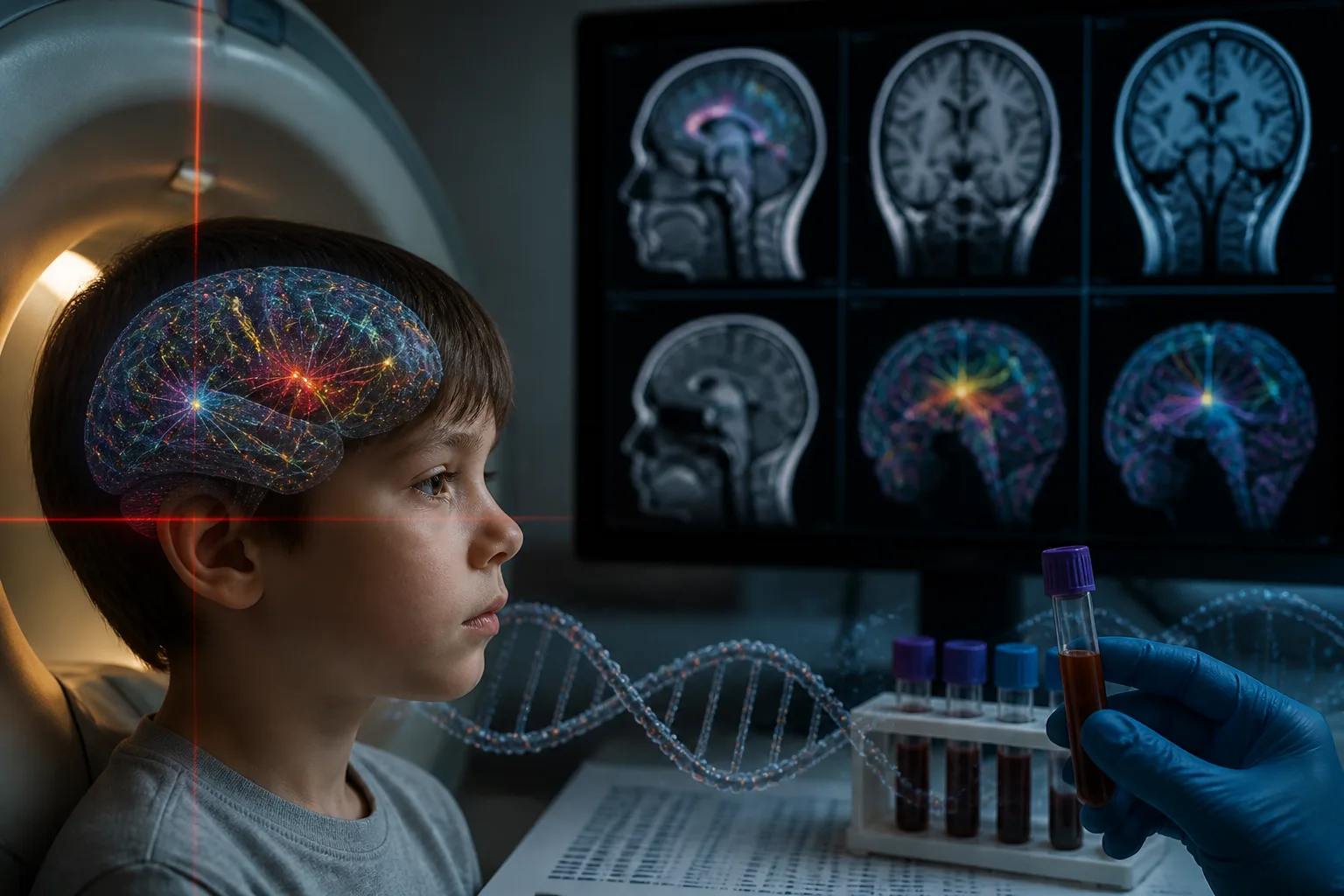
The investigation involved 43 children diagnosed with ASD and 54 typically developing (TD) peers. All participants underwent genetic testing to identify OXTR variants, analysis of DNA methylation at specific sites (notably CpG site 924), resting-state functional magnetic resonance imaging (fMRI), and standardized clinical assessments to measure ASD symptom severity.
Compared to TD children, those with ASD exhibited reduced functional connectivity (FC) both within and between major brain networks. Importantly, the presence of certain OXTR risk alleles and increased methylation (hypermethylation) at CpG 924 were linked to further decreases in FC among children with ASD.
Interestingly, the same genetic and epigenetic markers were associated with increased FC in TD children, suggesting that these molecular variations may have different, possibly compensatory, effects depending on neurodevelopmental status.
Moreover, measures of FC correlated significantly with the severity of ASD symptoms, indicating a potential neural basis for clinical features.
Context and Implications for Understanding ASD
Oxytocin is a neuropeptide known to influence social behavior, and its receptor gene OXTR has been a focus in autism research. This study integrates genetic and epigenetic data with brain imaging to provide a more comprehensive view of how molecular differences may translate into altered brain network function and behavioral outcomes in ASD.
The findings support a neurobiological model where OXTR-related genetic and epigenetic variations contribute to the atypical brain connectivity observed in ASD, which in turn relates to symptom severity.
Considerations and Future Directions
While these results are promising, the study’s sample size is moderate and further research is needed to confirm these associations and clarify causality. The diagnosis-dependent effects of OXTR variants underscore the complexity of genetic influences on brain function.
Future investigations combining genetics, epigenetics, and neuroimaging may enhance personalized approaches to understanding and potentially treating ASD by targeting specific molecular and neural mechanisms.
For more detailed information, see the original study published in Psychiatry Investigation: source.
Download the images in this article