
Skip to content
Love Beyond Words - autismwords.com Love Beyond Words - autismwords.com Love Beyond Words - autismwords.com

Supporting children with autism through education and care

Love Beyond Words - autismwords.com Love Beyond Words - autismwords.com Love Beyond Words - autismwords.com

Supporting children with autism through education and care

  • Learning & Support
    • Communication Skills
    • Daily Living Skills
    • Emotional Regulation
    • Everyday Challenges
    • Learning Through Play
    • Parent Education & Advocacy
    • Positive Behavior Support
    • Routines & Transitions
    • Social Skills
    • Speech & Language
  • Autism News & Perspectives
  • Learning & Support
    • Communication Skills
    • Daily Living Skills
    • Emotional Regulation
    • Everyday Challenges
    • Learning Through Play
    • Parent Education & Advocacy
    • Positive Behavior Support
    • Routines & Transitions
    • Social Skills
    • Speech & Language
  • Autism News & Perspectives
Close

Search

  • https://www.facebook.com/
  • https://twitter.com/
  • https://t.me/
  • https://www.instagram.com/
  • https://youtube.com/
Love Beyond Words - autismwords.com Love Beyond Words - autismwords.com Love Beyond Words - autismwords.com

Supporting children with autism through education and care

Love Beyond Words - autismwords.com Love Beyond Words - autismwords.com Love Beyond Words - autismwords.com

Supporting children with autism through education and care

  • Learning & Support
    • Communication Skills
    • Daily Living Skills
    • Emotional Regulation
    • Everyday Challenges
    • Learning Through Play
    • Parent Education & Advocacy
    • Positive Behavior Support
    • Routines & Transitions
    • Social Skills
    • Speech & Language
  • Autism News & Perspectives
  • Learning & Support
    • Communication Skills
    • Daily Living Skills
    • Emotional Regulation
    • Everyday Challenges
    • Learning Through Play
    • Parent Education & Advocacy
    • Positive Behavior Support
    • Routines & Transitions
    • Social Skills
    • Speech & Language
  • Autism News & Perspectives
Close

Search

  • https://www.facebook.com/
  • https://twitter.com/
  • https://t.me/
  • https://www.instagram.com/
  • https://youtube.com/
Home/Autism News & Perspectives/Neighborhood Resources Influence Response to Emotion Regulation Therapy in Autistic Youth
Neighborhood Resources Influence Response to Emotion Regulation Therapy in Autistic Youth
Autism News & Perspectives

Neighborhood Resources Influence Response to Emotion Regulation Therapy in Autistic Youth

August 24, 2026 2 Min Read
0

Study Explores Impact of Neighborhood Factors on Therapy Outcomes

Autistic children and adolescents often experience challenges with emotion dysregulation (ED), which can lead to difficult behaviors. A group therapy program called Regulating Together (RT) has been developed to address ED in autistic youth aged 8 to 18 years. While RT has demonstrated feasibility and effectiveness in reducing ED symptoms, new research suggests that the neighborhood environment where families live may influence how well participants respond to this treatment.

Research Design and Participants

Researchers conducted a secondary analysis of data from two prior nonrandomized trials of RT, one delivered in-person (37 participants) and the other via telehealth (26 participants). The combined sample included 63 autistic youths (approximately 79% male) with an average age of 12.8 years. Caregivers also participated in assessments. The study measured emotion dysregulation and related factors such as cognitive inflexibility at multiple time points: before treatment, immediately after, and at 5- and 10-week follow-ups.

Neighborhood Opportunity as a Social Determinant of Health

To evaluate neighborhood influence, the study used the Child Opportunity Index, which reflects the availability of resources and conditions in a child’s community that can affect health and development. This index incorporates factors like educational, health, and environmental opportunities based on participants’ home addresses.

Key Findings: Greater Improvement in Lower-Resource Neighborhoods

The analysis revealed that baseline clinical characteristics did not differ according to neighborhood opportunity levels. However, the extent of improvement in irritability and emotional reactivity after RT was significantly greater for families living in neighborhoods with fewer resources. This suggests that autistic youth from lower-opportunity areas may experience more pronounced benefits from the therapy.

Interpreting the Results

These findings resonate with previous studies showing enhanced treatment responses among youth from low-resource settings for behavioral and internalizing disorders. Possible reasons include limited prior access to behavioral health services, which might make the therapy more impactful, reductions in caregiver stress, or high satisfaction with the RT program itself. Importantly, this challenges the assumption that behavioral therapies are less effective in under-resourced environments.

Implications for Families and Providers

Understanding how neighborhood context affects treatment response can help clinicians tailor interventions and support equitable access to effective therapies. It also highlights the need to consider social determinants of health when designing and implementing behavioral treatments for autistic youth.

Limitations and Future Directions

As an exploratory secondary analysis, these results should be interpreted cautiously. Further research with larger, randomized samples is needed to confirm these findings and clarify mechanisms behind the differential treatment responses. Additionally, individual family factors and broader systemic influences warrant examination.

For more detailed information, see the original study published in the Journal of Child and Adolescent Psychopharmacology: Families’ Neighborhood Resources Predict Treatment Response for Regulating Together.

Download the images in this article

  • Neighborhood Resources Influence Response to Emotion Regulation Therapy in Autistic Youth

Tags:

autistic youthbehavioral therapychild mental healthemotion dysregulationemotion regulation therapyneighborhood resourcesRegulating Togethersocial determinants of health
Other Articles
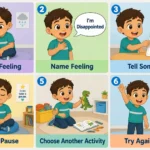
When I'm Disappointed: 6 Steps to Recognize and Manage Disappointment in Young
Previous

When I’m Disappointed: 6 Steps to Recognize and Manage Disappointment in Young Children

Challenges and Gaps in Autism Spectrum Disorder Assessment Among Individuals with Cerebral
Next

Challenges and Gaps in Autism Spectrum Disorder Assessment Among Individuals with Cerebral Palsy and Early-Onset Motor Conditions

No Comment! Be the first one.

Leave a Reply Cancel reply

Your email address will not be published. Required fields are marked *

AAC asking for a break asking for help autism education autism parenting autism research Autism Science Foundation autism spectrum disorder autism support child development child independence children's feelings child transitions communication communication phrases communication skills coping strategies daily living skills emotional regulation everyday challenges fine motor skills Functional Communication Gross Motor Skills IEP support language development learning through play parent advocacy parenting tips parent preparation positive behavior support predictable routines problem solving replacement skills school accommodations school support self-advocacy sensory breaks sensory support special education speech and language visual learning visual learning set visual routine visual supports young children

  • Teaching WH Questions: 6 Simple Examples for Young Children
    Teaching WH Questions: 6 Simple Examples for Young Children
    Learn how to teach young children important WH questions like who, what, where, when, why, and how with 6 simple visual examples and practical tips for parents.
  • Advancing Sleep Care in Children with Neurodevelopmental Disorders Through Phenotype-Focused Approaches
    Advancing Sleep Care in Children with Neurodevelopmental Disorders Through Phenotype-Focused Approaches
    Sleep disturbances are common in children with neurodevelopmental disorders, but diagnosis alone offers limited treatment guidance. A phenotype-focused approach may improve care.
  • Study Reveals Varied Preferences for Autism Terminology Among Autistic Individuals and Parents
    Study Reveals Varied Preferences for Autism Terminology Among Autistic Individuals and Parents in the U.S.
    A U.S. study of over 5,000 participants reveals diverse preferences for autism-related terminology, highlighting the importance of respectful, individualized language use.
  • Virtual Caregiver-Led Autism Intervention Adapted for Spanish-Speaking Families Shows Promise
    Virtual Caregiver-Led Autism Intervention Adapted for Spanish-Speaking Families Shows Promise
    A newly adapted virtual caregiver-led intervention shows potential in supporting Spanish-speaking families of children with autism by incorporating cultural and linguistic considerations.
  • Handling Disagreement: 6 Clear Steps to Support Your Child's Social Skills
    Handling Disagreement: 6 Clear Steps to Support Your Child’s Social Skills
    Teach your child 6 clear steps to handle disagreement calmly and respectfully: notice the problem, pause, say what happened, ask for space or help, choose a solution, and return when ready.
Advancing Sleep Care in Children with Neurodevelopmental Disorders Through Phenotype-Focused Approaches
August 25, 2026
Study Reveals Varied Preferences for Autism Terminology Among Autistic Individuals and Parents
Study Reveals Varied Preferences for Autism Terminology Among Autistic Individuals and Parents in the U.S.
August 25, 2026
Virtual Caregiver-Led Autism Intervention Adapted for Spanish-Speaking Families Shows Promise
August 25, 2026
Pediatric Primary Care Network Integrates Autism Spectrum Disorder Evaluation and Support Services
August 25, 2026
Expressing Discomfort and Asking for Help: 6 Essential Communication Phrases for Young
Expressing Discomfort and Asking for Help: 6 Essential Communication Phrases for Young Children
47 views
Preparing for Loud Events: 6 Sensory Support Steps for Children
47 views
Preparing for an IEP Meeting: 6 Essential Parent Steps for Success
37 views
Using a Calm Voice: 5 Positive Steps for Young Children
34 views
Color Sorting Treasure Hunt: A Fun Learning Through Play Activity
34 views

Content on this website is created with the assistance of artificial intelligence (AI), while some portions are still reviewed and overseen by humans. All content and resources are provided completely free of charge.

Some information may be referenced or cited from reputable sources. Whenever possible, we will clearly identify the sources used within each article.

If you have any questions, feedback, or would like to contact us, please email: info@autismwords.com

Copyright 2026 — Love Beyond Words - autismwords.com. All rights reserved. Blogsy WordPress Theme

Join Us on the Journey to Understanding Autism

Subscribe to receive curated autism knowledge, lessons, and the latest news — delivered to you regularly.

We promise to send only helpful autism-related information and knowledge — no ads, no spam. You can unsubscribe anytime.

Thank you for subscribing!