
Hidden Markov Models Reveal Distinct Brain Network Dynamics in Autism Spectrum Disorder

New Insights into Autism Brain Connectivity Using Advanced Imaging Analysis
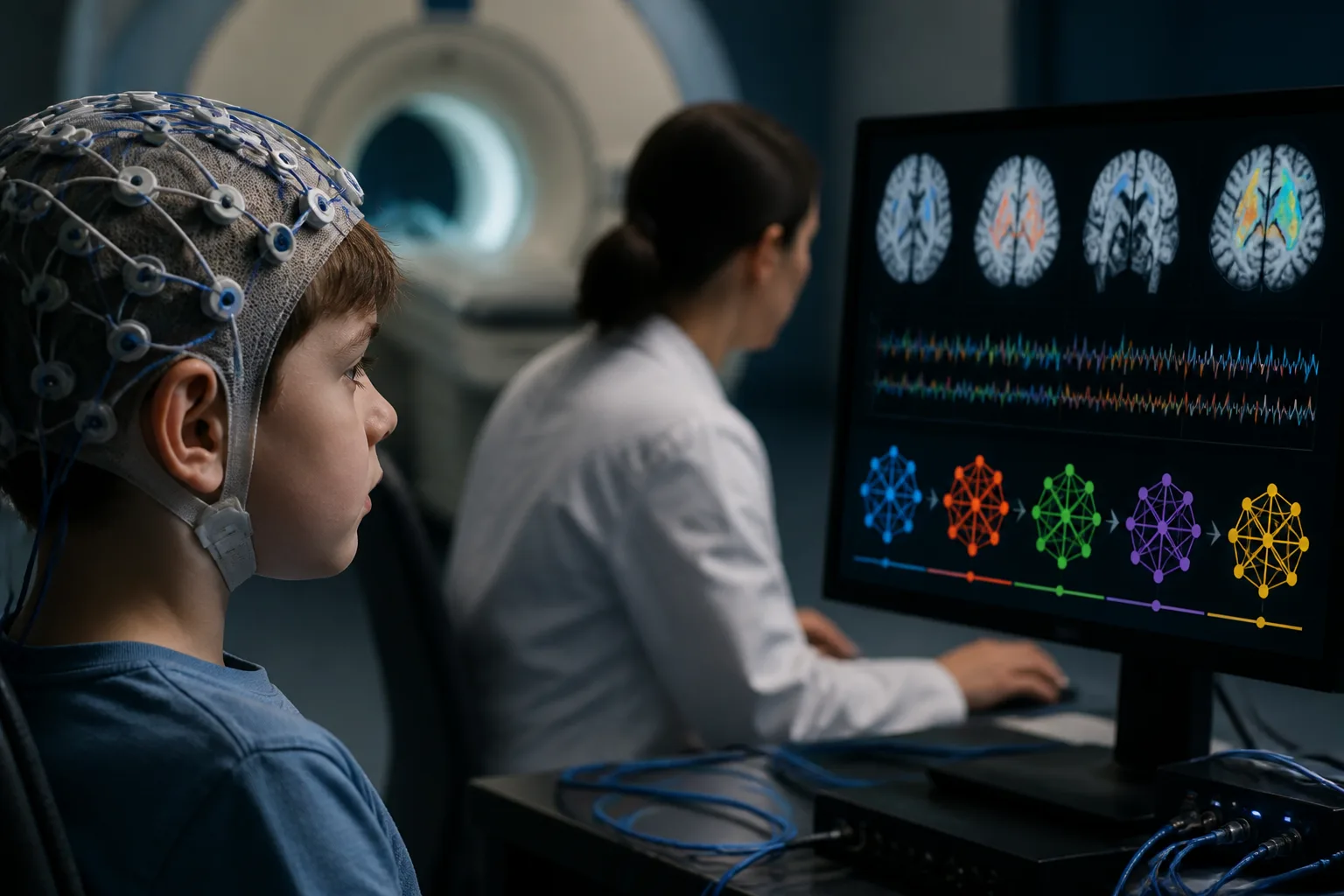
Recent research has applied Hidden Markov Models (HMMs) to resting-state functional MRI (rs-fMRI) data to better understand brain network dynamics in individuals with autism spectrum disorder (ASD). This approach captures the temporal fluctuations of brain activity more effectively than traditional static connectivity methods, offering fresh perspectives on the neural mechanisms underlying ASD.
Systematic Review and Meta-Analysis Findings
A systematic review and meta-analysis published online ahead of print in Journal of Autism and Developmental Disorders synthesized data from seven peer-reviewed studies that used HMMs on rs-fMRI in ASD populations. The analysis demonstrated that HMM-derived metrics have strong diagnostic potential, with a pooled area under the curve (AUC) of 0.85, indicating good accuracy in distinguishing individuals with ASD from typically developing controls.
Key findings revealed that people with ASD exhibit significantly reduced mean lifetime (MLT) and fractional occupancy (FO) in brain states associated with the default mode network (DMN), which is involved in integrative cognitive processes. Conversely, these individuals showed prolonged MLT and increased FO in states linked to sensory and attention networks, suggesting heightened and more persistent activation in these areas.
Brain Network Dynamics in ASD
The DMN-related states, which typically support social cognition and self-referential thought, were less engaged in ASD participants. In contrast, sensory and attention networks demonstrated hyperactivation and longer persistence. Transition analyses indicated fewer shifts from sensory to DMN states and more repetitive activity within sensory-motor states, reflecting a pattern of rigid brain dynamics.
Clinical Correlations and Implications
Importantly, these HMM metrics correlated negatively with Autism Diagnostic Observation Schedule (ADOS) scores, suggesting that more pronounced alterations in brain dynamics align with greater symptom severity. This supports the potential of HMM-based rs-fMRI analysis as a tool for personalized diagnostics and understanding the neural basis of ASD.
Considerations and Limitations
Despite promising results, the studies included showed substantial heterogeneity in methodology, such as differences in brain atlases, number of HMM states modeled, and participant characteristics. Risk of bias was generally low to moderate, with some studies not fully adjusting for confounding variables. These factors highlight the need for standardized protocols in future research to enhance comparability and clinical applicability.
Conclusion
This meta-analysis underscores that ASD is characterized by imbalanced and inflexible temporal brain dynamics, marked by diminished engagement of integrative networks and dominance of sensory-related activity. Hidden Markov Models applied to rs-fMRI provide a valuable framework for capturing these complex patterns, offering pathways toward improved mechanistic understanding and individualized diagnostic strategies.
For more detailed information, see the original publication: Autism Spectrum Disorder Through the Lens of Hidden Markov Models Applied to Resting-State fMRI.
Download the images in this article