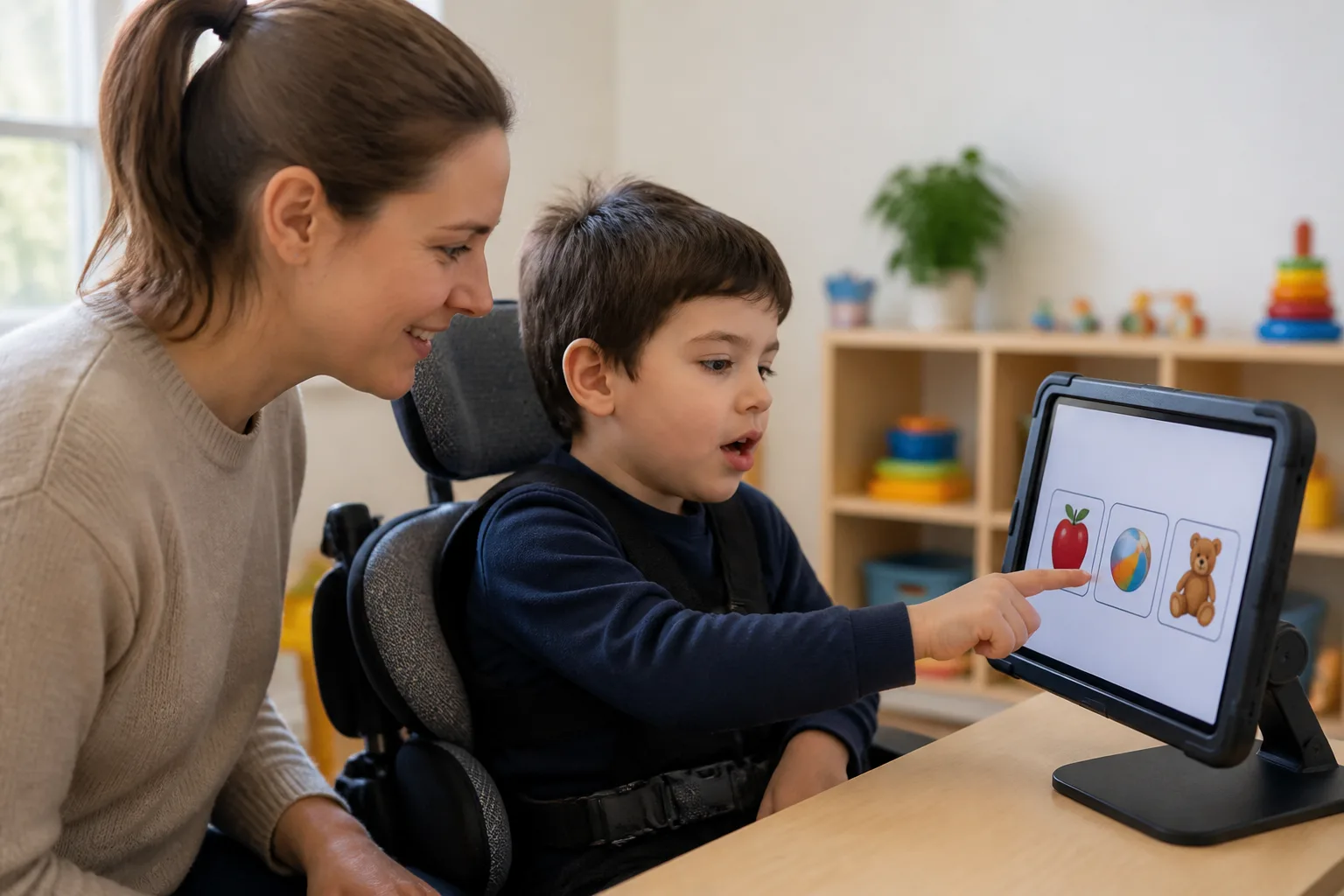
AI-Powered Visual Scene Displays Show Promise for Supporting Communication in Young Children with Complex Needs

Study Explores AI-Enhanced Tools to Foster Communication in Preschoolers
A recent study investigated the effectiveness of an artificial intelligence (AI)-driven visual scene display (VSD) in helping young children with complex communication needs (CCN) develop independent manding skills, which involve making requests or expressing needs. This research, published in Behavioral Sciences, focused on three preschool-aged children, including those with suspected or confirmed autism spectrum disorder diagnoses. The study employed a structured intervention combining the AI-powered VSD with time delays, least-to-most prompting, and reinforcement strategies.
Key Findings: Improved Independent Manding
The study utilized a non-concurrent multiple baseline design across participants to assess the impact of the intervention. Results indicated that all three children showed increased independent manding after the introduction of the AI-enhanced VSD. Specifically, one child, Brianna, reached the mastery criterion within nine intervention sessions. The other two participants, Nick and Vera, achieved mastery within nine and thirteen sessions, respectively. Furthermore, follow-up data suggested that two of the three children maintained their independent manding skills after the intervention concluded.
Context and Significance
Visual scene displays are known tools in augmentative and alternative communication (AAC) that use images or scenes to support language development in children with CCN. This study extends prior research by integrating AI technology into VSDs, potentially offering more adaptive and responsive communication aids. The findings provide preliminary evidence that AI-powered VSDs can be effective in supporting early communication skill acquisition among young children facing communication challenges.
Implications for Families and Clinicians
For families and practitioners working with children who have complex communication needs, these results highlight a promising technological approach to enhance communication development. The AI-driven VSD may offer a more engaging and tailored experience, potentially accelerating the acquisition of requesting behaviors. However, individual responses varied, and ongoing support may be necessary to sustain gains.
Limitations and Future Directions
The study acknowledges limitations related to the prototype AI technology used, including its current capabilities and the small sample size. Further research with larger participant groups and refined AI tools is needed to confirm these findings and explore long-term outcomes. Additionally, clinical considerations such as customization, accessibility, and integration into existing therapy programs warrant attention.
For more detailed information, the original study can be accessed here.
Download the images in this article