Skip to content
-
Subscribe to our newsletter & never miss our best posts. Subscribe Now!
Love Beyond Words - autismwords.com Love Beyond Words - autismwords.com Love Beyond Words - autismwords.com

Supporting children with autism through education and care

Love Beyond Words - autismwords.com Love Beyond Words - autismwords.com Love Beyond Words - autismwords.com

Supporting children with autism through education and care

  • Learning & Support
    • Communication Skills
    • Daily Living Skills
    • Emotional Regulation
    • Everyday Challenges
    • Learning Through Play
    • Parent Education & Advocacy
    • Positive Behavior Support
    • Routines & Transitions
    • Social Skills
    • Speech & Language
  • Learning & Support
    • Communication Skills
    • Daily Living Skills
    • Emotional Regulation
    • Everyday Challenges
    • Learning Through Play
    • Parent Education & Advocacy
    • Positive Behavior Support
    • Routines & Transitions
    • Social Skills
    • Speech & Language
Close

Search

  • https://www.facebook.com/
  • https://twitter.com/
  • https://t.me/
  • https://www.instagram.com/
  • https://youtube.com/
Subscribe
Love Beyond Words - autismwords.com Love Beyond Words - autismwords.com Love Beyond Words - autismwords.com

Supporting children with autism through education and care

Love Beyond Words - autismwords.com Love Beyond Words - autismwords.com Love Beyond Words - autismwords.com

Supporting children with autism through education and care

  • Learning & Support
    • Communication Skills
    • Daily Living Skills
    • Emotional Regulation
    • Everyday Challenges
    • Learning Through Play
    • Parent Education & Advocacy
    • Positive Behavior Support
    • Routines & Transitions
    • Social Skills
    • Speech & Language
  • Learning & Support
    • Communication Skills
    • Daily Living Skills
    • Emotional Regulation
    • Everyday Challenges
    • Learning Through Play
    • Parent Education & Advocacy
    • Positive Behavior Support
    • Routines & Transitions
    • Social Skills
    • Speech & Language
Close

Search

  • https://www.facebook.com/
  • https://twitter.com/
  • https://t.me/
  • https://www.instagram.com/
  • https://youtube.com/
Subscribe
Home/Learning & Support/Daily Living Skills/Cleaning Up After Playtime: 6 Steps to Teach Your Child Responsibility and Independence
Cleaning Up After Playtime: 6 Steps to Teach Your Child Responsibility and
Daily Living Skills

Cleaning Up After Playtime: 6 Steps to Teach Your Child Responsibility and Independence

By Andyle
August 20, 2026 2 Min Read
0

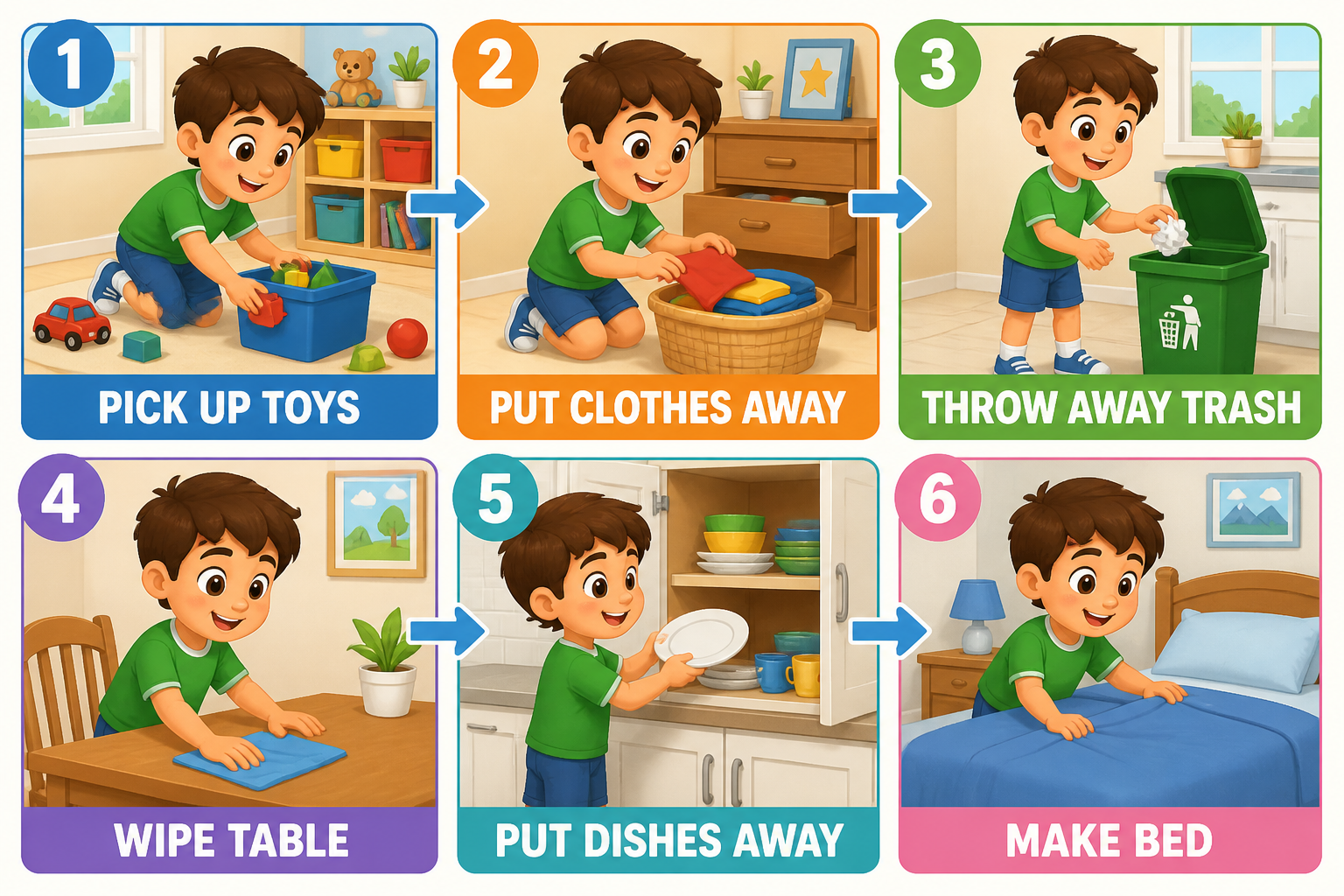
Teaching children how to clean up after playtime is an important daily living skill that fosters responsibility, organization, and independence. This visual learning set presents six related steps that help children understand and participate in tidying their environment after playing. Using bright, friendly cartoon illustrations, this routine breaks down the task into manageable actions that children can follow and practice.

Why Teach Cleaning Up After Playtime?

Cleaning up after playtime is more than just putting things away; it builds habits that support self-care and respect for shared spaces. Children who learn these skills early develop better executive functioning, including planning and sequencing tasks. For autistic children and those needing additional support, visual learning aids make routines clearer and reduce anxiety by setting predictable expectations.

The 6-Step Cleaning Up Routine

This visual routine includes the following steps, arranged in a logical order to guide children through the process:

  1. Pick Up Toys: The child gathers toys from the floor or play area.
  2. Put Clothes Away: The child places any clothes or dress-up items into a drawer or basket.
  3. Throw Away Trash: The child disposes of any wrappers, scraps, or trash in a bin.
  4. Wipe Table: The child uses a cloth to wipe the play surface clean.
  5. Put Dishes Away: The child puts any cups or plates used during playtime into the cupboard or sink.
  6. Make Bed: The child straightens blankets or cushions in the play or bedroom area.

How to Use This Visual Learning Set

Parents and caregivers can use this visual poster to support children in practicing the cleaning up routine:

  • Show the Visual Before Starting: Review the steps together so the child knows what to expect.
  • Practice One Step at a Time: Focus on mastering each action before moving to the next.
  • Use Clear Prompts: Use simple language and gestures to guide the child through each step.
  • Celebrate Participation: Praise efforts and progress to encourage motivation and confidence.

Remember, every child develops at their own pace. Some may need more support or time with certain steps, and that’s perfectly okay. The goal is to encourage participation and build independence gradually.

Supporting Independence Through Visual Learning

Visual schedules and educational posters like this help children understand routines by providing clear, consistent cues. They reduce reliance on verbal instructions alone and can be especially helpful for children with communication or sensory processing differences. By practicing these steps regularly, children gain confidence and skills that extend beyond playtime to other household responsibilities.

Which daily living skill is your child currently working on? Share your experiences and tips in the comments!

Download the images in this article

  • Cleaning Up After Playtime: 6 Steps to Teach Your Child Responsibility and
Author

Andyle

Follow Me
Other Articles
Personal Hygiene Visual Learning Set: 6 Steps to Help Your Child Develop
Next

Personal Hygiene Visual Learning Set: 6 Steps to Help Your Child Develop Independence

No Comment! Be the first one.

Leave a Reply Cancel reply

Your email address will not be published. Required fields are marked *

  • Preparing for Loud Events: 6 Sensory Support Steps for Children
    Preparing for Loud Events: 6 Sensory Support Steps for Children
    Learn 6 practical sensory support steps to help children prepare for loud events. Teach recognition, communication, breaks, and choices for comfort and confidence.
  • Color Sorting Treasure Hunt: A Fun Learning Through Play Activity
    Color Sorting Treasure Hunt: A Fun Learning Through Play Activity
    Engage your child with a playful color sorting treasure hunt that builds color recognition, matching, and motor skills in six fun, easy steps.
  • Teaching Prepositions: IN, ON, UNDER, NEXT TO
    Teaching Prepositions: IN, ON, UNDER, NEXT TO
    Teach children the prepositions IN, ON, UNDER, and NEXT TO with a fun, clear cartoon poster. Help your child describe where things are with simple language and play.
  • Expressing Discomfort and Asking for Help: 6 Essential Communication Phrases for Young
    Expressing Discomfort and Asking for Help: 6 Essential Communication Phrases for Young Children
    Help your child express discomfort and ask for help with 6 practical communication phrases. Teach "I don't like it," "Help me please," "Too loud," and more for everyday situations.
  • Snack Time Routine Visual Learning Set: 6 Steps to Help Your Child
    Snack Time Routine Visual Learning Set: 6 Steps to Help Your Child Build Independence
    Teach your child the snack time routine with 6 simple steps: wash hands, get snack, open snack, eat, throw trash away, and wipe mouth. Build independence with this visual guide.
Snack Time Routine Visual Learning Set: 6 Steps to Help Your Child Snack Time Routine Visual Learning Set: 6 Steps to Help Your Child Build Independence
August 21, 2026
Getting Dressed Visual Learning Set: 6 Steps to Help Your Child Build Getting Dressed Visual Learning Set: 6 Steps to Help Your Child Build Independence
August 21, 2026
Grocery Shopping Routine Visual Learning Set: 6 Steps to Help Your Child Grocery Shopping Routine Visual Learning Set: 6 Steps to Help Your Child Participate Independently
August 20, 2026
Personal Hygiene Visual Learning Set: 6 Steps to Help Your Child Develop Personal Hygiene Visual Learning Set: 6 Steps to Help Your Child Develop Independence
August 20, 2026
Personal Hygiene Visual Learning Set: 6 Steps to Help Your Child Develop Personal Hygiene Visual Learning Set: 6 Steps to Help Your Child Develop Independence
4 views
Teaching Personal Boundaries: 6 Essential Communication Phrases for Young Children Teaching Personal Boundaries: 6 Essential Communication Phrases for Young Children
4 views
Cleaning Up After Playtime: 6 Steps to Teach Your Child Responsibility and Cleaning Up After Playtime: 6 Steps to Teach Your Child Responsibility and Independence
2 views
Grocery Shopping Routine Visual Learning Set: 6 Steps to Help Your Child Grocery Shopping Routine Visual Learning Set: 6 Steps to Help Your Child Participate Independently
2 views
Preparing for Loud Events: 6 Sensory Support Steps for Children Preparing for Loud Events: 6 Sensory Support Steps for Children
0 views
Copyright 2026 — Love Beyond Words - autismwords.com. All rights reserved. Blogsy WordPress Theme