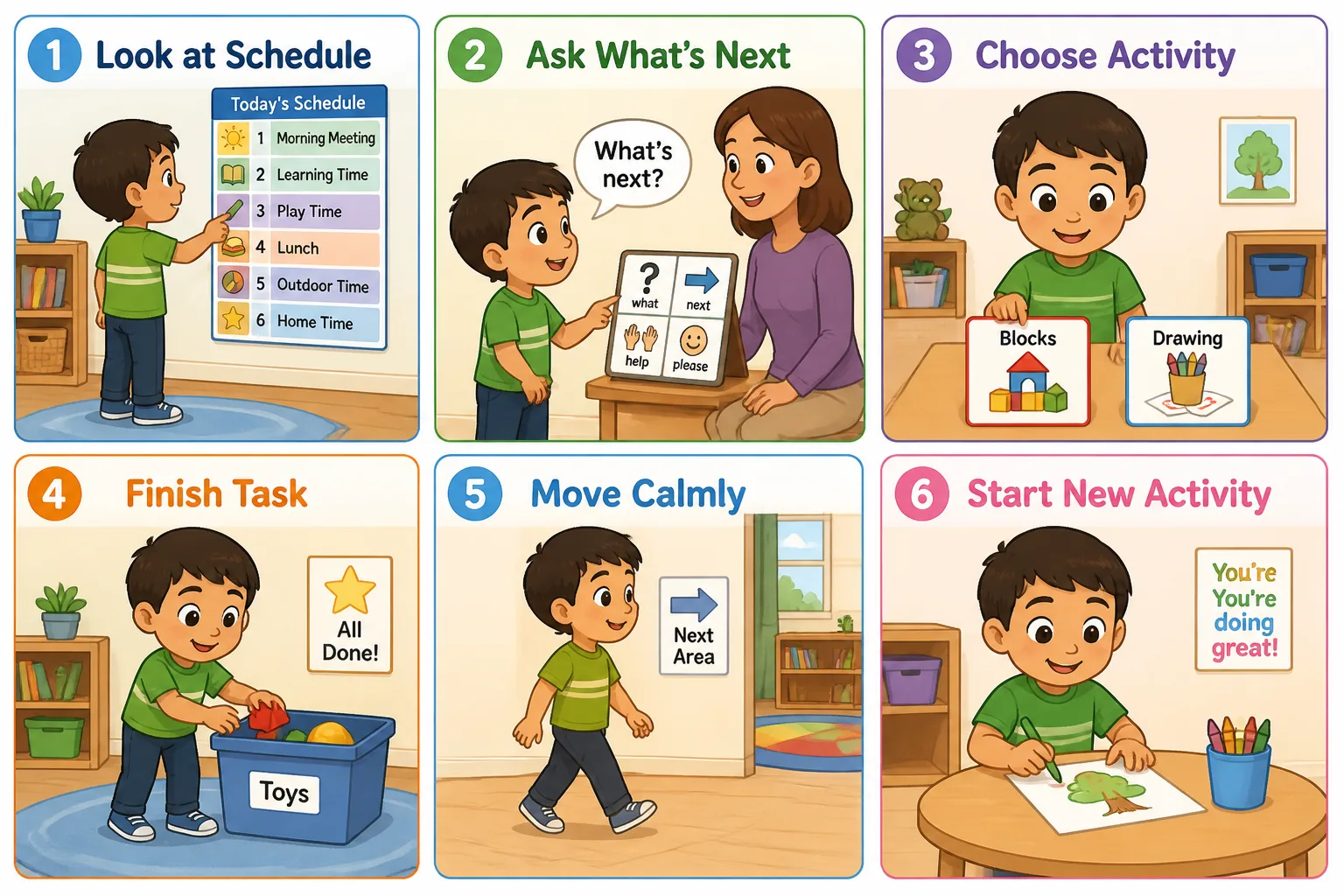

Transitioning between activities can be a challenging time for many young children, especially those who need extra support with routines and communication. Teaching positive behavior skills for transitioning helps children feel more secure, reduces anxiety, and promotes independence. This article explains six practical, child-friendly steps to support smooth transitions using clear expectations, communication, and choice.
1. Look at Schedule
Using a visual schedule helps children prepare for what comes next. Encourage your child to look at a picture or symbol schedule before an activity ends. This sets clear expectations and reduces surprises, which can be calming and reassuring.
2. Ask What’s Next
Teach your child to communicate about the next activity. This can be through words, signs, gestures, or AAC devices. Asking “What’s next?” gives your child control and helps them anticipate the change.
3. Choose Activity
Offering a choice between two reasonable activities empowers your child and increases cooperation. For example, “Do you want to play with blocks or read a book next?” Choices support autonomy and reduce resistance.
4. Finish Task
Encourage your child to complete or tidy up the current activity before moving on. This teaches responsibility and creates a clear stopping point, making transitions more predictable.
5. Move Calmly
Model and reinforce calm movement between activities. Walking slowly and safely helps children regulate their bodies and signals readiness for the next task.
6. Start New Activity
Support your child in beginning the new activity with a positive attitude. Use praise for trying or participating, even if the child needs extra help. Positive reinforcement encourages ongoing success.
Supporting Your Child at Home and School
Parents and caregivers can support these steps by showing the visual schedule consistently, keeping instructions short and clear, and practicing communication skills when calm. Reinforce every small success with specific praise like “Great job looking at the schedule!” or “I like how you asked what comes next.” When transitions are difficult, reduce demands and offer breaks if needed.
For additional support with communication during transitions, you might find helpful strategies in our articles on Asking for a Break and Using a Calm Voice.
What is one way you help your child feel ready for changes in their day?
Download the images in this article