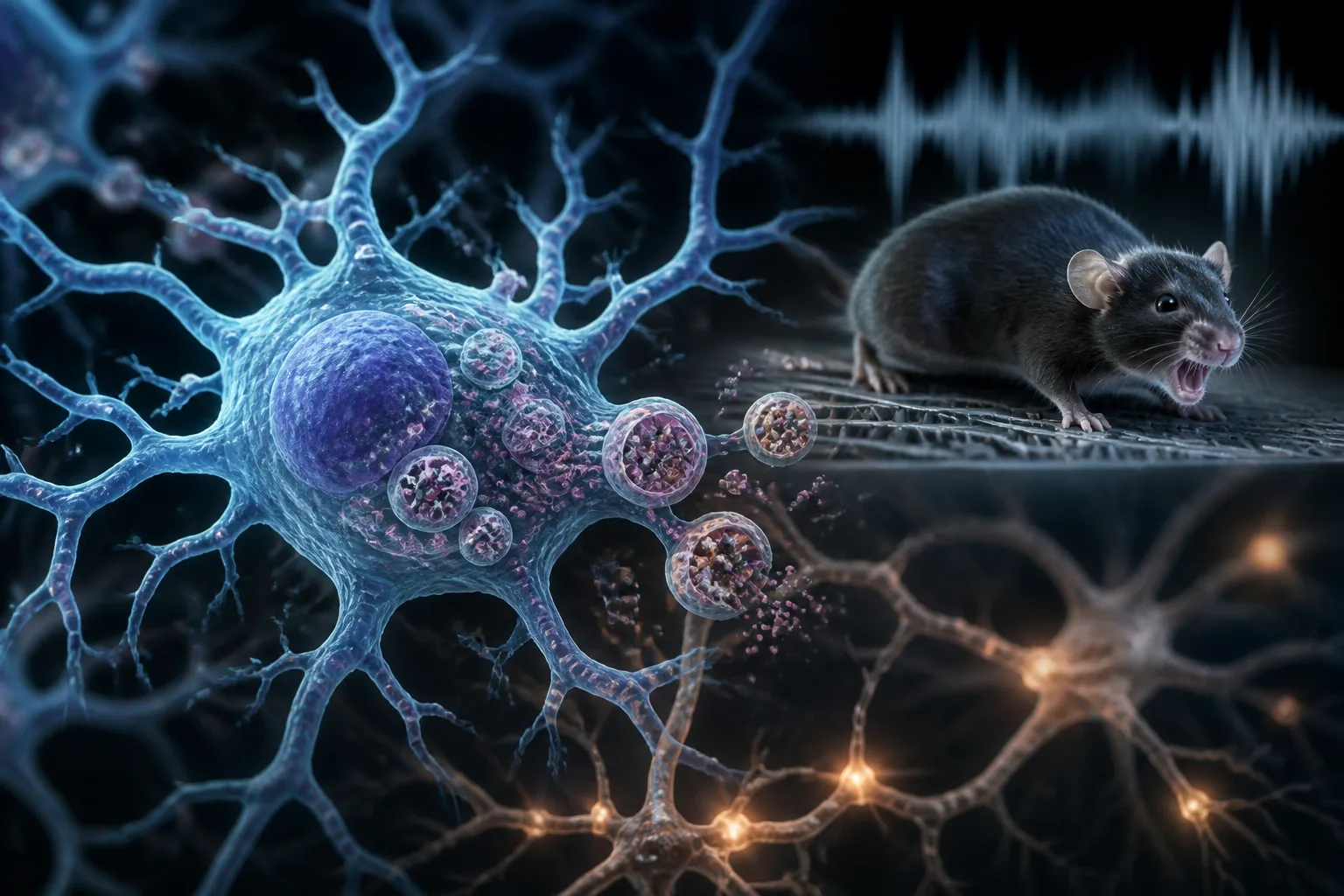
Microglial Dysfunction Linked to Fragile X Syndrome Through Impaired Lysosomal Activity

New Insights into Fragile X Syndrome Mechanisms
Fragile X syndrome (FXS), the leading inherited cause of intellectual disability and autism spectrum disorder, has traditionally been studied with a focus on neuronal dysfunction. However, recent research suggests that microglia—immune cells in the brain—may play a pivotal role in the disorder’s development. A study published online ahead of print in Molecular Psychiatry reveals that impaired lysosomal function in microglia, regulated by the fragile X mental retardation protein (FMRP), contributes to key FXS features.
Microglial FMRP Deficiency Recapitulates Fragile X Symptoms in Mice
The study utilized genetically modified mice lacking the Fmr1 gene specifically in microglial cells. These mice exhibited audiogenic seizures (AGS) and a reduction in parvalbumin (PV) neurons—two hallmark characteristics observed in mice with global Fmr1 deletion, a common model for FXS. This finding indicates that microglial FMRP is essential for maintaining normal brain function related to FXS symptoms.
FMRP Regulates Lysosomal Genes in Microglia
Using single-nucleus RNA sequencing (snRNA-Seq) combined with RNA immunoprecipitation techniques, researchers identified that FMRP binds to several messenger RNAs encoding lysosomal proteins within microglia. The presence of FMRP promotes proper lysosomal protein expression, which is crucial for lysosome function. When FMRP is deficient, lysosomal activity in microglia is disrupted, potentially impairing their ability to support neuronal health.
Progranulin Deficiency Links Microglial Dysfunction to Neuronal Loss
One significant consequence of FMRP loss in microglia is a reduction in progranulin, a secreted protein encoded by the Grn gene known to support neuron survival. The study showed that decreased progranulin levels were associated with increased apoptosis of PV neurons during brain development. Importantly, mice with partial progranulin deficiency (Grn+/-) exhibited similar decreases in PV neuron density as Fmr1-deficient mice. Mice with combined deficiencies did not show additive effects, suggesting a shared pathway.
Therapeutic Potential of Progranulin Restoration
Overexpression of progranulin in Fmr1-deficient mice was able to rescue both the incidence of audiogenic seizures and PV neuron loss. This finding highlights progranulin as a promising therapeutic target for FXS, emphasizing the importance of microglial health in the disorder’s pathology.
Implications for Understanding and Treating Fragile X Syndrome
This research underscores a previously underappreciated role of microglia and lysosomal function in the development of FXS. While prior clinical trials have focused primarily on neuronal targets, these findings suggest that therapies aimed at restoring microglial lysosomal function or progranulin levels might offer new avenues for intervention.
Limitations and Future Directions
Although the study provides compelling evidence linking microglial dysfunction to FXS phenotypes in mice, further research is needed to confirm these mechanisms in humans. Additionally, the complexity of FXS pathology means that multiple pathways likely contribute to the disorder, and microglial impairment represents one important piece of the puzzle.
For more detailed information, the original study can be accessed here.
Download the images in this article