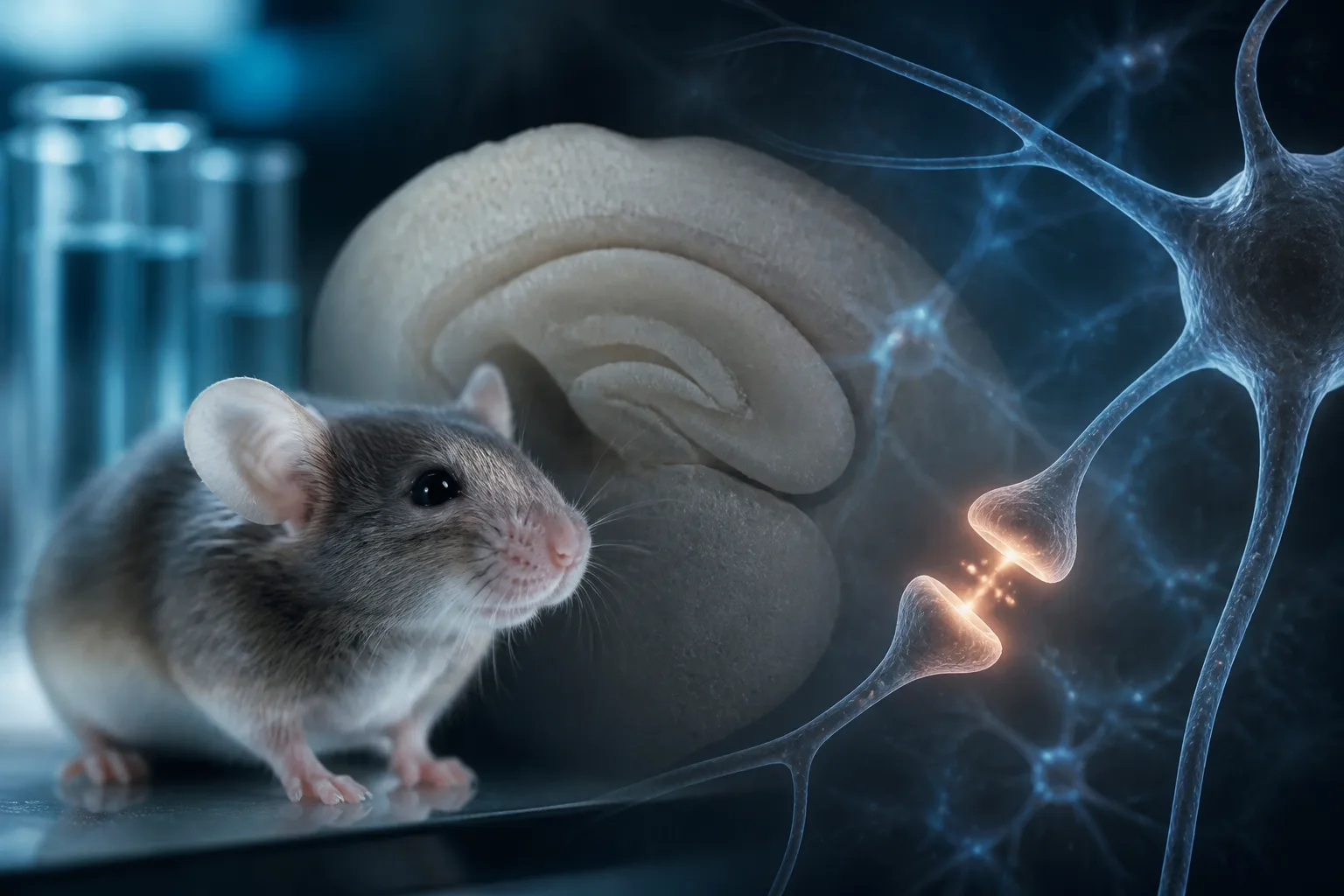
Early D-Aspartate Deficiency Alters Hippocampal Synaptic Plasticity in Juvenile Mice

Introduction
D-Aspartate (D-Asp) is a naturally occurring amino acid in the brain that acts as an agonist for NMDA receptors, which are critical for synaptic signaling and brain development. Its levels peak during early development, suggesting a key role in shaping neural circuits. Disruptions in D-Asp balance have been linked to neuropsychiatric conditions such as schizophrenia and autism spectrum disorders, which involve early-life brain circuit vulnerabilities. However, how D-Asp deficiency affects hippocampal function, particularly synaptic plasticity, has not been fully understood.
Study Overview
Researchers investigated the effects of constitutive D-Asp depletion on hippocampal synaptic function using a genetically engineered mouse model (Ddo-knock-in or Ddo-KI). These mice overexpress the enzyme D-aspartate oxidase (DDO), which degrades D-Asp, leading to persistent low levels of D-Asp from embryonic stages onward. The study focused on the CA1 region of the hippocampus, an area essential for learning and memory.
Key Findings
Electrophysiological recordings from hippocampal slices of male and female mice at postnatal days 30 (P30) and 60 (P60) revealed that basic synaptic transmission was not significantly affected by D-Asp deficiency. Measures such as paired-pulse ratio and spontaneous excitatory/inhibitory events showed no genotype-dependent differences.
However, synaptic plasticity dependent on NMDA receptors was distinctly altered. At P30, theta-burst stimulation induced a notably greater long-term potentiation (LTP) in Ddo-KI mice compared to controls, indicating an enhanced synaptic strengthening. This enhancement was not observed at P60, suggesting the effect is limited to juvenile stages.
Further patch-clamp analyses showed a reduced ratio of AMPA receptor (AMPAR) to NMDA receptor (NMDAR) mediated currents in P30 male Ddo-KI mice, implying an imbalance in synaptic receptor function.
Importantly, applying D-Asp acutely to hippocampal slices from Ddo-KI mice restored LTP levels to those seen in wild-type mice, demonstrating that the synaptic changes are reversible and sensitive to D-Asp availability.
Biochemical Confirmation and Interpretation
Biochemical assays confirmed increased activity of DDO and reduced D-Asp concentrations in Ddo-KI mice at both ages, indicating that the developmental specificity of the LTP phenotype is unlikely due to changes in D-Asp metabolism over time.
These results suggest that early-life D-Asp deficiency leads to an unexpected increase in NMDA receptor-dependent synaptic plasticity during juvenile stages, highlighting the importance of maintaining D-Asp balance during brain development.
Implications for Neurodevelopmental Disorders
Given the association of D-Asp dysregulation with neuropsychiatric disorders marked by early circuit vulnerability, these findings provide insight into how altered D-Asp levels may impact hippocampal function during critical developmental windows. The reversible nature of the synaptic changes also points to potential therapeutic avenues targeting D-Asp pathways.
Limitations and Future Directions
While the study reveals a developmental-stage specific effect of D-Asp depletion on synaptic plasticity, it does not establish direct causation for behavioral outcomes or neuropsychiatric symptoms. Further research is needed to explore how these synaptic alterations translate to cognitive or behavioral changes and whether similar mechanisms occur in humans.
For more detailed information, see the original research article: Embryonic Depletion of D-Aspartate Perturbs NMDA Receptor-Dependent Long-Term Potentiation in the Hippocampus of Juvenile Mice.
Download the images in this article