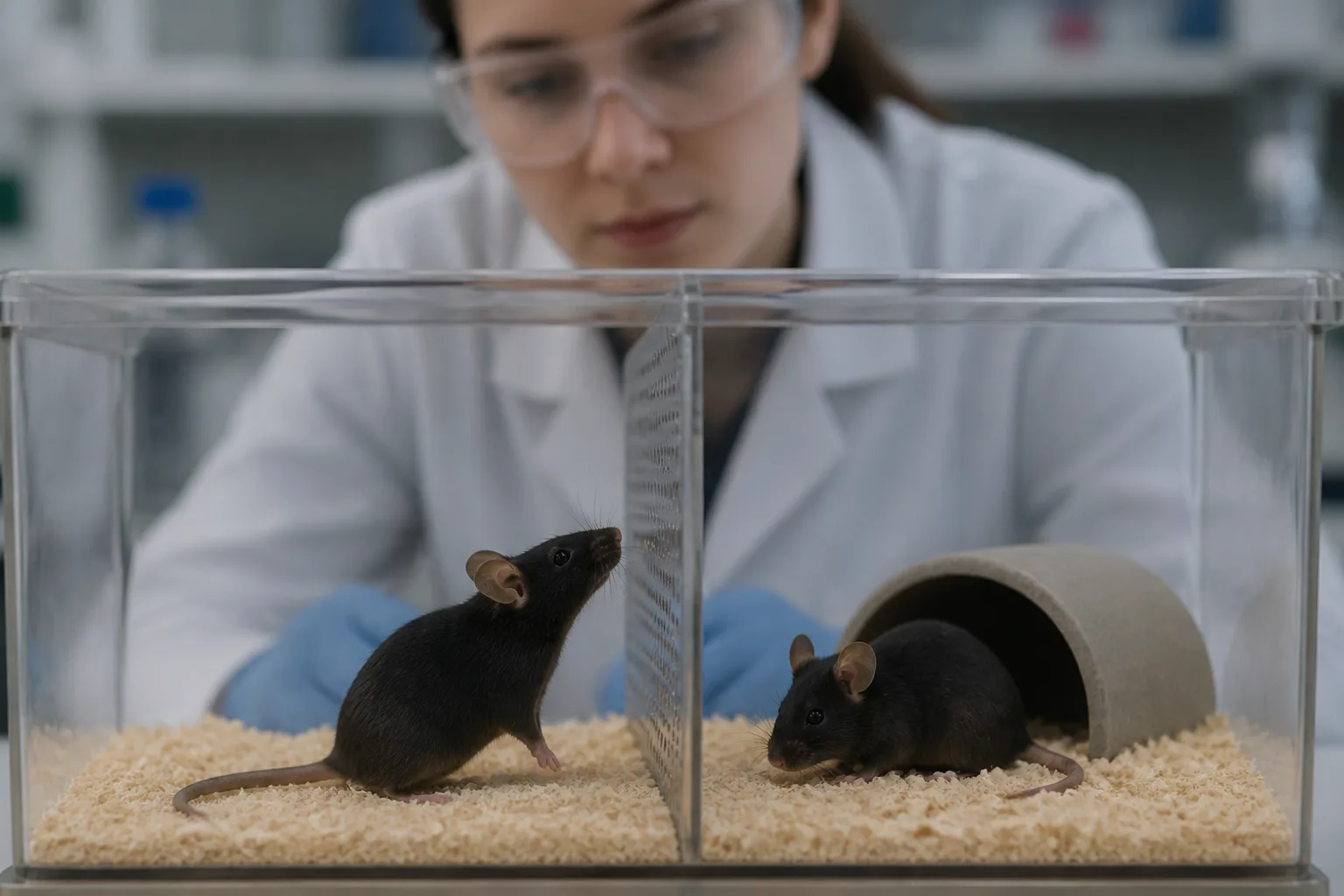
Study Reveals Sex-Specific Behavioral Changes in Mice Lacking α5-Nicotinic Acetylcholine Receptors

New Insights into Neurodevelopmental Disorders Through Mouse Model Research
Researchers have identified sex-dependent behavioral differences in mice lacking the α5 subunit of nicotinic acetylcholine receptors (α5-nAChR), a protein linked to neurodevelopmental disorders such as autism spectrum disorders (ASD) and schizophrenia. This discovery sheds light on how genetic factors may influence the maturation of social, cognitive, and emotional behaviors differently in males and females.
Key Findings from the α5-nAChR Knockout Mouse Study
The study focused on genetically modified mice (referred to as ACNA5 mice) that do not express the α5 subunit. These mice exhibited a range of behavioral alterations relevant to core symptoms observed in ASD and schizophrenia. Notably, these changes varied by sex and age:
- Anxiety-like behavior: Adult ACNA5 mice showed opposite patterns between males and females, indicating a sex-specific effect emerging in adulthood.
- Spatial memory deficits: Female ACNA5 mice demonstrated early-onset difficulties in spatial memory tasks, while males experienced a gradual decline from adolescence into adulthood.
- Social behavior: Both male and female ACNA5 mice lacked typical social novelty preference. Females were socially indifferent, whereas males showed a strong preference for familiar individuals.
- Repetitive behaviors and nesting: Increased repetitive behaviors appeared earlier in males, and both sexes showed poor nest-building skills throughout development.
Understanding the Role of α5-nAChR in Neural Circuit Development
The α5 subunit plays a critical role in modulating neural circuits, particularly through its involvement in vasoactive intestinal peptide (VIP)-positive interneurons, which are important for regulating brain activity linked to social and cognitive functions. The study’s findings suggest that disruptions in α5-nAChR can affect the developmental trajectory of these circuits in a sex-dependent manner.
Implications for Families and Future Research
These results highlight the importance of considering sex differences in neurodevelopmental research and may help guide future investigations into targeted therapies for disorders like ASD and schizophrenia. The ACNA5 mouse model offers a valuable tool for exploring how genetic factors contribute to behavioral outcomes and for identifying critical periods when interventions might be most effective.
Limitations and Considerations
While the study provides important insights, it is based on an animal model, and direct extrapolation to humans should be approached cautiously. The findings indicate associations rather than direct causation, and further research is needed to clarify the mechanisms involved and to explore potential therapeutic strategies.
For more detailed information, see the original research publication on PubMed.
Download the images in this article