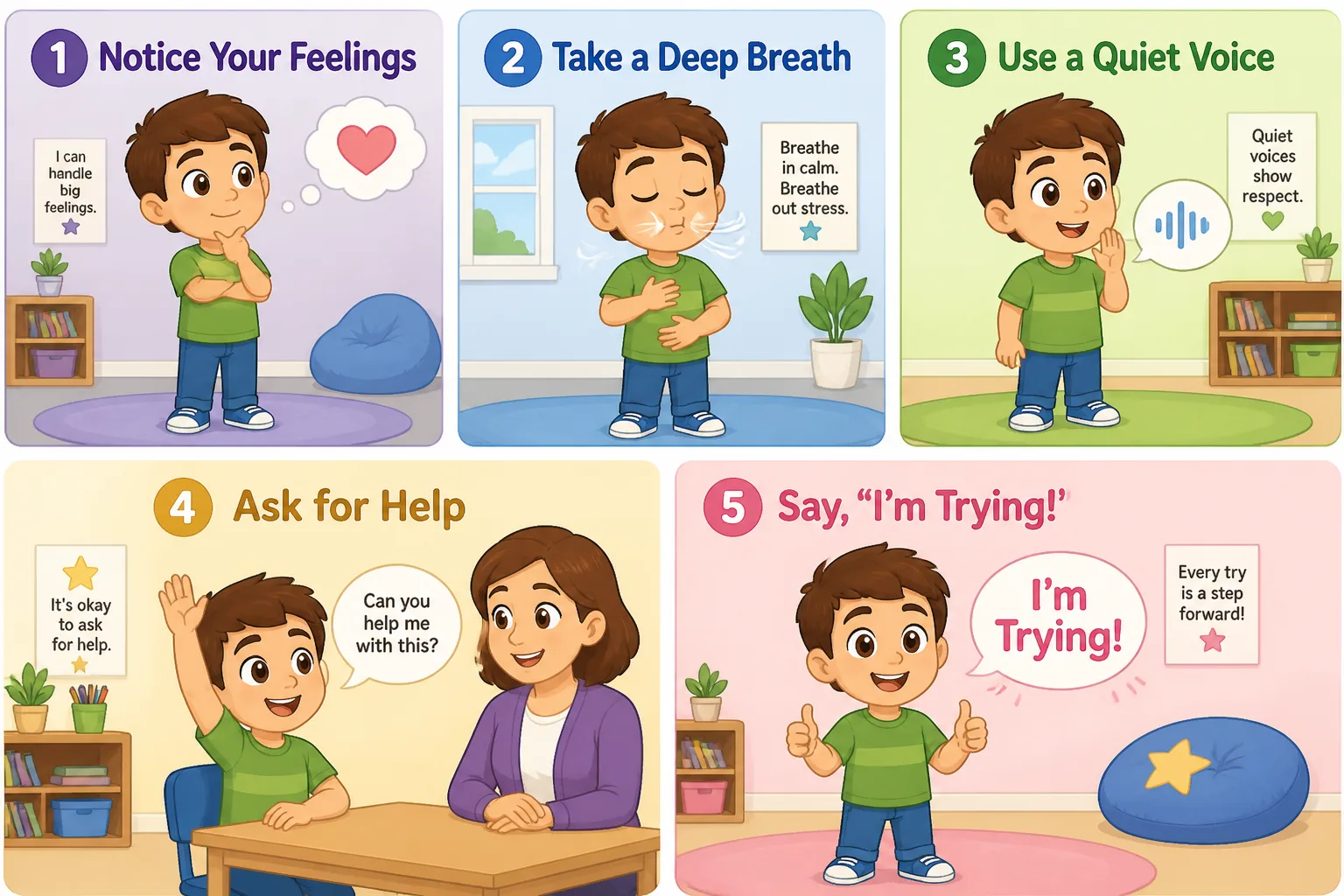

Teaching young children to use a calm voice is a vital positive behavior skill that supports better communication, emotional regulation, and social interactions. This visual learning set outlines 5 practical steps children can follow to express themselves calmly and safely, especially when they feel upset or overwhelmed.
Why Teach Using a Calm Voice?
Children often raise their voices when they feel frustrated, scared, or excited. Teaching them to notice their feelings and choose a calm voice helps prevent misunderstandings and supports positive relationships at home, school, and in the community. Using a calm voice is a replacement skill that can reduce challenging behaviors and encourage cooperation.
5 Positive Steps to Using a Calm Voice
1. Notice Your Feelings
Help your child recognize when they feel upset, angry, or overwhelmed. Use simple words or visuals to identify emotions. This awareness is the first step toward self-regulation.
2. Take a Deep Breath
Encourage your child to take a slow, deep breath to help calm their body and mind. Deep breathing is a proven strategy to reduce stress and prepare for calm communication.
3. Use a Quiet Voice
Model and practice speaking in a quiet, calm voice. You can use games or role-play to make this fun and engaging.
4. Ask for Help
Teach your child to ask for help if they feel unable to calm down or express themselves clearly. This can be through words, gestures, or AAC tools.
5. Say, “I’m Trying!”
Encourage your child to communicate their effort by saying or showing “I’m trying!” This reinforces positive attempts and builds confidence.
Supporting Your Child at Home
Parents can support these steps by preparing children before challenging situations, using visual supports, and offering choices. Keep instructions simple and praise specific positive behaviors, such as “Nice job using your quiet voice!” or “Thank you for asking for help.” Remember to teach these skills when your child is calm to increase success.
For additional strategies on handling emotions and communication, see Expressing Discomfort and Asking for Help: 6 Essential Communication Phrases for Young Children and Handling Frustration: 6 Positive Steps for Young Children.
Try This at Home
Next time your child feels upset, gently remind them to “Notice your feelings,” “Take a deep breath,” and “Use a quiet voice.” Celebrate their efforts and encourage them to say, “I’m trying!”
Parent question: What calm voice strategies have you found helpful for your child?
Download the images in this article