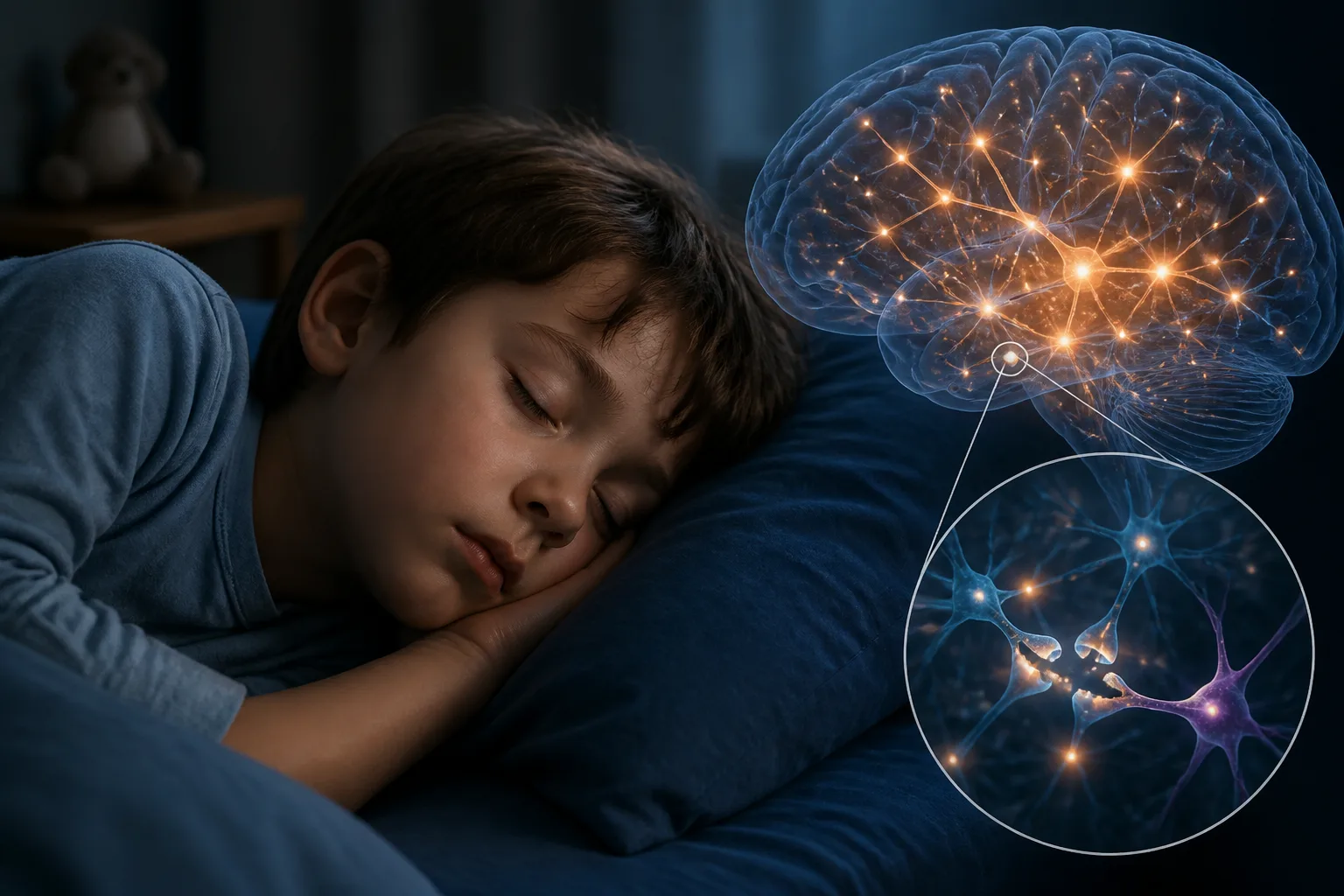
New Research Highlights Sleep’s Essential Role in Long-Term Memory Formation and Potential Links to Autism

Sleep and Memory: A Crucial Connection
Recent scientific findings emphasize the indispensable role of sleep in consolidating long-term memories. Researchers have proposed that during sleep, especially when brain regions are less engaged in active perception and cognition, a unique process involving dormant neurons in the brain’s cortical layer-2 supports the integration of new memories.
How Dormant Neurons Contribute to Memory Building
In large-brained mammals, including humans, certain neurons remain inactive or “dormant” within cortical columns. These quiescent cells appear to be recruited during offline periods—times when the brain is less focused on external stimuli—to help transform fleeting experiences into lasting memory imprints. This process is thought to occur predominantly during sleep cycles when the hippocampus replays recorded experiences, facilitating connections between active and free cortical columns through neurite outgrowth.
Sleep Cycle Dynamics and Neural Connectivity
Approximately half of each sleep cycle may involve this critical neural remodeling. The study also interprets rapid eye movements (REM) observed at the end of sleep cycles as a byproduct of cortical replay mechanisms that prime peripheral effectors and activate the hippocampus, enabling the formation of new neural pathways. Structural and functional brain data suggest a topological alignment between these processes and thalamocortical networks, which play a key role in sensory and cognitive functions.
Implications for Autism Spectrum Disorder
The research further explores how disruptions in this sleep-dependent neural integration might relate to autism. Specifically, an epigenetic reduction in the activity of the brain enzyme monoamine oxidase A (MAOA) may lead to excessive offline neural activity, causing abnormal branching between cortical columns. This aberrant connectivity could underlie some autistic symptoms.
The study proposes that the increasing prevalence of autism over recent generations might be influenced by genetic factors, including the masking effects of certain variants and X chromosome inactivation, alongside environmental risk factors that affect MAOA activity. Consequently, the authors suggest that screening for elevated MAOA activity during pregnancy could inform personalized interventions, potentially involving MAOA inhibitors to mitigate risk.
Considerations and Future Directions
While these findings offer a compelling framework linking sleep, memory consolidation, and autism, it is important to note that the theory remains to be fully validated through further experimental research. The proposed mechanisms provide a basis for new hypotheses and potential clinical applications but should be interpreted cautiously until more evidence is available.
For those interested in the detailed scientific analysis, the full study can be accessed here.
Download the images in this article