
Skip to content
-
Subscribe to our newsletter & never miss our best posts. Subscribe Now!
Love Beyond Words - autismwords.com Love Beyond Words - autismwords.com Love Beyond Words - autismwords.com

Supporting children with autism through education and care

Love Beyond Words - autismwords.com Love Beyond Words - autismwords.com Love Beyond Words - autismwords.com

Supporting children with autism through education and care

  • Learning & Support
    • Communication Skills
    • Daily Living Skills
    • Emotional Regulation
    • Everyday Challenges
    • Learning Through Play
    • Parent Education & Advocacy
    • Positive Behavior Support
    • Routines & Transitions
    • Social Skills
    • Speech & Language
  • Autism News & Perspectives
  • Learning & Support
    • Communication Skills
    • Daily Living Skills
    • Emotional Regulation
    • Everyday Challenges
    • Learning Through Play
    • Parent Education & Advocacy
    • Positive Behavior Support
    • Routines & Transitions
    • Social Skills
    • Speech & Language
  • Autism News & Perspectives
Close

Search

  • https://www.facebook.com/
  • https://twitter.com/
  • https://t.me/
  • https://www.instagram.com/
  • https://youtube.com/
Subscribe
Love Beyond Words - autismwords.com Love Beyond Words - autismwords.com Love Beyond Words - autismwords.com

Supporting children with autism through education and care

Love Beyond Words - autismwords.com Love Beyond Words - autismwords.com Love Beyond Words - autismwords.com

Supporting children with autism through education and care

  • Learning & Support
    • Communication Skills
    • Daily Living Skills
    • Emotional Regulation
    • Everyday Challenges
    • Learning Through Play
    • Parent Education & Advocacy
    • Positive Behavior Support
    • Routines & Transitions
    • Social Skills
    • Speech & Language
  • Autism News & Perspectives
  • Learning & Support
    • Communication Skills
    • Daily Living Skills
    • Emotional Regulation
    • Everyday Challenges
    • Learning Through Play
    • Parent Education & Advocacy
    • Positive Behavior Support
    • Routines & Transitions
    • Social Skills
    • Speech & Language
  • Autism News & Perspectives
Close

Search

  • https://www.facebook.com/
  • https://twitter.com/
  • https://t.me/
  • https://www.instagram.com/
  • https://youtube.com/
Subscribe
Home/Autism News & Perspectives/Gene Activity During Brain Development Influenced by Nuclear Positioning
Gene Activity During Brain Development Influenced by Nuclear Positioning
Autism News & Perspectives

Gene Activity During Brain Development Influenced by Nuclear Positioning

August 21, 2026 2 Min Read
0

Gene Activation Linked to Nuclear Location in Developing Brain

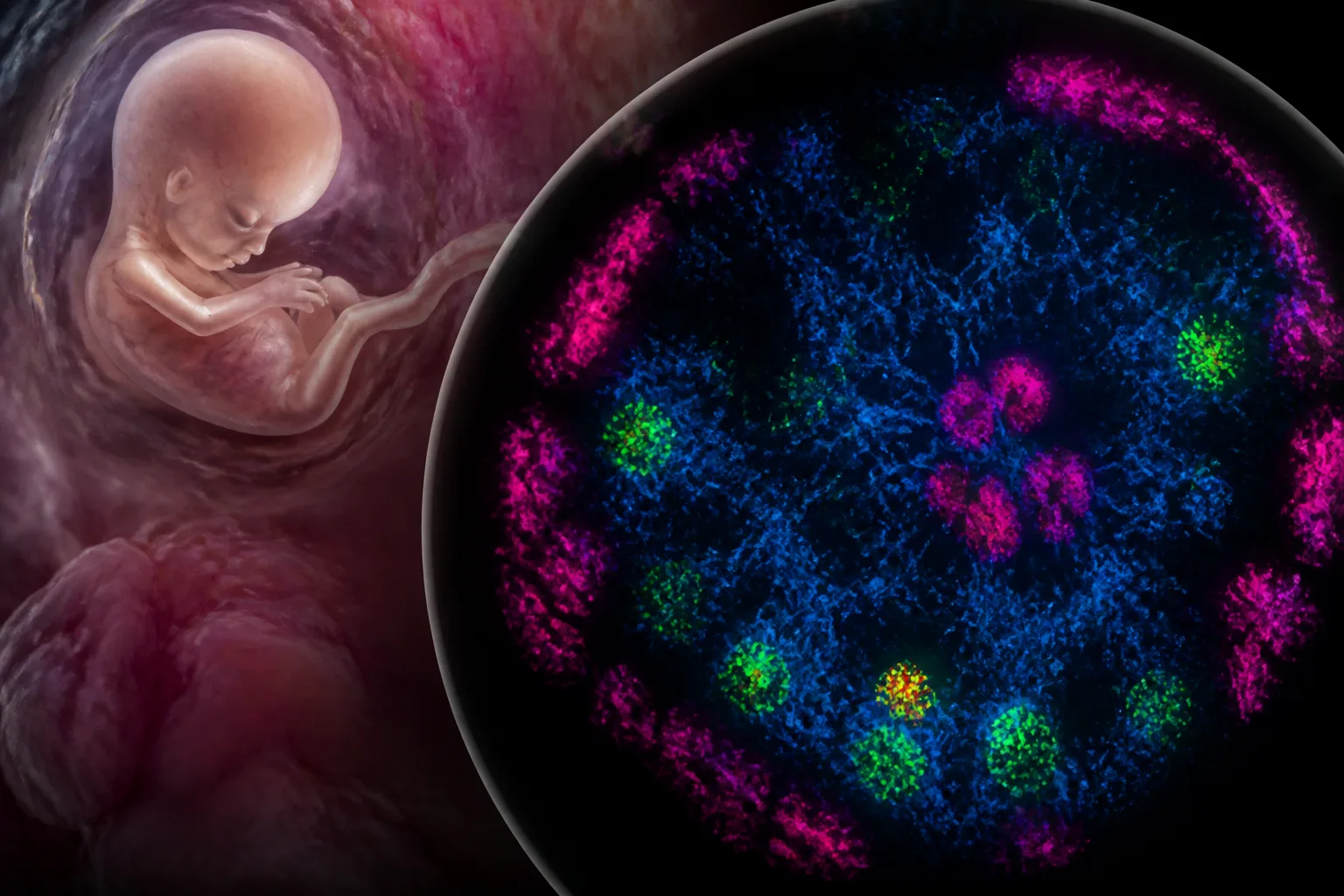
Recent research examining human brain tissue during development indicates that the spatial positioning of genes within the cell nucleus may influence their activity levels. Specifically, genes appear to become more active when they relocate from the periphery of the nucleus toward internal regions rich in proteins responsible for RNA synthesis and processing.

Key Findings from the Study

The study observed that during brain development, certain genes shift their position inside the nucleus. This movement correlates with an increase in gene expression, suggesting that nuclear architecture plays a role in regulating which genes are turned on or off at critical stages.

Proteins involved in RNA production and processing are concentrated in specific nuclear compartments. When genes move closer to these areas, their transcriptional activity tends to increase, supporting the idea that physical proximity within the nucleus can affect gene regulation.

Context and Implications for Brain Development

Understanding how gene activity is controlled during brain development is essential for grasping how complex neural structures form. The findings highlight the importance of nuclear organization as a layer of gene regulation, beyond the genetic code itself.

For families and individuals, this research may eventually contribute to better insights into developmental brain disorders, though the current findings are preliminary and primarily enhance foundational knowledge.

Limitations and Considerations

While the study sheds light on the relationship between nuclear positioning and gene activity, it does not establish direct causation. Further research is necessary to determine how these spatial changes impact brain function and development over time.

Additionally, the observations are based on tissue samples and may not fully capture dynamic processes occurring in living brains.

For more detailed information, see the original study at The Transmitter.

Download the images in this article

  • Gene Activity During Brain Development Influenced by Nuclear Positioning

Tags:

brain developmentdevelopmental biologygene activitygene expressiongene regulationhuman brainnuclear positioningRNA processing
Other Articles
Advancing Climate Neuroscience: Calls for Integrated and Directed Research
Previous

Advancing Climate Neuroscience: Calls for Integrated and Directed Research

Human Brain Organoids Grown for Five Years Show Postnatal Developmental Features
Next

Human Brain Organoids Grown for Five Years Show Postnatal Developmental Features

No Comment! Be the first one.

Leave a Reply Cancel reply

Your email address will not be published. Required fields are marked *

AAC action words for young children asking for a break asking for help autism education autism research Autism Science Foundation autism sensory support autism spectrum disorder autism support being told to wait calming strategies child development child independence classroom accommodations for autistic children communication communication phrases communication skills coping strategies daily living skills documenting progress early childhood development emotional regulation fine motor skills hygiene routine independence language development learning through play neuroscience Outdoor Play parent advocacy parenting tips parent preparation positive behavior support problem solving replacement skills self-advocacy sensory sensitivities sensory support snack time routine special education speech and language visual learning visual learning set young children

  • How Clear Communication Helps Secure Classroom Accommodations for Your Autistic Child
    How Clear Communication Helps Secure Classroom Accommodations for Your Autistic Child
    Clear communication with teachers helps parents secure effective classroom accommodations through the IEP process for their autistic child.
  • Tracking Concerns About My Child: 6 Practical Parent Steps
    Tracking Concerns About My Child: 6 Practical Parent Steps
    Learn 6 practical steps for parents to track concerns about their child effectively. Observe, document, and identify patterns to support advocacy and collaboration with professionals.
  • When I Make a Mistake: 6 Steps to Help Kids Cope
    When I Make a Mistake: 6 Steps to Help Kids Cope
    Help your child cope with mistakes using 6 practical steps: notice, pause, ask for help, fix what I can, try again, and move on. Support emotional growth with these strategies.
  • When I'm Excited: 6 Steps to Recognize and Manage Excitement in Young
    When I’m Excited: 6 Steps to Recognize and Manage Excitement in Young Children
    Help your child recognize and manage excitement with 6 simple steps: notice body signals, say "I'm excited," communicate safely, choose safe actions, ask for help, and take breaks.
  • Study Highlights Ways to Reduce Emotional Strain for Neurodivergent Students in Schools
    Study Highlights Ways to Reduce Emotional Strain for Neurodivergent Students in Schools
    A recent study reveals key factors contributing to emotional challenges faced by neurodivergent students in schools and highlights strategies involving both students and staff to foster supportive environments.
Study Highlights Ways to Reduce Emotional Strain for Neurodivergent Students in Schools
August 22, 2026
Avanço técnico em estudos da memória destaca reativação neuronal durante a recuperação
August 22, 2026
2023 Advances in Autism Research Highlight Diagnosis, Gender Differences, and Genetic Insights
August 22, 2026
Hidden Markov Models Reveal Distinct Brain Network Dynamics in Autism Spectrum Disorder
August 22, 2026
Preparing for Loud Events: 6 Sensory Support Steps for Children
41 views
Expressing Discomfort and Asking for Help: 6 Essential Communication Phrases for Young
Expressing Discomfort and Asking for Help: 6 Essential Communication Phrases for Young Children
39 views
Using a Calm Voice: 5 Positive Steps for Young Children
30 views
Transition from Playtime to Snack Time: 6-Step Visual Routine for Young Children
27 views
Color Sorting Treasure Hunt: A Fun Learning Through Play Activity
26 views

Content on this website is created with the assistance of artificial intelligence (AI), while some portions are still reviewed and overseen by humans. All content and resources are provided completely free of charge.

Some information may be referenced or cited from reputable sources. Whenever possible, we will clearly identify the sources used within each article.

If you have any questions, feedback, or would like to contact us, please email: info@autismwords.com

Copyright 2026 — Love Beyond Words - autismwords.com. All rights reserved. Blogsy WordPress Theme