Skip to content
-
Subscribe to our newsletter & never miss our best posts. Subscribe Now!
Love Beyond Words - autismwords.com Love Beyond Words - autismwords.com Love Beyond Words - autismwords.com

Supporting children with autism through education and care

Love Beyond Words - autismwords.com Love Beyond Words - autismwords.com Love Beyond Words - autismwords.com

Supporting children with autism through education and care

  • Learning & Support
    • Communication Skills
    • Daily Living Skills
    • Emotional Regulation
    • Everyday Challenges
    • Learning Through Play
    • Parent Education & Advocacy
    • Positive Behavior Support
    • Routines & Transitions
    • Social Skills
    • Speech & Language
  • Learning & Support
    • Communication Skills
    • Daily Living Skills
    • Emotional Regulation
    • Everyday Challenges
    • Learning Through Play
    • Parent Education & Advocacy
    • Positive Behavior Support
    • Routines & Transitions
    • Social Skills
    • Speech & Language
Close

Search

  • https://www.facebook.com/
  • https://twitter.com/
  • https://t.me/
  • https://www.instagram.com/
  • https://youtube.com/
Subscribe
Love Beyond Words - autismwords.com Love Beyond Words - autismwords.com Love Beyond Words - autismwords.com

Supporting children with autism through education and care

Love Beyond Words - autismwords.com Love Beyond Words - autismwords.com Love Beyond Words - autismwords.com

Supporting children with autism through education and care

  • Learning & Support
    • Communication Skills
    • Daily Living Skills
    • Emotional Regulation
    • Everyday Challenges
    • Learning Through Play
    • Parent Education & Advocacy
    • Positive Behavior Support
    • Routines & Transitions
    • Social Skills
    • Speech & Language
  • Learning & Support
    • Communication Skills
    • Daily Living Skills
    • Emotional Regulation
    • Everyday Challenges
    • Learning Through Play
    • Parent Education & Advocacy
    • Positive Behavior Support
    • Routines & Transitions
    • Social Skills
    • Speech & Language
Close

Search

  • https://www.facebook.com/
  • https://twitter.com/
  • https://t.me/
  • https://www.instagram.com/
  • https://youtube.com/
Subscribe
Home/Uncategorized/Preparing for Your Child’s IEP Meeting: A Practical Tip for Parents
Preparing for Your Child’s IEP Meeting: A Practical Tip for Parents
Uncategorized

Preparing for Your Child’s IEP Meeting: A Practical Tip for Parents

By Andyle
August 21, 2026 1 Min Read
0

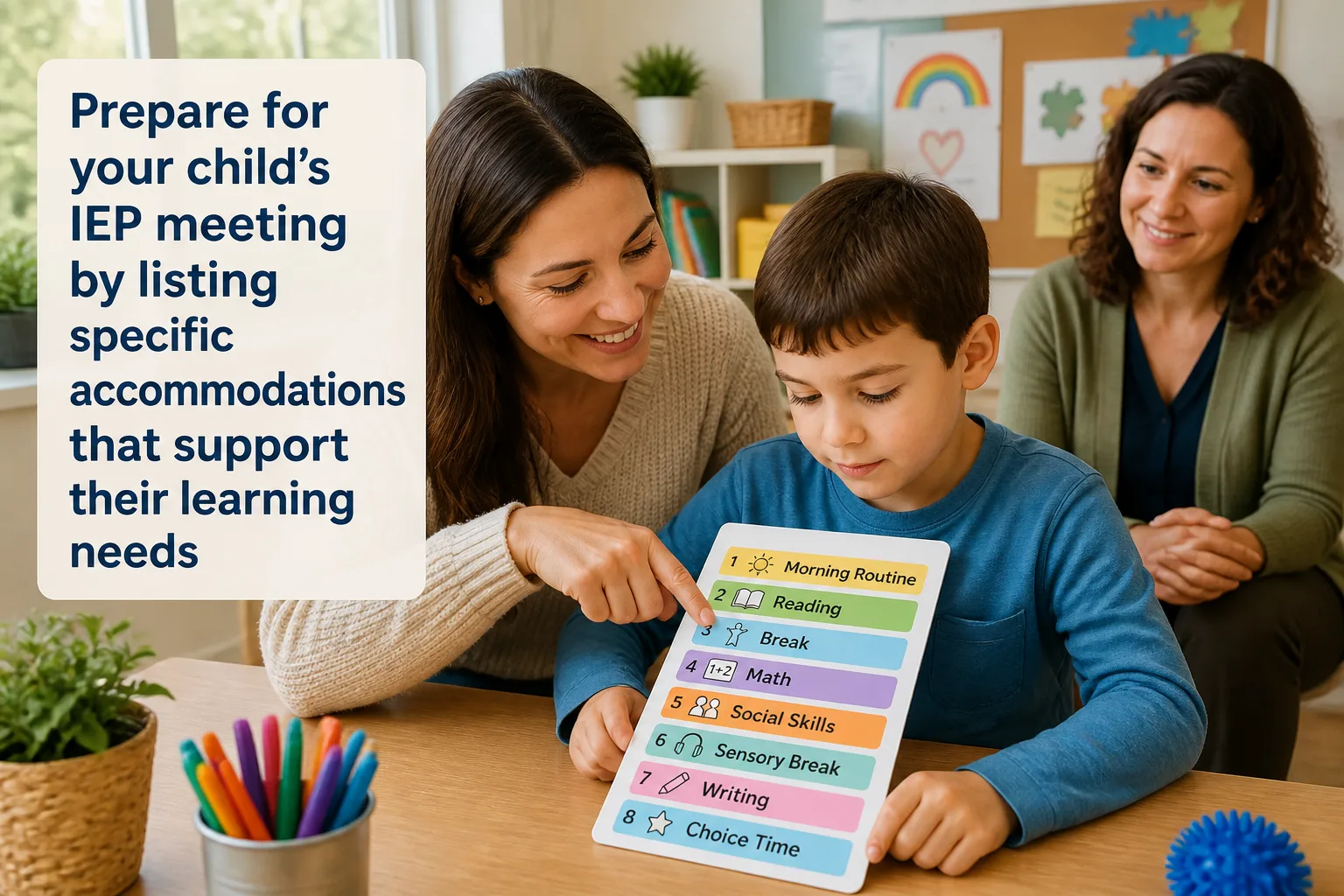
As a mom raising an autistic child, I’ve learned that preparing for your child’s IEP (Individualized Education Program) meeting can make a big difference in getting the right accommodations in place. One simple but powerful step is to create a clear list of specific accommodations that support your child’s learning needs before the meeting.

Why Make a List of Accommodations?

Having a written list helps you communicate clearly with teachers and school staff about what works best for your child. It also shows you’re organized and focused on your child’s success, which encourages collaboration.

How to Create Your Accommodations List

  1. Observe your child’s needs: Notice what helps them learn better or stay calm in the classroom, like extra time on tests or a quiet space.
  2. Talk with teachers and therapists: Ask what accommodations they think could help based on their experience.
  3. Write down specific accommodations: Be as detailed as possible, for example, “Preferential seating near the teacher” or “Use of a visual schedule to follow daily tasks.”
  4. Bring the list to the IEP meeting: Share it with the team and discuss how each accommodation supports your child.

This approach can help ensure your child’s IEP truly reflects their unique needs and strengths.

What accommodations have you found helpful for your child in school? Share your experiences below — we’re all learning together!

Follow Love Beyond Words for more practical autism parenting tips and support.

#AutismParenting #AutismEducation #IEPAdvocacy

Download the images in this article

  • Preparing for Your Child’s IEP Meeting: A Practical Tip for Parents

Tags:

autism educationautism parentingIEP accommodationsIEP advocacyparent advocacyschool supportspecial education
Author

Andyle

Follow Me
Other Articles
Recognizing and Managing Clothing Discomfort: 6 Sensory Support Steps for Children
Previous

Recognizing and Managing Clothing Discomfort: 6 Sensory Support Steps for Children

Feeling Worried: 6 Steps to Help Young Children Recognize and Manage Worry
Next

Feeling Worried: 6 Steps to Help Young Children Recognize and Manage Worry

No Comment! Be the first one.

Leave a Reply Cancel reply

Your email address will not be published. Required fields are marked *

AAC asking for a break asking for help autism parenting autism sensory support autism support calming strategies child development child independence communication phrases communication skills coping skills for kids coping strategies daily living skills early childhood development emotional regulation everyday challenges expressive language fine motor skills handwashing routine hygiene routine IEP accommodations IEP advocacy independence learning through play parent advocacy parenting tips patience for children positive behavior support problem solving replacement skills school support self-advocacy sensory sensitivities shape recognition Shape Stacking Tower snack time routine special education step-by-step routine transition from playtime to snack time using a calm voice visual learning visual routine waiting strategies young children

  • Being Told to Wait: 6 Helpful Steps for Kids to Cope
    Being Told to Wait: 6 Helpful Steps for Kids to Cope
    Learn 6 helpful steps children can use when being told to wait. Practical coping strategies support patience, communication, and calmness in everyday situations.
  • Feeling Worried: 6 Steps to Help Young Children Recognize and Manage Worry
    Feeling Worried: 6 Steps to Help Young Children Recognize and Manage Worry
    Teach young children 6 practical steps to recognize and manage worry with this friendly visual post. Help children notice feelings, communicate needs, choose coping strategies, and ask for help.
  • Preparing for Your Child’s IEP Meeting: A Practical Tip for Parents
    Preparing for Your Child’s IEP Meeting: A Practical Tip for Parents
    Preparing a clear list of specific accommodations before your child's IEP meeting helps you advocate effectively and supports your child's learning.
  • Recognizing and Managing Clothing Discomfort: 6 Sensory Support Steps for Children
    Recognizing and Managing Clothing Discomfort: 6 Sensory Support Steps for Children
    Learn 6 practical sensory support steps to help children recognize and manage clothing discomfort, communicate needs, and choose comfortable clothes with confidence.
  • Shape Stacking Tower: A Fun Learning Through Play Activity
    Shape Stacking Tower: A Fun Learning Through Play Activity
    Explore fine motor skills and shape recognition with the Shape Stacking Tower activity. Learn 6 playful steps to build, balance, and knock down towers with colorful shapes.
Expressing Discomfort and Asking for Help: 6 Essential Communication Phrases for Young Expressing Discomfort and Asking for Help: 6 Essential Communication Phrases for Young Children
32 views
Preparing for Loud Events: 6 Sensory Support Steps for Children Preparing for Loud Events: 6 Sensory Support Steps for Children
28 views
Using a Calm Voice: 5 Positive Steps for Young Children Using a Calm Voice: 5 Positive Steps for Young Children
21 views
Teaching Action Words: 6 Everyday Verbs for Young Children Teaching Action Words: 6 Everyday Verbs for Young Children
18 views
Transition from Playtime to Snack Time: 6-Step Visual Routine for Young Children Transition from Playtime to Snack Time: 6-Step Visual Routine for Young Children
15 views

Content on this website is created with the assistance of artificial intelligence (AI), while some portions are still reviewed and overseen by humans. All content and resources are provided completely free of charge.

Some information may be referenced or cited from reputable sources. Whenever possible, we will clearly identify the sources used within each article.

If you have any questions, feedback, or would like to contact us, please email: info@autismwords.com

Copyright 2026 — Love Beyond Words - autismwords.com. All rights reserved. Blogsy WordPress Theme