Skip to content
-
Subscribe to our newsletter & never miss our best posts. Subscribe Now!
Love Beyond Words - autismwords.com Love Beyond Words - autismwords.com Love Beyond Words - autismwords.com

Supporting children with autism through education and care

Love Beyond Words - autismwords.com Love Beyond Words - autismwords.com Love Beyond Words - autismwords.com

Supporting children with autism through education and care

  • Learning & Support
    • Communication Skills
    • Daily Living Skills
    • Emotional Regulation
    • Everyday Challenges
    • Learning Through Play
    • Parent Education & Advocacy
    • Positive Behavior Support
    • Routines & Transitions
    • Social Skills
    • Speech & Language
  • Learning & Support
    • Communication Skills
    • Daily Living Skills
    • Emotional Regulation
    • Everyday Challenges
    • Learning Through Play
    • Parent Education & Advocacy
    • Positive Behavior Support
    • Routines & Transitions
    • Social Skills
    • Speech & Language
Close

Search

  • https://www.facebook.com/
  • https://twitter.com/
  • https://t.me/
  • https://www.instagram.com/
  • https://youtube.com/
Subscribe
Love Beyond Words - autismwords.com Love Beyond Words - autismwords.com Love Beyond Words - autismwords.com

Supporting children with autism through education and care

Love Beyond Words - autismwords.com Love Beyond Words - autismwords.com Love Beyond Words - autismwords.com

Supporting children with autism through education and care

  • Learning & Support
    • Communication Skills
    • Daily Living Skills
    • Emotional Regulation
    • Everyday Challenges
    • Learning Through Play
    • Parent Education & Advocacy
    • Positive Behavior Support
    • Routines & Transitions
    • Social Skills
    • Speech & Language
  • Learning & Support
    • Communication Skills
    • Daily Living Skills
    • Emotional Regulation
    • Everyday Challenges
    • Learning Through Play
    • Parent Education & Advocacy
    • Positive Behavior Support
    • Routines & Transitions
    • Social Skills
    • Speech & Language
Close

Search

  • https://www.facebook.com/
  • https://twitter.com/
  • https://t.me/
  • https://www.instagram.com/
  • https://youtube.com/
Subscribe
Home/Learning & Support/Daily Living Skills/Handwashing Routine Visual Learning Set: 6 Steps to Help Your Child Build Independence
Handwashing Routine Visual Learning Set: 6 Steps to Help Your Child Build
Daily Living Skills

Handwashing Routine Visual Learning Set: 6 Steps to Help Your Child Build Independence

By Andyle
August 21, 2026 2 Min Read
0

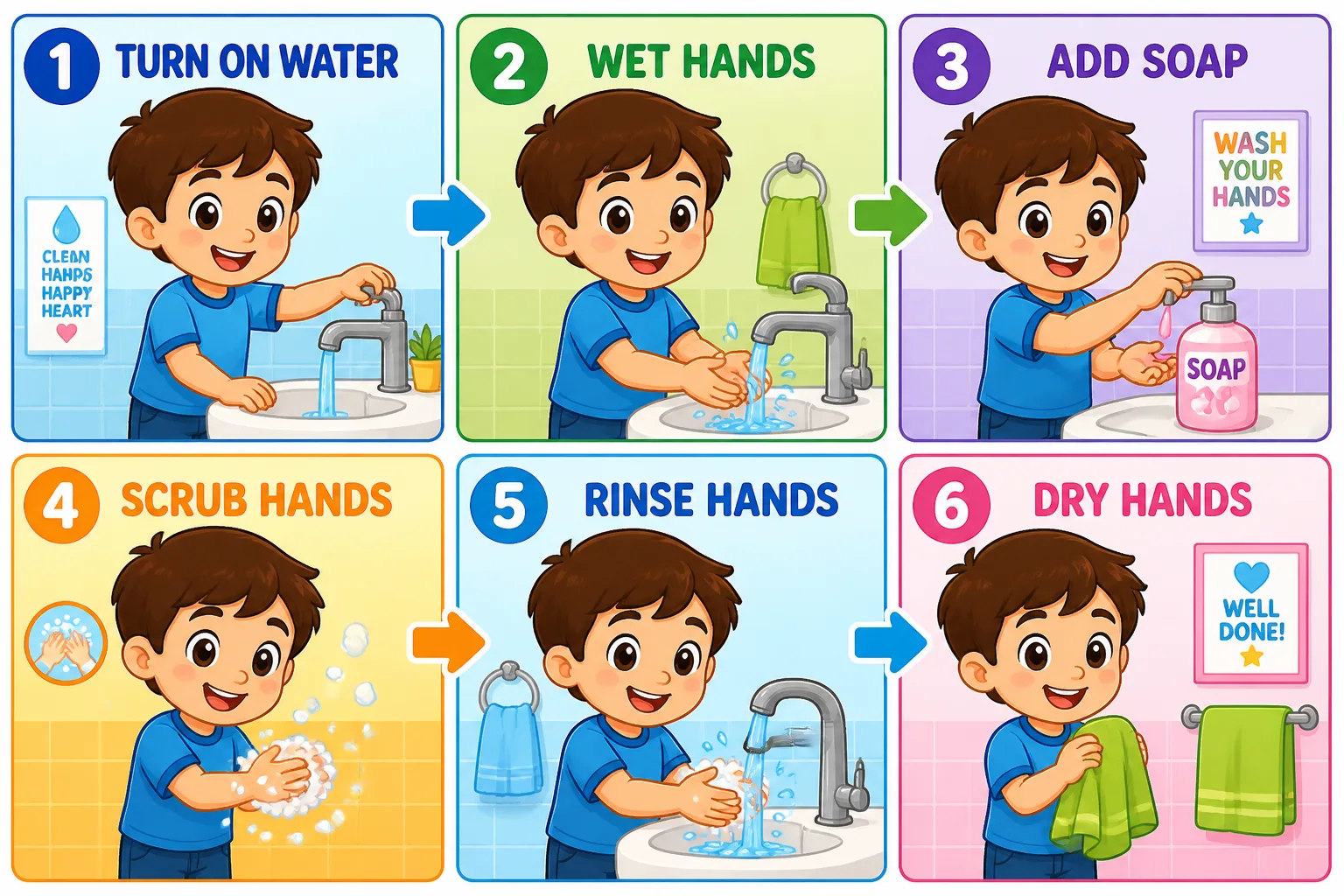
Teaching children the handwashing routine is essential for promoting good hygiene and helping them build independence in daily living skills. This visual learning set breaks down the handwashing process into six clear, manageable steps that children can understand and follow. Using a bright, friendly cartoon poster with step-by-step panels, children can see exactly what to do from turning on the water to drying their hands.

Why Teach the Handwashing Routine?

Handwashing is one of the most effective ways to prevent the spread of germs and illness. For young children, especially those with developmental needs, visual supports can make the routine easier to understand and remember. This routine also encourages participation and gradual independence, helping children feel confident and responsible for their own hygiene.

The 6 Steps in the Handwashing Routine Visual Set

  1. TURN ON WATER – Show your child how to turn on the faucet to get water flowing.
  2. WET HANDS – Place hands under the running water to get them wet.
  3. ADD SOAP – Use a soap dispenser or bar soap to add soap to hands.
  4. SCRUB HANDS – Rub hands together thoroughly, including between fingers and backs of hands, for at least 20 seconds.
  5. RINSE HANDS – Rinse all the soap off under running water.
  6. DRY HANDS – Use a clean towel or air dryer to dry hands completely.

How Parents Can Use This Visual Learning Set

  • Show the visual before starting: Let your child see the steps to know what to expect.
  • Practice one step at a time: Focus on mastering each action before moving on.
  • Use simple language and First → Then: For example, “First wet hands, then add soap.”
  • Give your child extra time: Allow them to process and complete each step without rushing.

Remember, every child develops at their own pace. Some may need more support or modeling, and that’s okay. Celebrate every effort and progress your child makes toward independence.

What daily living skill is your child currently practicing? Share your experience with us!

Download the handwashing routine visual learning set image below.

  • Handwashing Routine Visual Learning Set: 6 Steps to Help Your Child Build

Tags:

autism supportchild independencedaily living skillshandwashing routinehygiene routinestep-by-step routinevisual learning set
Author

Andyle

Follow Me
Other Articles
Asking for Help: 6 Clear Steps to Support Your Child's Social Skills
Previous

Asking for Help: 6 Clear Steps to Support Your Child’s Social Skills

Asking for a Break: 6 Essential Communication Phrases for Young Children
Next

Asking for a Break: 6 Essential Communication Phrases for Young Children

No Comment! Be the first one.

Leave a Reply Cancel reply

Your email address will not be published. Required fields are marked *

AAC action words action words for young children asking for a break asking for help autism support calming strategies child development child independence children child transitions communication communication phrases communication skills communication support coping strategies daily living skills early language emotional regulation emotional skills expressive language handling frustration handwashing routine hygiene routine independence language development parent advocacy parenting tips positive behavior support predictable routines replacement skills self-advocacy self-care skills snack time routine speech and language step-by-step routine transition from playtime to snack time using a calm voice verbs for kids visual communication visual learning visual learning set visual routine vocabulary building young children

  • Teaching Action Words: 6 Everyday Verbs for Young Children
    Teaching Action Words: 6 Everyday Verbs for Young Children
    Teach young children 6 common action verbs—eating, running, sleeping, drinking, reading, washing—with clear cartoon visuals to build vocabulary and expressive language.
  • Asking for a Break: 6 Essential Communication Phrases for Young Children
    Asking for a Break: 6 Essential Communication Phrases for Young Children
    Help your child communicate their need for a pause with 6 essential asking for a break phrases. Practical, everyday messages to support self-advocacy and emotional regulation.
  • Handwashing Routine Visual Learning Set: 6 Steps to Help Your Child Build
    Handwashing Routine Visual Learning Set: 6 Steps to Help Your Child Build Independence
    Help your child learn the handwashing routine with 6 clear steps in a bright, friendly visual learning set. Promote independence and good hygiene today!
  • Asking for Help: 6 Clear Steps to Support Your Child's Social Skills
    Asking for Help: 6 Clear Steps to Support Your Child’s Social Skills
    Learn how to teach young children the important social skill of asking for help with 6 clear steps. Support communication with speech, gestures, or AAC.
  • Transition from Playtime to Snack Time: 6-Step Visual Routine for Young Children
    Transition from Playtime to Snack Time: 6-Step Visual Routine for Young Children
    Help your child smoothly transition from playtime to snack time with a clear 6-step visual routine. Support predictability, communication, and independence.
Snack Time Routine Visual Learning Set: 6 Steps to Help Your Child Snack Time Routine Visual Learning Set: 6 Steps to Help Your Child Build Independence
August 21, 2026
Getting Dressed Visual Learning Set: 6 Steps to Help Your Child Build Getting Dressed Visual Learning Set: 6 Steps to Help Your Child Build Independence
August 21, 2026
Grocery Shopping Routine Visual Learning Set: 6 Steps to Help Your Child Grocery Shopping Routine Visual Learning Set: 6 Steps to Help Your Child Participate Independently
August 20, 2026
Personal Hygiene Visual Learning Set: 6 Steps to Help Your Child Develop Personal Hygiene Visual Learning Set: 6 Steps to Help Your Child Develop Independence
August 20, 2026
Expressing Discomfort and Asking for Help: 6 Essential Communication Phrases for Young Expressing Discomfort and Asking for Help: 6 Essential Communication Phrases for Young Children
29 views
Preparing for Loud Events: 6 Sensory Support Steps for Children Preparing for Loud Events: 6 Sensory Support Steps for Children
28 views
Using a Calm Voice: 5 Positive Steps for Young Children Using a Calm Voice: 5 Positive Steps for Young Children
19 views
Handling Frustration: 6 Positive Steps for Young Children Handling Frustration: 6 Positive Steps for Young Children
14 views
Transition from Playtime to Snack Time: 6-Step Visual Routine for Young Children Transition from Playtime to Snack Time: 6-Step Visual Routine for Young Children
13 views

Content on this website is created with the assistance of artificial intelligence (AI), while some portions are still reviewed and overseen by humans. All content and resources are provided completely free of charge.

Some information may be referenced or cited from reputable sources. Whenever possible, we will clearly identify the sources used within each article.

If you have any questions, feedback, or would like to contact us, please email: info@autismwords.com

Copyright 2026 — Love Beyond Words - autismwords.com. All rights reserved. Blogsy WordPress Theme