Skip to content
-
Subscribe to our newsletter & never miss our best posts. Subscribe Now!
Love Beyond Words - autismwords.com Love Beyond Words - autismwords.com Love Beyond Words - autismwords.com

Supporting children with autism through education and care

Love Beyond Words - autismwords.com Love Beyond Words - autismwords.com Love Beyond Words - autismwords.com

Supporting children with autism through education and care

  • Learning & Support
    • Communication Skills
    • Daily Living Skills
    • Emotional Regulation
    • Everyday Challenges
    • Learning Through Play
    • Parent Education & Advocacy
    • Positive Behavior Support
    • Routines & Transitions
    • Social Skills
    • Speech & Language
  • Learning & Support
    • Communication Skills
    • Daily Living Skills
    • Emotional Regulation
    • Everyday Challenges
    • Learning Through Play
    • Parent Education & Advocacy
    • Positive Behavior Support
    • Routines & Transitions
    • Social Skills
    • Speech & Language
Close

Search

  • https://www.facebook.com/
  • https://twitter.com/
  • https://t.me/
  • https://www.instagram.com/
  • https://youtube.com/
Subscribe
Love Beyond Words - autismwords.com Love Beyond Words - autismwords.com Love Beyond Words - autismwords.com

Supporting children with autism through education and care

Love Beyond Words - autismwords.com Love Beyond Words - autismwords.com Love Beyond Words - autismwords.com

Supporting children with autism through education and care

  • Learning & Support
    • Communication Skills
    • Daily Living Skills
    • Emotional Regulation
    • Everyday Challenges
    • Learning Through Play
    • Parent Education & Advocacy
    • Positive Behavior Support
    • Routines & Transitions
    • Social Skills
    • Speech & Language
  • Learning & Support
    • Communication Skills
    • Daily Living Skills
    • Emotional Regulation
    • Everyday Challenges
    • Learning Through Play
    • Parent Education & Advocacy
    • Positive Behavior Support
    • Routines & Transitions
    • Social Skills
    • Speech & Language
Close

Search

  • https://www.facebook.com/
  • https://twitter.com/
  • https://t.me/
  • https://www.instagram.com/
  • https://youtube.com/
Subscribe
Home/Learning & Support/Learning Through Play/Sticker Story Sequence: A Fun Learning Through Play Activity
Sticker Story Sequence: A Fun Learning Through Play Activity
Learning Through Play

Sticker Story Sequence: A Fun Learning Through Play Activity

By Andyle
August 20, 2026 2 Min Read
0

Sticker play is a wonderful way to develop fine motor skills, early sequencing, language, and creativity in young children. The “Sticker Story Sequence” activity invites children to choose stickers, place them in order, and tell a simple story about their sequence. This playful routine supports attention, hand-eye coordination, and expressive language while being easy to set up and enjoyable for families.

What You Need

A sheet of colorful stickers, a blank sheet of paper, and a safe space to play.

Steps to Play

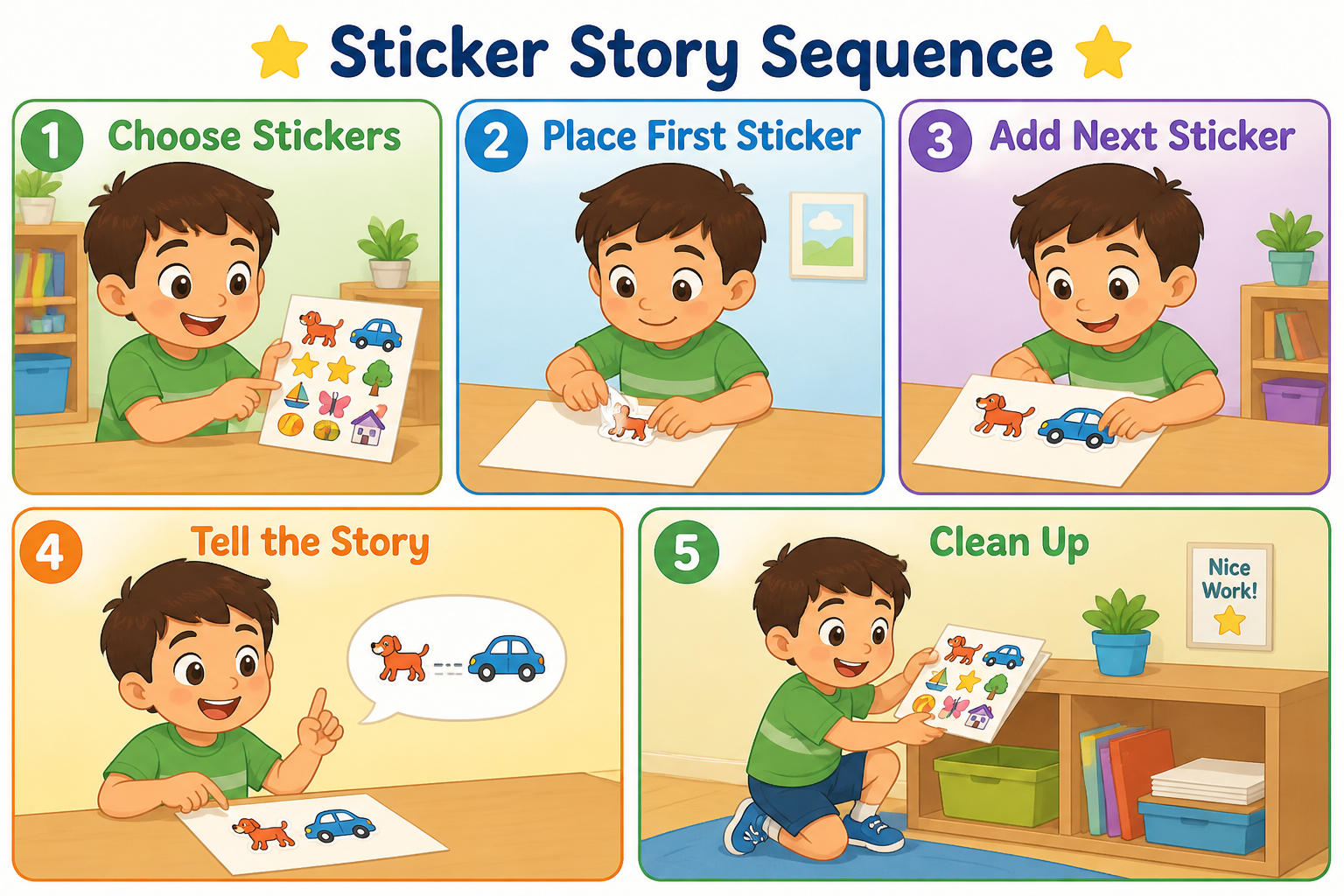
1. Choose Stickers

Invite your child to pick several stickers from the sheet. Encourage them to select stickers that interest them, fostering choice and engagement.

2. Place First Sticker

Show how to peel and stick the first sticker onto the paper. This helps develop fine motor skills and hand-eye coordination.

3. Add Next Stickers

Encourage placing additional stickers in a line or sequence. This introduces the concept of order and sequencing.

4. Tell the Story

Ask your child to talk about the stickers in order, creating a simple story. This supports language development and creativity.

5. Clean Up

Model putting away the stickers and paper neatly. This teaches responsibility and turn-taking if playing with others.

How Parents Can Support

Model each step clearly and use simple language. Follow your child’s lead and give them time to explore. Celebrate their choices and stories without pressure. Repeat the activity to build confidence and skills.

Adaptations

Easier: Use fewer stickers or larger stickers for easier handling.
Harder: Add counting the stickers or ask your child to sequence by categories (e.g., animals, food).

Safety Tips

Use age-appropriate stickers without small parts that could be choking hazards. Always supervise young children during sticker play.

Sticker Story Sequence is a playful way to practice fine motor skills, sequencing, and language. Try it today with your child and watch their stories come alive!

What fun story did your child create with their stickers?

Download the images for the Sticker Story Sequence activity

  • Sticker Story Sequence: A Fun Learning Through Play Activity

Tags:

children's activitiesearly learningfine motor skillslanguage developmentparenting tipsplay-based learningsequencingsticker activity
Author

Andyle

Follow Me
Other Articles
Feeling Overwhelmed: 6 Steps to Help Young Children Regulate Emotions
Previous

Feeling Overwhelmed: 6 Steps to Help Young Children Regulate Emotions

When I'm Frustrated: 6 Steps to Recognize and Manage Frustration in Young
Next

When I’m Frustrated: 6 Steps to Recognize and Manage Frustration in Young Children

No Comment! Be the first one.

Leave a Reply Cancel reply

Your email address will not be published. Required fields are marked *

  • Preparing for Loud Events: 6 Sensory Support Steps for Children
    Preparing for Loud Events: 6 Sensory Support Steps for Children
    Learn 6 practical sensory support steps to help children prepare for loud events. Teach recognition, communication, breaks, and choices for comfort and confidence.
  • Color Sorting Treasure Hunt: A Fun Learning Through Play Activity
    Color Sorting Treasure Hunt: A Fun Learning Through Play Activity
    Engage your child with a playful color sorting treasure hunt that builds color recognition, matching, and motor skills in six fun, easy steps.
  • Teaching Prepositions: IN, ON, UNDER, NEXT TO
    Teaching Prepositions: IN, ON, UNDER, NEXT TO
    Teach children the prepositions IN, ON, UNDER, and NEXT TO with a fun, clear cartoon poster. Help your child describe where things are with simple language and play.
  • Expressing Discomfort and Asking for Help: 6 Essential Communication Phrases for Young
    Expressing Discomfort and Asking for Help: 6 Essential Communication Phrases for Young Children
    Help your child express discomfort and ask for help with 6 practical communication phrases. Teach "I don't like it," "Help me please," "Too loud," and more for everyday situations.
  • Snack Time Routine Visual Learning Set: 6 Steps to Help Your Child
    Snack Time Routine Visual Learning Set: 6 Steps to Help Your Child Build Independence
    Teach your child the snack time routine with 6 simple steps: wash hands, get snack, open snack, eat, throw trash away, and wipe mouth. Build independence with this visual guide.
Color Sorting Treasure Hunt: A Fun Learning Through Play Activity Color Sorting Treasure Hunt: A Fun Learning Through Play Activity
August 21, 2026
Expressing Discomfort and Asking for Help: 6 Essential Communication Phrases for Young Expressing Discomfort and Asking for Help: 6 Essential Communication Phrases for Young Children
10 views
Preparing for Loud Events: 6 Sensory Support Steps for Children Preparing for Loud Events: 6 Sensory Support Steps for Children
10 views
Teaching Personal Boundaries: 6 Essential Communication Phrases for Young Children Teaching Personal Boundaries: 6 Essential Communication Phrases for Young Children
7 views
Grocery Shopping Routine Visual Learning Set: 6 Steps to Help Your Child Grocery Shopping Routine Visual Learning Set: 6 Steps to Help Your Child Participate Independently
6 views
Personal Hygiene Visual Learning Set: 6 Steps to Help Your Child Develop Personal Hygiene Visual Learning Set: 6 Steps to Help Your Child Develop Independence
6 views

Content on this website is created with the assistance of artificial intelligence (AI), while some portions are still reviewed and overseen by humans. All content and resources are provided completely free of charge.

Some information may be referenced or cited from reputable sources. Whenever possible, we will clearly identify the sources used within each article.

If you have any questions, feedback, or would like to contact us, please email: info@autismwords.com

Copyright 2026 — Love Beyond Words - autismwords.com. All rights reserved. Blogsy WordPress Theme