Personal Hygiene Visual Learning Set: 6 Steps to Help Your Child Develop Independence

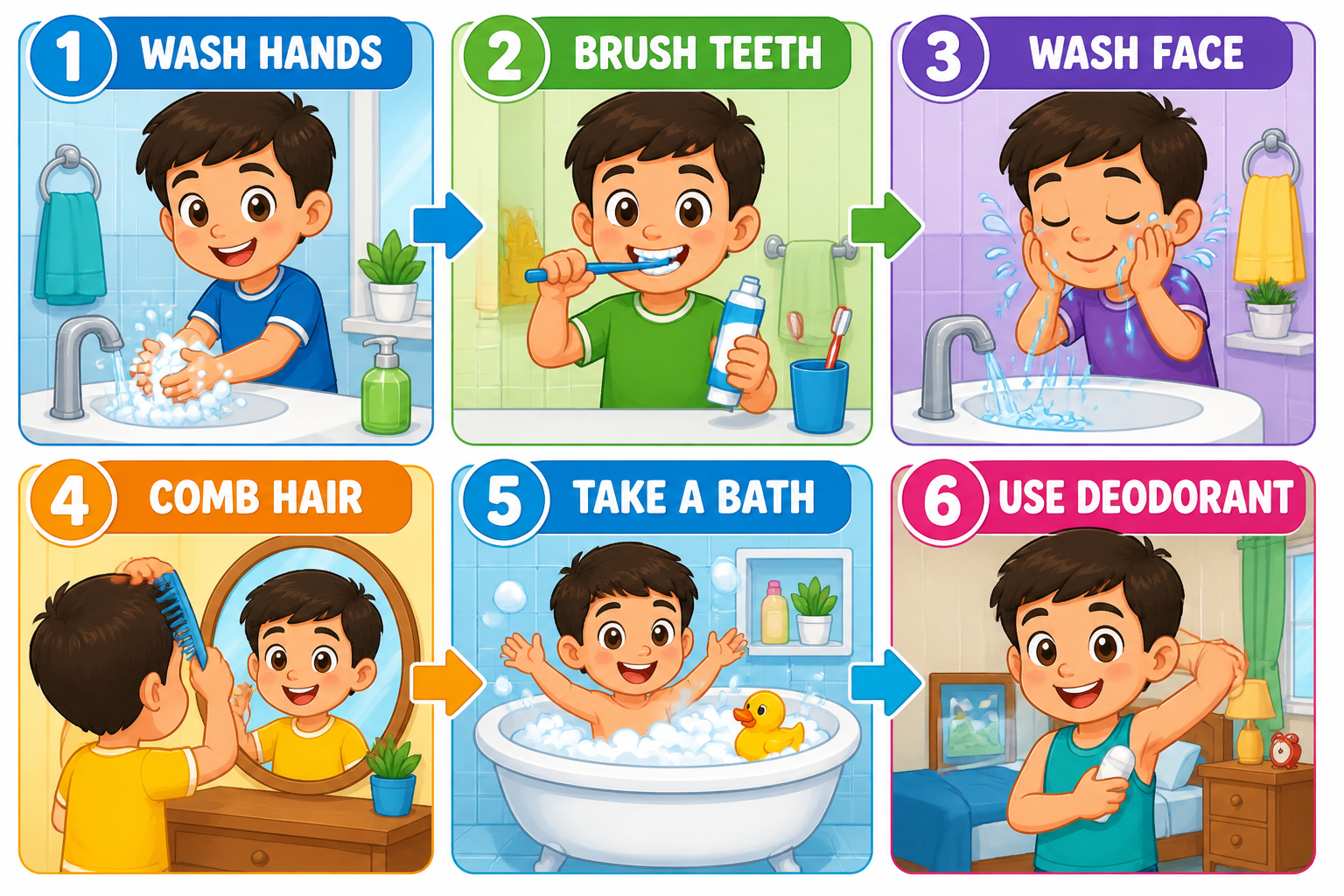
Teaching children personal hygiene is a vital part of fostering independence and health. This personal hygiene visual learning set includes six key daily skills: washing hands, brushing teeth, washing face, combing hair, taking a bath, and using deodorant. These actions form a natural sequence that children can learn to do with increasing independence, supported by clear visual cues.
Why Teach Personal Hygiene Skills Visually?
Children, especially those with autism or additional support needs, often benefit from visual supports that break down routines into manageable steps. Visual learning sets use bright, friendly cartoon illustrations paired with simple action labels to make complex routines understandable and engaging. This method helps children anticipate what comes next, reduces anxiety, and encourages participation in self-care tasks.
Step-by-Step Personal Hygiene Routine
1. Wash Hands
Start with washing hands using soap and water. This step is essential for preventing illness and teaches the importance of cleanliness. Visual cues can show the child how to rub hands together and rinse thoroughly.
2. Brush Teeth
Next, brushing teeth helps maintain oral health. The visual shows the child holding a toothbrush with toothpaste, brushing all areas of the mouth. Parents can model the action and encourage the child to practice daily.
3. Wash Face
Washing the face refreshes and cleans the skin. The illustration depicts the child splashing water on the face, an easy step to include in morning or bedtime routines.
4. Comb Hair
Combing hair helps with grooming and appearance. The child is shown using a comb in front of a mirror, promoting self-care and confidence.
5. Take a Bath
Bathing is a more involved hygiene step that keeps the whole body clean. The visual shows the child happily sitting in a bathtub with bubbles, making the experience inviting.
6. Use Deodorant
Applying deodorant is an important skill for older children learning about body odor and personal care. The image shows the child applying deodorant in a bedroom setting.
Practical Strategies for Parents
- Show the visual before starting: Preview the routine so your child knows what to expect.
- Practice one step at a time: Focus on mastering each action before moving to the next.
- Use First → Then: For example, “First wash hands, then brush teeth” to support understanding.
- Give extra processing time: Allow your child to complete each step at their own pace without rushing.
Remember, every child develops at their own pace and may need different levels of support. Celebrate participation and progress, no matter how small, and avoid pressuring your child to complete every step independently.
Which personal hygiene skill is your child currently practicing? Share your experience below!
Download the images in this article