Snack Time Routine Visual Learning Set: 6 Steps to Help Your Child Build Independence

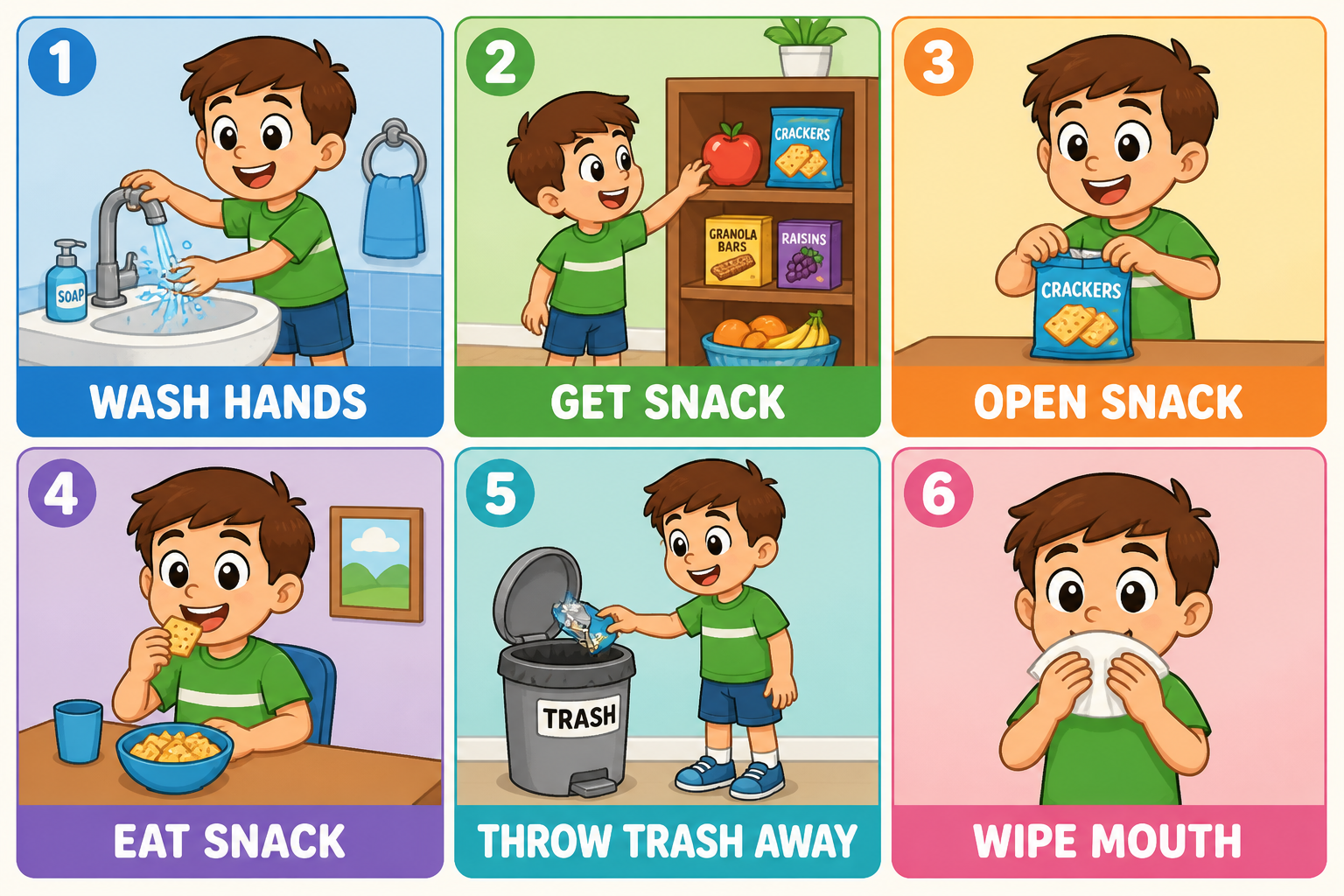
Teaching children daily living skills like the snack time routine helps them develop independence, responsibility, and confidence. This visual learning set breaks down the snack time process into six clear, manageable steps that children can understand and practice with support. Using a step-by-step cartoon poster, children can see what to do next, which is especially helpful for young children and those who benefit from visual schedules.
Snack Time Routine: Six Essential Steps
1. Wash Hands
Starting with clean hands is important for hygiene and health. Teach your child to turn on the faucet, wet their hands, apply soap, scrub, rinse, and dry. Visual prompts can guide this process.
2. Get Snack
Encourage your child to choose or retrieve their snack from a designated spot like a shelf or snack box. This builds decision-making and participation skills.
3. Open Snack
Opening snack packaging can be challenging. Use simple, easy-to-open snacks at first and model the action. Visual steps help children understand what to do.
4. Eat Snack
Teach your child to sit at a table or designated spot and enjoy their snack calmly. This step encourages good mealtime manners and focus.
5. Throw Trash Away
After eating, help your child learn to clean up by throwing wrappers or trash into a bin. This fosters responsibility and tidiness.
6. Wipe Mouth
Finally, teach your child to use a napkin or tissue to wipe their mouth, promoting self-care and neatness.
How Parents Can Use This Visual Routine
- Show the visual before snack time to prepare your child for each step.
- Point to each panel and use simple language to describe the action.
- Practice one step at a time, allowing extra time as needed.
- Use “First → Then” language to help your child understand the sequence.
- Model actions if your child needs support and gradually reduce help as they gain confidence.
- Celebrate participation and progress to motivate your child.
Remember, every child develops at their own pace. Visual routines like this can make snack time easier and more enjoyable for children who need extra support with sequencing and independence.
Which daily living skill is your child currently practicing? Share your experience with us!
Download the images in this article